
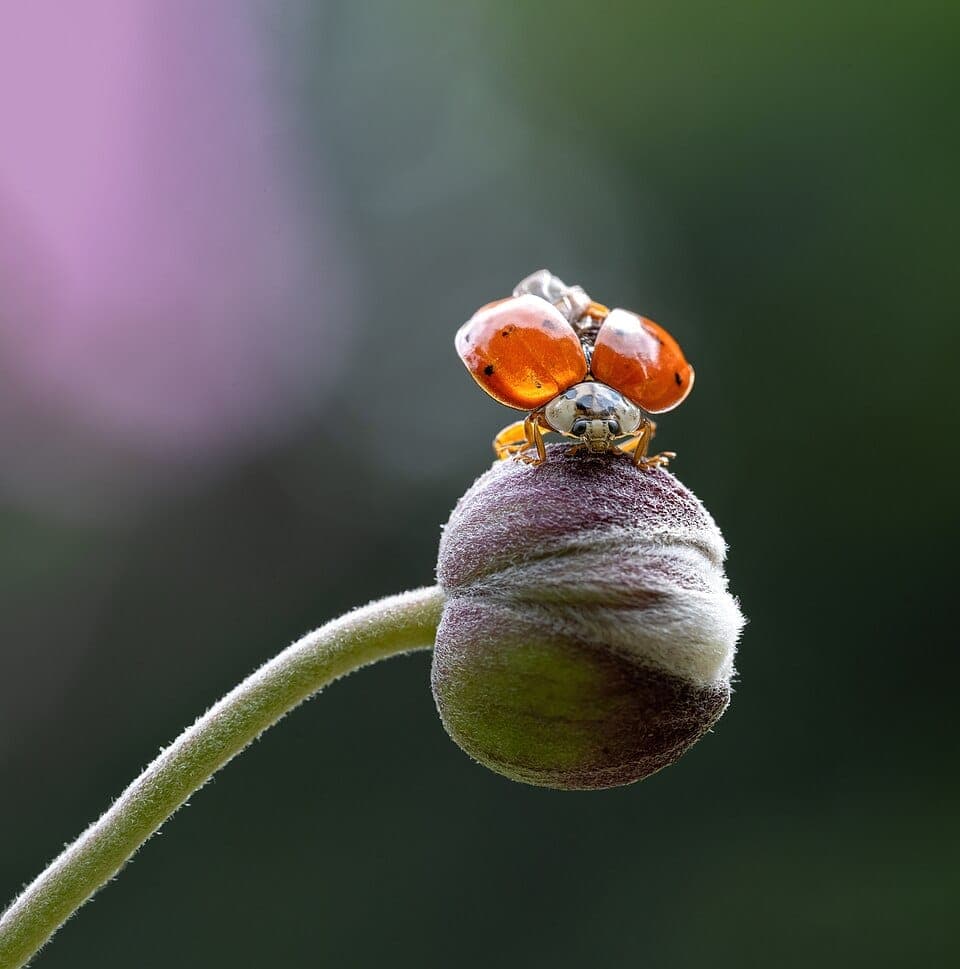
From late summer into fall, a familiar scene plays out across much of North America: dozens or even hundreds of orange, spotted beetles gathering on the warm, sunlit side of a house and working their way inside around window frames and door gaps. Most people call them ladybugs and wonder why the gentle garden helper has suddenly turned into a home invader. The answer is that these are almost always a different insect — the multicolored Asian lady beetle — and the true native ladybugs you remember from childhood rarely swarm homes at all. Telling them apart is easy once you know where to look.
Why the Sudden Fall Gathering
The multicolored Asian lady beetle was introduced to North America to help control aphids and other plant pests, and at that job it excels. But unlike our native ladybugs, this species spends the winter as an adult and instinctively seeks out sheltered crevices to ride out the cold. In its native range that means cliff faces and rock outcrops; here, a large light-colored house on a sunny hillside is close enough. As nights cool in late summer and early fall, the beetles respond to the shortening days and warm afternoons by congregating on sun-facing walls in huge numbers, then slipping into wall voids, attics, and window channels to overwinter.
The Telltale Differences
Both are small, rounded, and orange-to-red with black spots, so color alone will not settle it. A few features are far more reliable:
- The "M" mark: look just behind the head at the pronotum (the shield between head and wing covers). Asian lady beetles have a whitish patch marked with a black "M" or "W" shape. Native ladybugs lack this.
- Spot count is unreliable: Asian lady beetles range from no spots to 19, in colors from pale tan to deep red, which is exactly why "multicolored" is in the name. A native ladybug is usually a consistent bright red with a set number of black spots.
- Behavior: native ladybugs stay in gardens and fields and do not mass on houses. If a swarm is blanketing your siding in fall, it is almost certainly the Asian species.
- Size and shape: Asian lady beetles are a touch larger and more oval; native species tend to be smaller and more domed.
Try Spotter Free on iOS & Android
Plants, animals, fungi, and rocks — all from a photo. 5 free identifications every day, no credit card required.
Are Asian Lady Beetles Harmful?
They are not dangerous, but they can be a nuisance. When handled or threatened, Asian lady beetles practice "reflex bleeding," oozing a yellow, foul-smelling fluid from their leg joints that can stain walls and fabrics. They will occasionally deliver a small nip that feels like a pinch, and a few people are mildly allergic to the beetles when they overwinter indoors in large numbers. Pets that eat a mouthful of them can drool or get an upset stomach. None of this makes them a health threat — they are simply an insect that wants to spend the winter where you live.
What to Do About Them
The most effective approach is to keep them out before they settle in: seal gaps around windows, doors, utility lines, and the eaves, and repair torn screens in late summer before the beetles start gathering. Once they are indoors, vacuuming is the cleanest removal method — avoid crushing them, which releases the staining fluid and its odor. Because they are beneficial predators outdoors, there is no reason to wage war on them in the garden; the goal is just to keep the overwintering crowd on the outside of the walls.
Not sure whether the beetle on your windowsill is a native ladybug or the multicolored Asian lady beetle massing for winter? Snap a photo and let Spotter help you identify it, so you know whether you are looking at a garden friend or the fall home invader.
Try Spotter Free on iOS & Android
Plants, animals, fungi, and rocks — all from a photo. 5 free identifications every day, no credit card required.