Field Notes

The Spotter Blog

Practical guides on identifying plants, animals, fungi, and rocks — plus honest comparisons of the best nature identification apps for hikers.

GuideCephas / Wikimedia Commons (CC BY-SA 3.0)

What Is the Little Gray Bird That Showed Up When It Got Cold? Identifying the Dark-Eyed Junco

A small, round, gray-and-white bird suddenly appears under your feeders and along the shrub edges in fall, hopping on the ground and flashing white tail feathers when it flies. That is a dark-eyed junco — the bird so tied to cold weather that people call it the "snowbird." Here is how to recognize juncos, understand why they arrive now, and tell them from other little gray birds.

·5 min readRead →
GuideJudy Gallagher / Wikimedia Commons (CC BY 2.0)

What Are the Sleek, Crested Birds Stripping My Berry Tree? Identifying Cedar Waxwings

A tight flock of soft brown, crested birds descends on a berry tree, works it over in minutes, and vanishes — leaving thin, high whistles hanging in the air. Those are cedar waxwings, one of the most elegant and social birds of fall. Here is how to recognize a waxwing, understand their berry-driven wandering, and know when to expect them.

·5 min readRead →
Guidevoir ci-dessous / see below / Wikimedia Commons (CC BY 3.0)

What Is the Cluster of Shelf Mushrooms Growing on the Dead Tree? Identifying the Oyster Mushroom

Overlapping, shelf-like mushrooms with smooth pale caps and deep gills appear in clusters on a dead trunk or fallen log in fall, often after rain. That look points to an oyster mushroom — but several look-alikes matter, so identification is about knowing the group and its dangerous imitators. Here is how to recognize oyster mushrooms and stay safe around them.

·6 min readRead →
GuideMembeth / Wikimedia Commons (CC0)

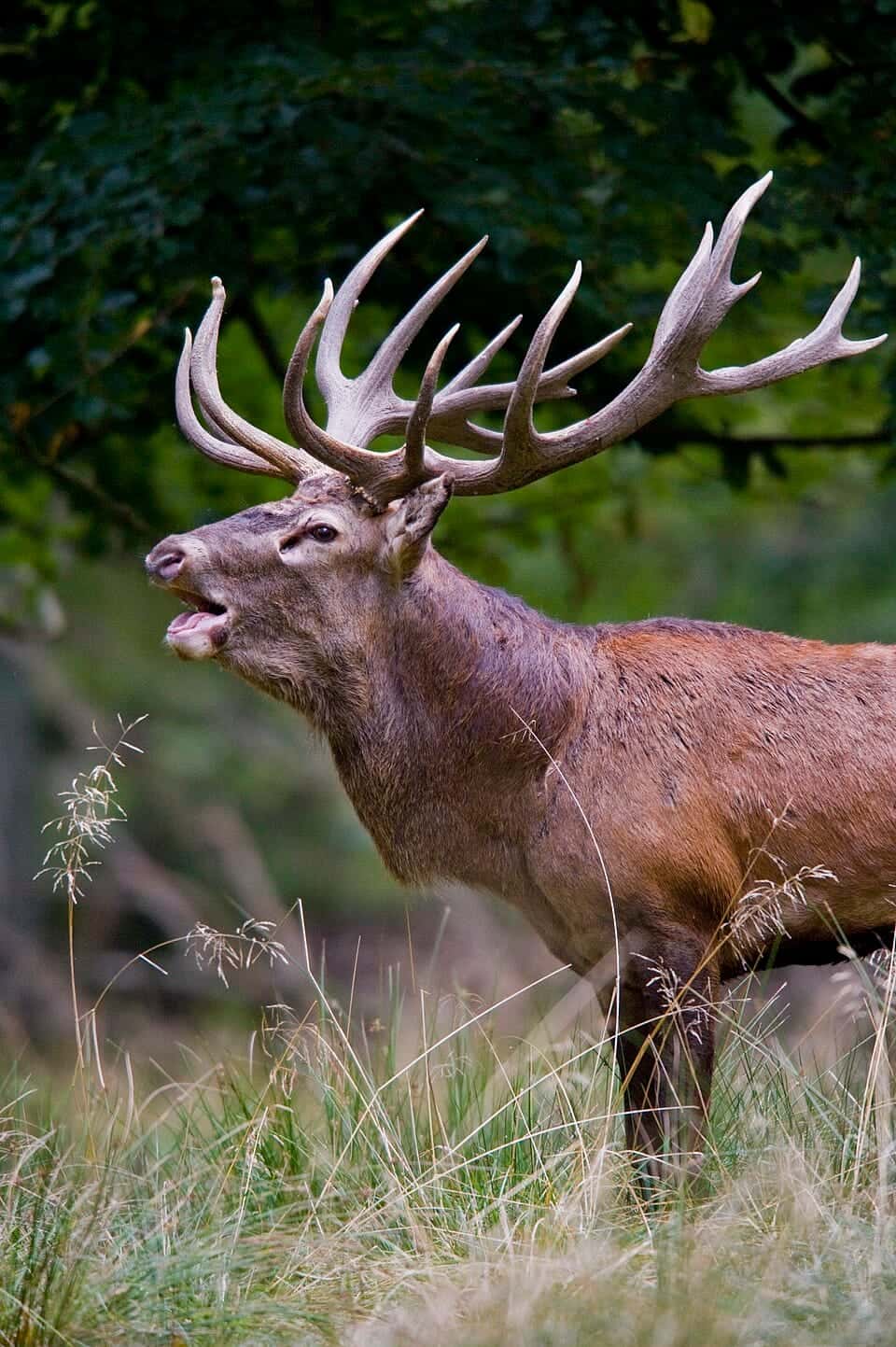
What Is the Loud, Eerie Call Echoing Through the Hills in Fall? Identifying the Elk Bugle and the Autumn Rut

A wild, high-pitched scream rising to a squeal and ending in deep grunts carries across a mountain meadow at dawn — a sound that seems too strange to come from a large animal. That is a bull elk bugling, the signature sound of the fall rut that runs from September into October. Here is how to recognize the bugle, understand the behavior behind it, and watch the spectacle safely.

·6 min readRead →
GuideRhododendrites / Wikimedia Commons (CC BY-SA 4.0)

What Is the Little Yellowish Bird Passing Through in Fall? Identifying Confusing Fall Warblers

Small, restless, greenish-yellow birds are flitting through the treetops and shrubs in September, and none of them seem to match the bright pictures in the guide. Those are fall warblers — mostly drab young birds and worn adults on their way south — and even expert birders call them confusing. Here is a beginner-friendly way to make sense of the fall warbler wave.

·6 min readRead →
GuideUSDA photo by Scott Bauer / Wikimedia Commons (Public domain)

What Stripped the Bark Off My Young Tree in Fall? Identifying Buck Rubs and the Deer Rut

You find a sapling with the bark shredded and scraped away on one side, bright bare wood showing, and maybe some snapped branches nearby. In fall, the usual culprit is a buck rub — a male deer polishing his antlers and marking territory as the rut begins. Here is how to recognize a buck rub, tell it from other tree damage, and protect vulnerable young trees.

·5 min readRead →
GuideBecky Matsubara from El Sobrante, California / Wikimedia Commons (CC BY 2.0)

What Is the Big Hawk on the Fence Post or Soaring Over the Highway? Identifying the Red-Tailed Hawk

A large, broad-winged hawk perched on a roadside pole, a bare branch, or a fence post — or wheeling in slow circles high over the fields — is one of the most common sights of early fall. More often than not it is a red-tailed hawk, the most widespread big hawk in North America and the one whose piercing scream Hollywood dubs over every eagle on screen. Here is how to identify it and tell it from the other raptors sharing the autumn sky.

·6 min readRead →
GuideGreg Hume / Wikimedia Commons (CC BY-SA 3.0)

What Is the Owl I Hear Hooting at Night? Identifying Common Owls by Their Calls

On cool fall nights the woods and even the suburbs come alive with hooting, and most people never see the birds making the sound. Owls grow noticeably more vocal in autumn as young birds disperse and the big species begin claiming territories for winter nesting. Here is how to identify the most common backyard and woodland owls by their calls — from the classic hoot to a spooky wavering whinny.

·6 min readRead →
GuideKENPEI / Wikimedia Commons (CC BY-SA 3.0)

What Is the Shrub With Silvery Leaves and Speckled Red Berries? Identifying Autumn Olive

A scrubby shrub along a field edge, old fencerow, or roadside is suddenly loaded with small red berries flecked with tiny silver dots, and its leaves flash silvery-white underneath in the breeze. That is almost certainly autumn olive — a fast-spreading invasive shrub that fruits heavily in September and October. Here is how to identify it and why land managers treat it as a problem.

·5 min readRead →
GuideCody Hough / Wikimedia Commons (CC BY-SA 3.0)

What Is the Yellow-and-Black Beetle on My Goldenrod? Identifying the Locust Borer

You lean in to admire a patch of blooming goldenrod on a crisp early-fall morning and spot what looks like a slim wasp working the flowers — jet black with bright yellow bands and long, waving antennae. It is not a wasp at all. It is the locust borer, a longhorned beetle that shows up on goldenrod like clockwork in late summer and fall to feed on pollen. Here is how to recognize it and why it is on your flowers.

·5 min readRead →
GuideJean-Pol GRANDMONT / Wikimedia Commons (CC BY 3.0)

What Are the Clouds of Orange Butterflies? Identifying the Painted Lady

Some falls you see the odd orange butterfly and think "monarch." Other years the orange butterflies come by the thousands — streaming across roads, covering flower beds, bouncing off windshields — and they are moving too fast and too erratically to be monarchs. Often these are painted ladies, one of the most widespread butterflies in the world, on one of their unpredictable mass migrations. Here is how to tell a painted lady from a monarch.

·6 min readRead →
GuideCephas / Wikimedia Commons (CC BY-SA 3.0)

What Is the Sparrow With a White Throat and Yellow Spot? Identifying the White-Throated Sparrow

A new brown bird turns up under your feeder in fall, scratching through the leaf litter with a two-footed backward hop. Look closely and you see a crisp white throat patch, bold black-and-white (or tan) head stripes, and a small dab of yellow right in front of each eye. This is the white-throated sparrow, one of fall's most reliable arrivals across much of the country. Here is how to identify it and separate it from other backyard sparrows.

·6 min readRead →
ComparisonCephas / Wikimedia Commons (CC BY-SA 4.0)

Downy or Hairy Woodpecker? How to Tell the Two Look-Alike Feeder Birds Apart

A small black-and-white woodpecker lands on your suet feeder, and you are sure you know what it is — until a nearly identical but noticeably bigger one shows up and you realize there are two of them. The downy and hairy woodpecker are the classic "same bird in two sizes" puzzle of backyard birding across North America, and fall and winter, when both crowd the feeders, is prime time to sort them out. Here is how to tell a downy from a hairy woodpecker with confidence.

·6 min readRead →
GuideRandy Everette / Wikimedia Commons (CC BY-SA 3.0)

What Is the Tree With Mitten-Shaped Leaves? Identifying Sassafras

You pick up a fallen leaf on a fall walk and stop: it is shaped exactly like a mitten, with a rounded palm and a single "thumb" sticking off one side. Look up into the same tree and you find three completely different leaf shapes — mittens, oval leaves, and leaves with two thumbs like a ghost — all growing together, turning brilliant orange and scarlet. This is sassafras, one of the easiest and most delightful native trees to learn. Here is how to identify it.

·6 min readRead →
GuideBeatriz Moisset / Wikimedia Commons (CC BY-SA 4.0)

What Is the Round Ball on My Goldenrod Stem? Identifying the Goldenrod Gall Fly

Walking through a fall field full of blooming goldenrod, you notice something odd: many of the stems have a smooth, round ball swelling out of the middle, like a golf ball the plant swallowed. The stem grows right through it. These are goldenrod ball galls, and each one is a tiny nursery built by a fly. Here is what makes them, how to recognize them, and why they are one of the best small nature mysteries of autumn.

·5 min readRead →
GuideScott Bauer, USDA / Wikimedia Commons (Public domain)

What Is the Tropical-Tasting Fruit Growing Wild in the Woods? Pawpaw

On a late-summer walk along a shady creek you spot them: fat, green, mango-shaped fruits hanging in small clusters from a cluster of slender understory trees with big, drooping, tropical-looking leaves. They seem wildly out of place in a temperate woodland, more like something from the jungle than a North American forest. This is the pawpaw, the largest edible fruit native to the United States, and early fall is exactly when it ripens. Here is how to identify a pawpaw tree by its leaves, growth habit, and unmistakable fruit — and the safety notes to know before you touch it.

·6 min readRead →
GuidePeterwchen / Wikimedia Commons (CC BY-SA 4.0)

What Is the Small Orange Fruit on the Tree in Fall? American Persimmon

In fall you notice them on a bare-branching tree at the edge of a field or roadside: small, round, orange fruits the size of a cherry tomato or plum, often clinging to the twigs after the leaves have dropped. Underfoot are the squishy, fallen ones. This is the American persimmon, a native tree famous for fruit that is mouth-puckeringly astringent until it is fully soft and ripe. Here is how to identify an American persimmon by its blocky bark, leaves, and distinctive fruit — and the safety notes to know.

·6 min readRead →
GuideLuc Viatour / Wikimedia Commons (CC BY-SA 3.0)

What Is the Tan Foam Lump on a Plant Stem? Praying Mantis Egg Case

While cutting back the garden or walking a brushy field in fall, you find it: a hardened, tan, foam-like lump about an inch or two long, firmly wrapped around a woody stem or stuck to a fence. It looks like a blob of dried spray-foam insulation or papier-mâché. This is an ootheca — the egg case of a praying mantis, laid in fall to overwinter and hatch out dozens to hundreds of tiny mantises in spring. Here is how to identify a mantis egg case, tell the species apart, and what to do if you find one.

·5 min readRead →
GuideRhododendrites / Wikimedia Commons (CC BY-SA 4.0)

What Are the Neat Rows of Holes in My Tree Bark? Yellow-Bellied Sapsucker

You notice it on a favorite tree in the yard — tidy horizontal rows of small, evenly spaced holes drilled into the bark, sometimes wrapping the trunk in neat bands, sometimes beading with sap. It looks deliberate, almost man-made, and it can be alarming to see on a tree you care about. The culprit is not a bug or a disease but a bird: the yellow-bellied sapsucker, a migratory woodpecker that drills orderly wells to feed on sap. Here is how to recognize sapsucker damage, tell the bird from other woodpeckers, and know whether your tree is in real trouble.

·6 min readRead →
GuideFamartin / Wikimedia Commons (CC BY-SA 4.0)

What Are the Nuts Falling From the Shaggy-Barked Tree? Shagbark Hickory

Something is thudding onto the driveway in early fall: hard, round nuts in a thick green-to-brown husk that splits into four neat sections and drops a pale, ridged nut inside. Look up and the tree is unmistakable — a tall hardwood whose gray bark peels away in long, curling plates, as if it is shedding. That is a shagbark hickory, one of the easiest native trees to recognize once you know the bark. Here is how to identify a shagbark hickory by its bark, leaves, and distinctive nuts, and how to tell it from walnuts and other lookalikes.

·6 min readRead →
GuideSage Ross / Wikimedia Commons (CC BY-SA 3.0)

What Is the White, Ghostly Plant With No Leaves? Indian Pipe (Ghost Plant)

On the shady forest floor you find something that stops you: a small cluster of waxy, pure-white stems, each nodding a single flower like a tiny bowed pipe, with no green anywhere on the plant. It looks less like a plant than a small waxwork or a mushroom pretending to be a flower. This is Indian pipe, also called ghost plant — a real flowering plant that has given up chlorophyll entirely and lives off a hidden underground network. Here is how to identify it and the strange biology behind its ghostly color.

·6 min readRead →
GuideHappiestFish / Wikimedia Commons (CC BY 4.0)

What Are the Tall Gray Birds Flying High and Rattling Overhead? Sandhill Crane Migration

You hear them before you ever find them: a wild, rolling rattle rolling down out of a clear fall sky. When you finally spot the source, it is a ragged line of huge, long-necked gray birds flying very high, necks and legs stretched straight out, riding the wind south. These are sandhill cranes, and their autumn migration is one of the great sounds and sights of fall across much of North America. Here is how to identify a sandhill crane, why that bugling call carries for miles, and where and when to catch the migration overhead.

·6 min readRead →
GuideReddishClover / Wikimedia Commons (CC BY-SA 4.0)

What Is the Mushroom With a Spongy Underside Instead of Gills? Meet the Boletes

You turn over a fat, meaty mushroom you found under the oaks after a fall rain, expecting the usual paper-thin gills — and instead the underside looks like a pale sponge, dimpled with hundreds of tiny holes. That spongy layer of pores is the signature of a whole family of mushrooms called boletes, which include the prized porcini as well as plenty of bitter, inedible, and a few genuinely toxic relatives. Here is how to recognize a bolete, what makes this group so distinctive, and the safety rules that matter before you ever think about one on your plate.

·6 min readRead →
GuideBill Summers. USDA SCS. 1991. Southern wetland flora: Field office guide to plant species. South National Technical Center, Fort Worth. Courtesy of USDA NRCS Wetland Science Institute. / Wikimedia Commons (Public domain)

Wild Grapes or a Toxic Lookalike? How to Tell Grapes From Moonseed

A wild vine draped over the fencerow is hung with clusters of small, round, dark-purple fruit that look exactly like little grapes. Wild grapes are a familiar native vine — but they have a dangerous impostor. Common moonseed is a woody vine that produces nearly identical-looking dark fruit in fall and is highly toxic, even potentially fatal, if eaten. Here is how to tell a wild grape vine from moonseed and other grape lookalikes, and why this is one plant ID where getting it right genuinely matters.

·6 min readRead →
GuideMothore / Wikimedia Commons (CC BY-SA 3.0)

Why Are Tarantulas Suddenly Crossing the Road in Fall? The Male Mating Walk

On a warm fall evening on a back road through prairie or desert, your headlights catch a big, dark, hairy spider the size of your palm walking deliberately across the pavement — and then another, and another. It looks like an eerie invasion, and every autumn it makes the news as a tarantula "migration." It is not really a migration at all: these are lovesick males, out of their burrows for the one big walk of their lives, searching for a mate. Here is how to identify a wandering tarantula, why they are on the move, and why the gentle giants are almost nothing to fear.

·6 min readRead →
GuideRichard Bartz, Munich aka Makro Freak / Wikimedia Commons (CC BY-SA 2.5)

Why Are Yellowjackets Suddenly So Aggressive in Late Summer?

All summer the wasps mostly ignored you. Then, right around Labor Day, they seem to turn mean: dive-bombing the picnic table, crawling into your soda can, and stinging with almost no provocation. It is not your imagination — yellowjackets really do get bolder and more short-tempered in late summer and fall, and there is a clear reason rooted in the life cycle of the colony. Here is what is going on, how to identify a yellowjacket, and how to share the last weeks of the season without getting stung.

·5 min readRead →
GuideAyotte, Gilles, 1948- / Wikimedia Commons (CC BY-SA 4.0)

Why Do Leaves Change Color in Fall — and How to Identify Trees by Their Color?

Every autumn the hills catch fire with red, orange, and gold, and it is easy to forget how strange it is: where do those colors come from, and why now? The answer is a tidy bit of tree chemistry — and the colors themselves are a clue to what kind of tree you are looking at, since different species turn different shades. Here is why leaves change color in fall, what makes some years more brilliant than others, and how to use fall color to help identify the trees around you.

·6 min readRead →
GuideDaniel.fox123 / Wikimedia Commons (CC BY 4.0)

Why Are There Suddenly So Many Spiders in My House This Fall?

Every September it seems to happen overnight: big spiders appear on the wall, sprint across the floor at night, or hang in a corner where there was nothing yesterday. It feels like an invasion, and plenty of people assume the spiders are pouring in from the cold. The truth is stranger and a lot less alarming — most of them have been living with you all along, and the ones you are suddenly seeing are lovesick males out looking for a mate. Here is what is really going on during "spider season," how to identify the usual suspects, and why almost none of them are worth worrying about.

·6 min readRead →
GuideKatja Schulz from Washington, D. C., USA / Wikimedia Commons (CC BY 2.0)

What Are the Sudden Swarms of Flying Ants? Nuptial Flights Explained

On a warm, humid afternoon in late summer the air is suddenly full of winged ants — pouring out of a sidewalk crack, swirling around the yard, clinging to the side of the house, or piling up on a windowsill by the hundreds. A day later they are gone and the ground is littered with shed wings. It looks like an infestation, but it is actually a wedding: the brief, once-a-year mating flight of an ant colony. Here is how to identify flying ants, how to tell them from termites, and why the swarm is nothing to fear.

·5 min readRead →
GuideAdam Jackson / Wikimedia Commons (CC0)

What Are the Birds Pouring Into a Chimney at Dusk? Chimney Swifts

On an early-fall evening you notice a swirling cloud of small birds gathering over a rooftop as the light fades — hundreds of them, wheeling in a tightening vortex above an old chimney. Then, a few at a time and finally in a rush, they funnel down into the chimney and disappear, until the sky is empty. It is one of the most magical wildlife spectacles in any town, and the birds are chimney swifts staging for migration. Here is how to identify them and where to catch the show.

·6 min readRead →
GuideJeffreyGammon / Wikimedia Commons (CC BY 4.0)

What Are the Rivers of Dragonflies Streaming Across the Sky? Green Darner Migration

On a warm September afternoon you notice dragonflies everywhere — not one or two patrolling the garden, but dozens or hundreds all drifting the same direction, low over a field, a beach, or a parking lot, in a loose, restless river of wings. They are not lost or swarming a hatch; they are on the move. Most are common green darners, one of the few dragonflies in North America that truly migrates, funneling south by the thousands each fall much like monarchs and hawks. Here is how to recognize the darner and the spectacle it makes.

·6 min readRead →
GuideBrian Gratwicke / Wikimedia Commons (CC BY 2.0)

What Is the Tiny Bright-Orange "Lizard" on the Trail? Identifying the Red Eft

After a fall rain you spot it on the wet trail: a small, brilliant orange creature, no longer than your finger, walking slowly and boldly across the open path in broad daylight. It looks like a tiny lizard, but it is soft-skinned and utterly unafraid — because it is not a lizard at all. It is the red eft, the land-walking teenage stage of the eastern newt, and its shocking color is a warning. Here is how to identify it, why it is so brazen, and why you should look but not lick.

·6 min readRead →
GuideUSFWS Mountain-Prairie / Wikimedia Commons (Public domain)

Why Are the Geese Flying in a V and Honking Overhead? Canada Goose Migration

On a crisp fall day you hear it before you see it — a rising chorus of honks — and look up to find a ragged V of big, long-necked geese pushing across the sky. It is one of the most familiar signs that the seasons are turning. But why the V, why all the honking, and are these the geese that never leave the local pond or true long-distance migrants? Here is how to identify Canada geese and read the story written in their flight.

·5 min readRead →
GuideOriginal uploader was JulieFromVT (Julie Waters) at en.wikipedia / Wikimedia Commons (CC BY-SA 3.0)

What Are the Hundreds of Hawks Circling in a Tornado? Broad-Winged Hawk Migration

On a clear September afternoon you look up and the sky is full of hawks — not one or two, but dozens or even hundreds, spiraling together in a slow, swirling column that looks like a tornado of birds. They rise on the spiral, then peel off and stream south in a long river. This is a "kettle," and most of the birds are broad-winged hawks on one of the great migrations of North America, funneling south by the thousands in a two-week window each fall. Here is how to recognize it and where to watch.

·6 min readRead →
GuideWikimedia Commons / Wikimedia Commons (Public domain)

Why Is My Lawn Turning Brown Overnight? Identifying Fall Armyworms

Your lawn looked fine a few days ago, and now a brown patch is spreading across it fast — sometimes seeming to march in a line, eating the green as it goes. Look closely in the thinning grass at dawn or dusk and you may find the culprit: small striped caterpillars with a pale upside-down "Y" on their heads, chewing the blades down to the ground. Those are fall armyworms, and a heavy infestation can brown out a lawn in just a couple of days. Here is how to identify them and tell their damage from ordinary drought stress.

·6 min readRead →
GuideSten Porse / Wikimedia Commons (CC BY-SA 3.0)

What Is the Cloud of Tiny White Flowers at the Woods’ Edge? Identifying White Snakeroot

In late summer and fall, the shady edge of the woods lights up with frothy, flat-topped clusters of tiny bright-white flowers on a bushy, waist-high plant. It thrives in exactly the shade where few other flowers bloom this late, glowing against the dark understory. That is white snakeroot — a native wildflower with a notorious history: its toxin once passed through cows’ milk and killed thousands of settlers, in what was called "milk sickness." Here is how to identify it and why it deserves respect.

·6 min readRead →
Guide(c) Alison Northup, some rights reserved (CC BY) / Wikimedia Commons (CC BY 4.0)

What Is the White Icicle-Like Mushroom Growing on a Tree? Identifying Lion’s Mane

On a fall walk you spot a bright white lump on the side of a tree trunk or a fallen log — a cascade of soft, dangling spines that looks like a frozen waterfall, a shaggy pom-pom, or a clump of icicles clinging to the bark. It stands out because almost nothing else in the woods is that pure white. That is lion’s mane, one of the most distinctive and beginner-friendly mushrooms in North America. Here is how to identify it, what it grows on, and how to tell it from its close cousins.

·6 min readRead →
GuideAmos Oliver Doyle / Wikimedia Commons (CC BY-SA 4.0)

What Are the Pods Bursting Open With Silky White Seeds? Identifying Milkweed

In late summer and fall, a roadside or garden plant is hung with plump, teardrop-shaped green pods — and one by one they split along a seam and spill out a cloud of brown seeds, each riding a tuft of silky white floss that drifts away on the wind. It is one of the most recognizable sights of the season, and it is milkweed, the single most important plant for monarch butterflies. Here is how to identify it and why those pods matter.

·6 min readRead →
GuideCharles J. Sharp / Wikimedia Commons (CC BY-SA 4.0)

What Are the Huge Flocks of Black Birds Swirling in Fall? Starlings, Grackles, and Blackbirds

In late summer and fall, enormous flocks of dark birds gather over fields, roll across the sky like drifting smoke, and pour into trees and marshes at dusk in noisy, chattering masses. Sometimes they wheel and swirl in shifting shapes — a murmuration — before dropping down to roost. They are usually European starlings, common grackles, red-winged blackbirds, and cowbirds, often mixed together. Here is how to tell the common black birds apart and why they flock.

·6 min readRead →
GuideUnknown authorUnknown author / Wikimedia Commons (Public domain)

What Are the Little Bags Hanging on My Evergreen? Identifying Bagworms

Your arborvitae, juniper, spruce, or cedar is dotted with dozens of small, spindle-shaped bags — an inch or two long, wrapped in bits of the plant’s own needles and twigs, dangling from the branches like tiny pinecones or ornaments. Up close each one seems to be made of the tree itself, and by late summer some are hanging by a thread of silk. Those are bagworms, the caterpillars of a small moth, and the bags are their portable cases. Here is how to identify them and why they matter.

·6 min readRead →
GuideWikimedia Commons / Wikimedia Commons (Public domain)

What Is the Vine With Orange-and-Red Berries in Fall? Identifying Oriental Bittersweet

In fall, a woody vine climbs a fence, a tree, or a roadside thicket and lights up with clusters of berries — yellow-orange capsules that split open to reveal a scarlet-red seed inside. It looks gorgeous and turns up in wreaths and decorations, but across much of the country it is Oriental bittersweet, an aggressive invasive vine that strangles trees. Here is how to identify it, tell it from the native American bittersweet, and why it matters.

·6 min readRead →
ComparisonCharles J. Sharp / Wikimedia Commons (CC BY-SA 4.0)

Turkey Vulture or Black Vulture? How to Tell the Two Soaring Scavengers Apart

A big dark bird circles high overhead on broad wings, tilting and rocking as it rides the wind without a flap. Across much of the country it is one of two scavengers — the turkey vulture or the black vulture — and in fall they gather and soar in large kettles that draw everyone’s eyes upward. They look alike from the ground, but their flight, wing pattern, and head give them away. Here is how to tell them apart.

·6 min readRead →
GuideKatya from Moscow, Russia / Wikimedia Commons (CC BY-SA 2.0)

What Is the Shrub With Fuzzy Red Cone-Shaped Clusters? Identifying Staghorn Sumac

Along a roadside, a fence line, or the sunny edge of a field in late summer, a spreading shrub or small tree holds up dozens of dense, upright, cone-shaped clusters of fuzzy deep-red berries, above long fern-like leaves just starting to blaze scarlet. Its branches are covered in soft velvety hairs like a deer’s antlers. That is staghorn sumac — and despite the alarming name it shares with poison sumac, it is a harmless native. Here is how to identify it and tell it apart from the poison sumac people fear.

·6 min readRead →
GuideBigredwine1 / Wikimedia Commons (CC BY-SA 4.0)

What Is the Tall Shaggy White Mushroom That Melts Into Black Ink? Identifying the Shaggy Mane

Overnight, a row of tall white mushrooms pushes up through your lawn, a gravel driveway edge, or a disturbed roadside — each one a shaggy, cylindrical, scaly column like a half-furled umbrella. By the next day the caps are dripping and dissolving into an inky black goo. That is the shaggy mane, one of the most distinctive and self-destructing fungi of late summer and fall. Here is how to identify it and why it turns to ink.

·5 min readRead →
GuideRhododendrites / Wikimedia Commons (CC BY-SA 4.0)

What Is the Giant Black Wasp on My Flowers in Late Summer? Identifying the Great Black Wasp

On a patch of mountain mint, goldenrod, or milkweed in late summer, a big, glossy, all-black wasp over an inch long works the flowers with a low hum, its smoky blue-black wings glinting in the sun. It looks intimidating, but it is a solitary, docile flower-visitor with no interest in you. That is very likely the great black wasp. Here is how to identify it, tell it from other big black wasps, and why it is a gardener’s friend.

·5 min readRead →
GuideFritz Geller-Grimm / Wikimedia Commons (CC BY-SA 2.5)

What Is the Orange Flower With Exploding Seed Pods? Identifying Jewelweed (Spotted Touch-Me-Not)

Along a shady stream bank, a wet ditch, or the damp edge of the woods in late summer, a patch of tall, juicy-stemmed plants dangles dozens of small, orange, cornucopia-shaped flowers spotted with reddish-brown — and if you brush a ripe seed pod, it bursts and flings its seeds several feet. That is jewelweed, also called spotted touch-me-not, one of the signature wildflowers of late summer. Here is how to identify it, why its pods explode, and the folklore about its sap.

·6 min readRead →
GuideDidier Descouens / Wikimedia Commons (CC BY-SA 4.0)

What Is the Big Brown Bug With Flat, Leaf-Like Legs? Identifying Leaf-Footed Bugs

A large, narrow brown bug about an inch long turns up on the sunny side of the house, on a window screen, or on your tomato plants in late summer and fall — and its back legs have odd little flattened, leaf-shaped flares. That is a leaf-footed bug, and in much of the country the one crawling inside come autumn is the western conifer seed bug. Here is how to identify it, tell it from a stink bug or a kissing bug, and why it shows up now.

·5 min readRead →
GuideAndy Reago & Chrissy McClarren / Wikimedia Commons (CC BY 2.0)

What Are the Birds Swirling Overhead at Dusk in Late August? Understanding Nighthawk Migration

On a warm evening in late August or early September, you look up and see dozens — sometimes hundreds — of slim, long-winged birds wheeling and darting high overhead, flashing white patches near their wingtips as they drift south. Those are common nighthawks on the move, and their loose evening flocks are one of the first great spectacles of fall migration. Here is how to identify them and why they gather now.

·5 min readRead →
GuideUser:Kilom691 / Wikimedia Commons (Public domain)

What Are the Shiny Brown Nuts Falling From My Tree? Identifying Buckeyes and Horse Chestnuts

Late summer and early fall bring a scatter of split husks and glossy, mahogany-brown nuts across the sidewalk under a big shade tree — each one so smooth and rich in color it looks polished. Those are buckeyes or horse chestnuts, close cousins that drop their fruit right about now. Here is how to identify the tree, tell a buckeye from a horse chestnut, and why these handsome nuts are one wild find you should admire but never eat.

·6 min readRead →
GuideStu's Images / Wikimedia Commons (CC BY-SA 3.0)

What Are the Clustered Mushrooms at the Base of My Tree? Identifying Honey Mushrooms

A dense clump of honey-colored mushrooms erupting from the base of a tree, a stump, or a buried root in fall — dozens of caps crowded together on stems that fuse at the bottom — is one of the classic autumn fungi. That is very likely a honey mushroom, a wood-rotting fungus that fruits as the weather cools. Here is how to identify one, why its appearance can be a warning sign for the tree, and the safety cautions that matter.

·6 min readRead →
GuideBjörn S... / Wikimedia Commons (CC BY-SA 2.0)

What Is the White Powdery Coating on My Plant Leaves? Identifying Powdery Mildew

A dusty white or gray film spreading across the leaves of squash, zinnias, phlox, or lilac in late summer — looking almost as if someone dusted the plant with flour — is one of the most common questions gardeners have this time of year. That is powdery mildew, a fungal disease that thrives in the warm days and humid nights of late summer. Here is how to identify it, why it shows up now, and what it means for your plants.

·5 min readRead →
GuideWill Brown / Wikimedia Commons (CC BY 2.0)

What Is the Big Black Snake in My Yard? Identifying Rat Snakes and Black Racers

A long, glossy black snake stretched across the patio, climbing a shed wall, or vanishing into the woodpile is one of the most common — and most alarming — reptile sightings of late summer, right as this year’s hatchlings start turning up. The good news is that the big black snake in most yards is a harmless rat snake or black racer, not something to fear. Here is how to tell the two apart, separate them from the venomous snakes people worry about, and understand why a black snake around the yard is usually a sign of good pest control at work.

·6 min readRead →
GuideDidier Descouens / Wikimedia Commons (CC BY-SA 4.0)

What Is the Giant Insect With Huge Pincers at My Porch Light? Identifying the Dobsonfly

On a warm late-summer night a huge, prehistoric-looking insect thumps against the porch light — several inches long, with soft gray wings folded over its back and a pair of enormous, curved pincers on the male that look like they belong on a beetle three times the size. It looks like something that should be dangerous, but the eastern dobsonfly is one of the more harmless giants in the insect world. Here is how to identify it, why it turns up at lights this time of year, and whether those alarming jaws can actually hurt you.

·5 min readRead →
GuideJerzy Opioła / Wikimedia Commons (CC BY-SA 3.0)

What Is the Colorful Layered Bracket Fungus on the Log? Identifying Turkey Tail

Fan-shaped, tightly-layered brackets covered in concentric rings of brown, tan, rust, blue-gray, and cream — arranged in rosettes along a fallen log or stump — are one of the most recognizable fungi of fall woods walks. That is turkey tail, a common wood-decay mushroom that genuinely resembles a wild turkey’s fanned tail. Here is how to identify it, tell it from the "false turkey tail" and other look-alikes using the one feature that matters, and understand the role it plays in the forest.

·6 min readRead →
GuideJörg Hempel / Wikimedia Commons (CC BY-SA 3.0 de)

What Is the Foul-Smelling Mushroom in My Mulch? Identifying Stinkhorns

You catch a whiff of something like rotting meat or dog waste in the garden, follow your nose, and find a slimy, horn-shaped mushroom jutting out of the mulch — sometimes with flies crawling all over its dark, gooey tip. That is a stinkhorn, one of the strangest and smelliest fungi to appear in a yard, especially in the warm, wet stretches of late summer and early fall. Here is how to identify one, why it smells so bad on purpose, and whether you need to do anything about it.

·5 min readRead →
GuideAlvesgaspar / Wikimedia Commons (CC BY-SA 3.0)

What Are the Slow Flies Clustering at My Windows in Fall? Identifying Cluster Flies

As the weather cools, sluggish, dark flies start showing up at sunny windows and in upstairs rooms, bumping the glass and clustering in corners — bigger and slower than a housefly, and appearing indoors even when there is no food or garbage around. Those are cluster flies, one of the most common fall home invaders. Here is how to tell them from ordinary houseflies, why they crowd into your walls this time of year, and what actually keeps them out.

·5 min readRead →
GuideFamartin / Wikimedia Commons (CC BY-SA 4.0)

What Are the Spiky Brown Balls Falling From My Tree? Identifying Sweetgum

They roll into the driveway, turn up all over the lawn, and are painful to step on barefoot: hard, woody, spiky brown balls about the size of a golf ball, littering the ground under a tall shade tree. Those "gumballs" come from the American sweetgum, and while they are a genuine nuisance to clean up, the tree itself is a striking native with brilliant fall color. Here is how to identify a sweetgum, what those spiky balls actually are, and what you can and cannot do about them.

·5 min readRead →
GuideWikimedia Commons / Wikimedia Commons (CC BY-SA 3.0)

What Are the Green, Brain-Like Fruits Falling From a Tree? Identifying Osage Orange (Hedge Apples)

Every fall they turn up along old fence lines and back roads: heavy, grapefruit-sized fruits with a bumpy, yellow-green, brain-like surface, thudding to the ground and rolling into the ditch. People call them hedge apples, hedge balls, monkey brains, or horse apples, and they come from the Osage orange tree. Here is how to identify the tree and its strange fruit, why it exists at all, and the truth about using hedge apples to repel spiders and bugs.

·5 min readRead →
GuideLukas from London, England / Wikimedia Commons (CC BY-SA 2.0)

What Is the Big Frilly Mushroom at the Base of My Oak Tree? Identifying Hen of the Woods

In early fall a large, ruffled, grayish-brown mass appears at the foot of an old oak, made of dozens of overlapping fan-shaped caps clustered like the feathers of a fluffed-up hen. That is hen of the woods, also called maitake, one of the most sought-after fall mushrooms in North America. Here is how to recognize it, why it keeps coming back to the same tree, and the safety facts that matter more than any photo match.

·5 min readRead →
GuideSKsiddhartthan / Wikimedia Commons (CC BY-SA 4.0)

What Are the Tiny White Flying Fuzz Bugs Drifting Through the Air? Identifying Woolly Aphids

On a still, warm afternoon in late summer and fall, the air fills with tiny drifting white specks that look like floating lint, bits of fluff, or slow-motion snow. Look closely and each one is a tiny insect trailing a cottony white tail. Those are woolly aphids, sometimes called "fairy flies" or "angel bugs," and they show up in a big way this time of year. Here is how to identify them, why they suddenly appear, and whether they are anything to worry about.

·4 min readRead →
GuideThe Cosmonaut / Wikimedia Commons (CC BY-SA 2.5 ca)

What Is the Purple Daisy-Like Wildflower Blooming in Fall? Identifying Asters

Just as summer winds down, roadsides and meadows fill with clouds of small purple, violet, and lavender daisy-like flowers with sunny yellow centers — often growing right alongside golden goldenrod. Those are asters, one of the last great wildflower shows of the year and a lifeline for late-season pollinators. Here is how to identify them, tell them from other fall bloomers, and why they matter so much to migrating monarchs and bees.

·5 min readRead →
GuideIvar Leidus / Wikimedia Commons (CC BY-SA 4.0)

Why Are There So Many Acorns This Year? Understanding Oak Mast Years

Some autumns the oaks unload: acorns raining down and blanketing the lawn, driveway, and deck, crunching underfoot everywhere you walk. Then a couple of years later you can barely find one. That boom-and-bust cycle is called masting, and it is one of the more remarkable coordinated events in the plant world. Here is what a mast year is, why it happens, and whether a bumper acorn crop really predicts a hard winter.

·5 min readRead →
GuideThegreenj / Wikimedia Commons (CC BY-SA 3.0)

What Is the Humpbacked, Spider-Like Cricket in My Basement? Identifying Camel Crickets

You flip on the basement light and something the size of a quarter springs straight at you on long, spidery legs. It has no wings, a hunched back, and enormous antennae — and it seems to leap toward you on purpose. That startling jumper is a camel cricket (also called a spider cricket or cave cricket), and it turns up indoors by the dozen every fall. Here is how to identify it, why it moves into basements now, and why it is harmless.

·5 min readRead →
GuideWikimedia Commons / Wikimedia Commons (Public domain)

What Are the Green Balls Falling From My Tree and Staining Everything? Identifying Black Walnut

Every late summer they start dropping: heavy green balls the size of a golf ball or small tennis ball, thudding onto the lawn, the driveway, and the roof of the car — and leaving dark stains wherever they rot. That messy fruit is almost always a black walnut. Here is how to identify the tree, why the husks stain everything they touch, and what to know before you handle them.

·5 min readRead →
GuideNo machine-readable author provided. Taka assumed (based on copyright claims). / Wikimedia Commons (CC BY-SA 3.0)

What Is the Weed With Big White Trumpet Flowers and Spiky Seed Pods? Identifying Jimsonweed

It shows up in disturbed ground, garden edges, and field margins in late summer: a coarse, rank-smelling weed with dramatic white or pale-purple trumpet flowers that open in the evening, followed by egg-shaped seed pods covered in sharp spines. That is jimsonweed — a strikingly pretty plant that also happens to be one of the more dangerously toxic weeds in North America. Here is how to identify it and why to keep your distance.

·5 min readRead →
GuideMason Brock (Masebrock) / Wikimedia Commons (Public domain)

What Is the Tall Pink-Purple Wildflower Buzzing With Butterflies in Late Summer? Identifying Joe-Pye Weed

In the fading weeks of summer, when most spring wildflowers are long gone, a towering plant lights up wet meadows, ditches, and garden borders with big dusty-rose domes of tiny flowers — and it is absolutely covered in butterflies and bees. That is very likely Joe-Pye weed, one of the most valuable late-season native wildflowers in eastern North America. Here is how to identify it and tell it from its vivid cousin, ironweed.

·5 min readRead →
ComparisonWilfredor / Wikimedia Commons (CC0)

Ladybug or Asian Lady Beetle? How to Tell the Native Beetle From the Fall Home Invader

Every autumn the same question fills inboxes and search bars: why are there suddenly hundreds of "ladybugs" clustering on the sunny side of the house, creeping in around the windows? The good news is they are not really the ladybug most people picture. They are Asian lady beetles, and once you know the differences you can tell the native charmers from the fall invaders at a glance.

·6 min readRead →
GuideDidier Descouens / Wikimedia Commons (CC BY-SA 4.0)

Is a Daddy Longlegs a Spider? Identifying the Harvestman (and the Venom Myth)

By late summer they are everywhere — clusters of round-bodied, impossibly long-legged creatures on shady walls, fence posts, and woodpiles. Almost everyone calls them daddy longlegs and repeats the same rumor: that they are the most venomous spider alive, saved only by fangs too small to bite. Nearly all of that is wrong, starting with the word "spider." Here is what a harvestman actually is.

·6 min readRead →
ComparisonLinnaeus / Wikimedia Commons (CC BY-SA 3.0)

Is It Poison Ivy or Virginia Creeper? How to Tell the Harmless Five-Leaf Vine Apart

As the first vines start blushing red in late summer, a familiar worry returns: is that climbing plant on the fence poison ivy? Often it is not — it is Virginia creeper, a native look-alike that turns brilliant scarlet in early fall. The single most useful rule for telling them apart takes about two seconds to check. Here is how to read the leaves and stay out of trouble.

·6 min readRead →
GuideJudy Gallagher / Wikimedia Commons (CC BY 2.0)

What Are All the Funnel-Shaped Webs in My Lawn? Identifying Grass Spiders

You step outside on a cool, dewy morning and the whole lawn is suddenly stitched with flat, silvery sheets of webbing, each with a little funnel disappearing into the grass. It looks like it happened overnight — but the spiders have been there all summer. Here is what makes these funnel webs, why they blossom in late summer, and whether the spiders inside are anything to worry about.

·6 min readRead →
GuideAlan Rockefeller / Wikimedia Commons (CC BY 4.0)

Why Is There a Ring of Mushrooms in My Lawn? Understanding Fairy Rings

A near-perfect circle of mushrooms — or a ring of unusually dark green or dead grass — appears in the lawn after a wet spell, and it seems to grow a little wider every year. Folklore blamed dancing fairies; the real explanation is a single fungus living underground. Here is what a fairy ring actually is, why it forms a circle, and what to do about it.

·5 min readRead →
GuideGeorge Chernilevsky / Wikimedia Commons (CC BY 4.0)

What Is the Plant With Burs That Stick to Your Clothes? Identifying Cocklebur and Burdock

You come in from a walk covered in prickly little burs, or you spend an evening picking them out of the dog. Two late-summer weeds are usually behind it: cocklebur and burdock. Here is how to tell them apart, why their burs cling so stubbornly, and the surprising invention they inspired.

·5 min readRead →
GuideThomas Bresson / Wikimedia Commons (CC BY 2.0)

Why Are There Suddenly So Many Monarchs? Understanding the Great Fall Migration

For weeks you barely saw one, and now orange-and-black butterflies are drifting through the yard, gathering on flowers, and streaming south in loose numbers. This is not your imagination — it is the start of one of the most astonishing journeys in the natural world. Here is what is happening to the monarchs in late summer, and why the ones you are seeing now are special.

·6 min readRead →
GuideWikimedia Commons / Wikimedia Commons (CC BY 2.5)

What Is the Shrub With Drooping Clusters of Tiny Dark Berries? Identifying Elderberry

Along a roadside, fence line, or damp thicket in late summer, a tall shrub bends under flat sprays of tiny purple-black berries hanging from bright reddish stems. It is one of the most recognizable wild shrubs of August — and one of the most dangerous to confuse with its toxic look-alikes. Here is how to identify elderberry, and why caution matters.

·6 min readRead →
GuideRkitko / Wikimedia Commons (CC BY 3.0)

What Is the Big Grasshopper Eating My Garden? Identifying Grasshoppers (and the Toxic Lubber)

By late summer the grasshoppers are at their biggest and boldest — launching out of the grass with a rattle, chewing holes in the garden, and occasionally showing up as a slow, gaudy giant you have never seen before. Here is how to tell grasshoppers from their look-alikes, and which one you should not pick up.

·5 min readRead →
ComparisonMykola Swarnyk / Wikimedia Commons (CC BY-SA 3.0)

Is That a Cooper’s Hawk or a Sharp-Shinned Hawk? How to Tell the Backyard Bird-Hunters Apart

A gray-and-rust hawk drops out of nowhere, scatters every bird at your feeder, and lands in a nearby tree looking far too fierce for a suburban yard. Two nearly identical raptors — the Cooper’s hawk and the smaller sharp-shinned hawk — hunt songbirds at feeders across North America, and even experienced birders mix them up. Here is how to sort them out.

·6 min readRead →
GuideHolger Gröschl / Wikimedia Commons (CC BY-SA 2.0 de)

What Is the Giant Mosquito-Looking Bug on My Wall? Identifying the Harmless Crane Fly

A mosquito the size of a quarter is clinging to your wall or bumbling around the porch light, all impossibly long legs and clumsy flight. It looks like it could deliver a monster bite — but it cannot bite you at all. This is a crane fly, one of the most misunderstood insects of late summer. Here is what it actually is.

·5 min readRead →
GuideIvar Leidus / Wikimedia Commons (CC BY-SA 3.0)

What Is the Tall Purple Flower Taking Over the Marsh? Identifying Purple Loosestrife

Drive past a marsh, ditch, or pond edge in late summer and you may see it glowing — a sea of tall magenta flower spikes stretching across the wet ground. It is beautiful, and that is part of the problem. Purple loosestrife is one of the most damaging wetland invaders in North America, and August is when it is impossible to miss. Here is how to recognize it.

·6 min readRead →
GuideNjh5880 / Wikimedia Commons (CC BY-SA 4.0)

What Is the Worm Thrashing Wildly in My Garden? Identifying the Invasive Jumping Worm

You turn over some mulch or lift a flowerpot and a worm goes berserk — thrashing, flipping, and slithering away like a tiny snake instead of the slow wriggle you expect from an earthworm. It may be an Asian jumping worm, an invasive species spreading fast across the United States that strips garden soil bare and cannot be eradicated once established. Here is how to recognize one and why gardeners are being asked to watch for it.

·6 min readRead →
GuideRhododendrites / Wikimedia Commons (CC BY-SA 4.0)

What Are the Black-and-Red Bugs Swarming the Side of My House? Identifying Boxelder Bugs

As summer winds down, dozens — sometimes hundreds — of flat black bugs with bright red-orange lines show up on the sunny wall of a house or garage, basking in clusters and slipping into cracks. They are boxelder bugs, and their late-summer gatherings are a signal that fall is coming. Here is how to identify them and why they suddenly appear in a crowd.

·5 min readRead →
GuideCoveredinsevindust at English Wikipedia / Wikimedia Commons (CC BY-SA 3.0)

What Is the Big Loud Metallic-Green Beetle? Green June Beetle vs Japanese Beetle

A shiny green beetle buzzes past your ear like a small bumblebee and thumps into the window screen. Or a smaller, jewel-toned beetle sits chewing your rose leaves into lace. Both are metallic green, and both show up in mid to late summer — but they are two different insects with very different habits. Here is how to tell the green June beetle from the Japanese beetle at a glance.

·5 min readRead →
GuideCDC/ Edward J. Wozniak D.V.M., Ph.D., John Willson at the University of Georgia, at the Savannah River Ecology Laboratory (SREL) / Wikimedia Commons (Public domain)

Is That a Cottonmouth or a Harmless Water Snake? How to Tell Them Apart Safely

You are near a pond, river, or swamp in the summer heat and a dark snake slips into the water — or coils on a log with its mouth gaping open. Is it a venomous cottonmouth (water moccasin) or one of the many harmless water snakes it gets confused with? The answer matters, but so does the way you find it: from a safe distance, never with your hands. Here is how to actually tell these look-alikes apart.

·7 min readRead →
GuideDan Molter (shroomydan) / Wikimedia Commons (CC BY-SA 3.0)

What Is the All-White Mushroom in My Yard? Identifying the Deadly Destroying Angel

A tall, pure-white mushroom pushes up in the lawn or at the wooded edge after a summer rain — clean, elegant, almost too perfect. It looks harmless, even edible. It may be a destroying angel, one of the deadliest mushrooms in North America and responsible for a large share of fatal mushroom poisonings. Here is how to recognize it and why "all white and pretty" is exactly the wrong reason to trust a mushroom.

·6 min readRead →
GuideNorbert Nagel / Wikimedia Commons (CC BY-SA 3.0)

What Is the Bright Yellow Blob in My Mulch? Identifying Dog Vomit Slime Mold

You go out after a warm, rainy stretch and find it: a frothy, bright-yellow (or orange) blob spreading across the mulch or wood chips, looking exactly like something an animal threw up. It seems alarming, but this is one of nature’s harmless oddities — dog vomit slime mold. Here is what it actually is, why it appears, and why you can relax about it.

·5 min readRead →
GuideJakec / Wikimedia Commons (CC BY-SA 4.0)

What Is the Plant With Dark Purple Berries and Red Stems? Identifying Pokeweed

A tall, sprawling weed shoots up along your fence line or the edge of the woods, and by late summer it is hung with drooping clusters of shiny, dark-purple berries on bright magenta stems. It looks almost ornamental — and the berries look a lot like grapes or elderberries. That is exactly the problem. This is very likely pokeweed, one of the most common poisonous plants in the eastern United States. Here is how to identify it and why every part of it deserves respect.

·6 min readRead →
GuideRosa Pineda / Wikimedia Commons (CC BY-SA 3.0)

How to Identify a Brown Recluse Spider (and Why the Violin Myth Fools Everyone)

Few spiders spark as much fear as the brown recluse, and few are more often misidentified. Almost every "brown recluse" people find in the house is something else entirely — because the famous violin marking is one of the most misleading clues in all of nature identification. Here is how to actually recognize a brown recluse, why the fiddle myth leads people astray, and where these spiders genuinely live.

·6 min readRead →
GuideDidier Descouens / Wikimedia Commons (CC BY-SA 4.0)

What Is the Fast Bug With a Hundred Legs in My Bathroom? Identifying the House Centipede

You flip on the bathroom light and something with a startling number of long, rippling legs streaks across the wall and vanishes behind the baseboard before you can react. It looks like a nightmare and moves like lightning. It is almost certainly a house centipede — and despite the alarm it causes, it is harmless and may even be doing you a favor. Here is how to identify one and why it turned up indoors.

·5 min readRead →
Guide[[User:Alan R Walker (talk) 09:27, 28 January 2014 (UTC)]] / Wikimedia Commons (CC BY-SA 3.0)

Why Am I Covered in Tiny, Intensely Itchy Red Bites? Identifying Chiggers

You spent an afternoon in the tall grass, and hours later your ankles, waist, and the backs of your knees erupt in clusters of small, furiously itchy red bumps. You never saw a thing bite you. The likely culprit is a chigger — a nearly invisible mite that is at its worst in late summer. Here is how to recognize chigger bites, tell them apart from other bites, and clear up the myths about what is actually going on under your skin.

·5 min readRead →
GuideRhododendrites / Wikimedia Commons (CC BY-SA 4.0)

What Is the Bug With Pincers on Its Rear? Identifying Earwigs

You lift a flowerpot or open the mailbox and a flat, reddish-brown bug scurries out, waving a pair of pincers at the back end like tiny forceps. It looks alarming and its name sounds worse. Meet the earwig — a common late-summer home invader that is far more harmless than its reputation. Here is how to identify one, what those pincers are really for, and why the old ear myth is just a myth.

·5 min readRead →
GuideWilson44691 / Wikimedia Commons (Public domain)

What Is the Striped Snake in My Garden? Identifying the Garter Snake

A slender snake with long stripes slips through the flower bed and disappears under the deck, and your heart skips. The good news: the striped snake most people find in a yard is a garter snake — one of the most common, most harmless, and most beneficial snakes in North America. Here is how to identify one, tell it from look-alikes, and understand why it is a welcome sign in a healthy garden.

·5 min readRead →
Guidejeffreyw / Wikimedia Commons (CC BY 2.0)

Where Did My Hummingbirds Go? Understanding the Fall Migration

Your feeder was busy all summer, and then one week in late August the hummingbirds seem to vanish — or suddenly there are more of them than ever, all strangers. Neither is cause for worry: it is the start of fall migration, one of the most remarkable journeys any backyard animal makes. Here is what is happening, when to expect the change, and why keeping your feeder up a little longer actually helps.

·5 min readRead →
GuideWikimedia Commons / Wikimedia Commons (CC BY-SA 3.0)

What Is the Golden Trumpet-Shaped Mushroom? Identifying Chanterelles (and Their Look-Alikes)

After a warm, wet summer stretch, glowing golden-orange mushrooms push up in the woods — vase- or trumpet-shaped, often in scattered troops under hardwoods. Chanterelles are among the most sought-after wild fungi, and late summer is prime season. But they have dangerous look-alikes, so this is a guide to recognizing them by their key features — not a green light to eat anything.

·6 min readRead →
GuideBruce Marlin / Wikimedia Commons (CC BY-SA 3.0)

What Keeps Biting Me Near the Water? Identifying Deer Flies and Horse Flies

You are hiking, gardening, or at the lake and something keeps circling your head and delivering a sharp, painful bite — nothing like a mosquito’s. In late summer that relentless attacker is almost always a deer fly or horse fly. Here is how to tell them apart from other flies, why their bite hurts so much, and simple ways to make yourself a less appealing target.

·5 min readRead →
GuidePatrick Coin / Wikimedia Commons (CC BY-SA 2.5)

What Is the Little Lizard With a Bright Blue Tail? Identifying the Five-Lined Skink

A small, glossy black lizard with pale stripes and a startlingly bright blue tail darts across your deck or woodpile — and in late summer you are probably seeing a lot of them. That electric-blue tail belongs to a young five-lined skink, one of the most common lizards in the eastern U.S. Here is how to identify it, why the tail is blue, and how to tell it from its near-twin, the broad-headed skink.

·5 min readRead →
GuideWikimedia Commons / Wikimedia Commons (Public domain)

Is That a Copperhead? How to Identify the Venomous Snake (Safely)

Copperheads are the venomous snake people are most likely to actually encounter in the eastern U.S. — and late summer is peak season, when newborns arrive and adults are on the move. The good news: they have a distinctive pattern you can learn to recognize from a safe distance, and several harmless snakes get blamed for being copperheads every day. Here is how to tell the real thing apart — without ever getting close.

·6 min readRead →
GuideOnderwijsgek / Wikimedia Commons (CC BY-SA 3.0 nl)

What Is the Red Mushroom With White Spots? Identifying the Fly Agaric

It looks like it walked straight out of a fairy tale or a video game: a big domed cap, fire-engine red, dotted with white flecks. That is the fly agaric (Amanita muscaria), and in late summer and fall it appears under pines and birches across North America. Here is how to recognize it, why those white spots exist, and why this iconic mushroom is one to admire but never eat.

·5 min readRead →
GuideRhododendrites / Wikimedia Commons (CC BY-SA 4.0)

Why Is the Cardinal or Blue Jay at My Feeder Bald? The Late-Summer Molt Explained

You glance out at the feeder and freeze: a northern cardinal or blue jay with a completely bald, black, reptilian-looking head. It looks sick, or diseased, or attacked. In late summer it is almost always none of those things — it is a normal (if alarming) stage of the annual molt. Here is how to identify a molting bird, why it happens in August, and the rare case when baldness is worth a second look.

·5 min readRead →
GuideRhododendrites / Wikimedia Commons (CC BY-SA 4.0)

What Are the Orange-and-Black Bugs Swarming My Milkweed? Identifying the Large Milkweed Bug

You planted milkweed for the monarchs, and now clusters of bright orange-and-black bugs are crawling all over the pods. Before you reach for the spray, know this: they are almost certainly large milkweed bugs, a native insect that lives on milkweed and is not the enemy you might think. Here is how to identify them, tell them from look-alikes like boxelder bugs, and decide whether to do anything at all.

·5 min readRead →
GuideIvar Leidus / Wikimedia Commons (CC BY-SA 4.0)

What Are the Round Balls and Bumps on My Oak Leaves? Identifying Oak Galls

You notice them in late summer: papery brown balls the size of a marble, or clusters of odd bumps and warts studding the leaves and twigs of an oak. They look like fruit, or eggs, or a disease. They are oak galls — strange but mostly harmless growths triggered by tiny insects. Here is how to identify the common types and whether you need to do anything about them.

·5 min readRead →
Guide(c) Christine Young, some rights reserved (CC BY) / Wikimedia Commons (CC BY 4.0)

What Is the Big Green Caterpillar on My Sidewalk? Identifying Giant Silk Moth Caterpillars

In late summer you spot it inching across the driveway or clinging to a branch: a caterpillar the size of your finger, bright green and studded with colorful knobs or spines. Odds are it is the larva of a giant silk moth, on its late-season march to pupate. Here is how to identify the big green caterpillars of August, which one is harmless despite looking terrifying, and the single one you should not touch.

·5 min readRead →
GuideRodney Campbell / Wikimedia Commons (CC BY 2.0)

What Is the Bright Yellow Bird at My Feeder? Identifying the American Goldfinch

A small, brilliant lemon-yellow bird with black wings keeps showing up at the feeder or bobbing over the garden in late summer. That is almost certainly the American goldfinch — and unlike most songbirds, it is just now getting around to nesting. Here is how to identify it, why it is so yellow right now, and why August is its busiest month.

·5 min readRead →
GuideRror / Wikimedia Commons (CC BY-SA 3.0)

What Is the Bright Orange Shelf Mushroom on My Tree? Identifying Chicken of the Woods

A shelf of glowing orange-and-yellow brackets has appeared on a tree trunk or stump, in overlapping fans that almost look painted on. That is very likely chicken of the woods, one of the most eye-catching fungi of late summer. Here is how to identify it, what it means for the tree, and the safety facts to know before you touch it.

·5 min readRead →
GuideRhododendrites / Wikimedia Commons (CC BY-SA 4.0)

What Is the Big Gray Paper Nest in My Tree? Identifying Bald-Faced Hornets

Sometime in late summer you notice it: a gray, football-sized papery ball hanging in a tree or under an eave, with insects streaming in and out of a hole at the bottom. That is almost certainly a bald-faced hornet nest. Here is how to identify it, why the nests seem to appear overnight, and how to stay safe around one.

·5 min readRead →
GuideKaldari / Wikimedia Commons (CC0)

What Is the Tiny Fuzzy Spider That Jumps? Identifying Jumping Spiders

A small, fuzzy spider is sitting on your windowsill or wall, and instead of scuttling away it turns to face you, tilts its head, and watches — then leaps. That curious, cat-like little spider is a jumping spider, and it is one of the most harmless and charming spiders you will ever meet. Here is how to identify it.

·5 min readRead →
GuideThe original uploader was Sulfur at English Wikipedia. / Wikimedia Commons (CC BY-SA 3.0)

What Is the Big White Ball in My Yard? Identifying the Giant Puffball

You look out at the lawn or the edge of a field in late summer and see it: a smooth, round, white ball the size of a soccer ball sitting in the grass, seemingly out of nowhere. That is very likely a giant puffball mushroom. Here is how to identify one — and the crucial safety check that separates it from a dangerous look-alike.

·5 min readRead →
GuideAgdipasquale / Wikimedia Commons (CC0)

What Is Eating My Dill and Parsley? Identifying the Black Swallowtail Caterpillar

You go to snip some dill or parsley in August and find plump green-and-black striped caterpillars chewing the leaves to stubs. Before you reach for the spray, know what you have: those are almost certainly baby black swallowtail butterflies. Here is how to identify them and why many gardeners let them stay.

·5 min readRead →
GuideHaarFager at English Wikipedia / Wikimedia Commons (CC BY-SA 3.0)

What Is the Big Yellow Butterfly With Black Stripes? Identifying the Eastern Tiger Swallowtail

A large, unhurried yellow butterfly with bold black tiger stripes sails through the yard on a hot August afternoon and lands on a flower. That is an eastern tiger swallowtail, one of the most familiar big butterflies in the East — with a black look-alike form that fools almost everyone. Here is how to identify it.

·5 min readRead →
GuideChfab / Wikimedia Commons (CC BY-SA 3.0)

What Made the Big Web in My Yard Overnight? Identifying Orb Weaver Spiders

You walk out the door in late August and nearly step through a huge, perfect wheel-shaped web strung across the path — with a large spider sitting dead center. It looks alarming, but it is almost always a harmless orb weaver, and its timing is no accident. Here is how to identify one and why the webs appear now.

·5 min readRead →
GuideWikimedia Commons / Wikimedia Commons (CC BY-SA 3.0)

Is That a Wolf Spider? How to Identify the Big Hairy Spider in Your House

A large, fast, hairy spider bolts across the basement floor in late summer and freezes you in place. Most of the time it is a wolf spider — one of the most common and most misunderstood spiders in North America. Here is how to recognize one and whether it can actually hurt you.

·6 min readRead →
GuideBenny Mazur from Toledo, OH / Wikimedia Commons (CC BY 2.0)

Monarch or Viceroy? How to Tell the Orange Butterflies Apart

Two big orange-and-black butterflies drift across a late-summer meadow and look almost identical. One is the famous migrating monarch; the other is its clever mimic, the viceroy. One small black line settles it every time. Here is how to tell them apart.

·5 min readRead →
GuideAndy Reago & Chrissy McClarren / Wikimedia Commons (CC BY 2.0)

What Is the Fuzzy Black-and-Orange Caterpillar? Identifying the Woolly Bear

A stout caterpillar with a black head, black tail, and a rusty band in the middle hurries across the sidewalk in late summer and fall. That is a woolly bear — the one folklore says can predict the winter. Here is how to identify it and what its bands really mean.

·5 min readRead →
GuideRyan Kaldari / Wikimedia Commons (Public domain)

What Is That Gray Bug With a Gear on Its Back? Identifying the Wheel Bug

A big, slow, battleship-gray insect with what looks like half a cogwheel bolted to its back shows up on the porch in late summer. It looks prehistoric and slightly alarming — and it is one of the most useful predators in your yard. Here is how to recognize the wheel bug and why you should leave it alone.

·6 min readRead →
GuideAndrew C / Wikimedia Commons (CC BY 2.0)

Did That Twig Just Move? How to Identify a Walking Stick Insect

You reach for what looks like a slender twig on the screen door and it starts to walk. Walking stick insects are among the best-camouflaged animals in North America, and late summer is when the big adults turn up. Here is how to recognize one and whether it can hurt you.

·5 min readRead →
GuideCharles J. Sharp / Wikimedia Commons (CC BY-SA 4.0)

Dragonfly or Damselfly? How to Tell These Summer Fliers Apart

They patrol the pond edge on shimmering wings all through late summer — jewel-toned, fast, and endlessly fun to watch. But is that a dragonfly or a damselfly? A few quick features tell them apart every time, and neither one can hurt you.

·6 min readRead →
GuideJudy Gallagher / Wikimedia Commons (CC BY 2.0)

Is That a Tiny Hummingbird? How to Identify the Hummingbird Moth

Something the size of your thumb is hovering at your flowers, beating its wings in a blur and sipping nectar through a long tongue — but it is not a baby hummingbird. It is a hummingbird moth. Here is how to recognize one and tell the two common species apart.

·6 min readRead →
GuideLuc Viatour / Wikimedia Commons (CC BY-SA 3.0)

How to Identify a Praying Mantis (and Which Ones Are Native)

By late summer, praying mantises are full-grown, obvious, and turning up on porches, fences, and garden plants. Here is how to identify a mantis, tell the three common species apart, and recognize their foamy egg cases.

·6 min readRead →
GuideQuartl / Wikimedia Commons (CC BY-SA 3.0)

What Is Making All That Noise at Night? Identifying Katydids and Crickets

The wall of buzzing, chirping, and rasping that fills late-summer nights is not one insect but several — katydids, crickets, and tree crickets, each with its own song. Here is how to tell who is calling in the dark.

·6 min readRead →
GuideWikimedia Commons / Wikimedia Commons (Public domain)

Poison Hemlock vs Queen Anne’s Lace: How to Tell the Deadly One Apart

Two tall, lacy white wildflowers bloom side by side along roadsides all summer — one is a harmless wild carrot, the other is deadly poisonous. Here is how to tell poison hemlock from Queen Anne’s lace at a glance.

·6 min readRead →
GuideTampAGS, for AGS Media / Wikimedia Commons (CC BY-SA 3.0)

What Are the White Webs in My Trees? Identifying the Fall Webworm

Loose, silky webs wrapping the ends of tree branches in late summer are almost always fall webworms — unsightly but rarely harmful to the tree. Here is how to identify them and why you usually do not need to do anything.

·6 min readRead →
Guide(c) Heatherelle, some rights reserved (CC BY) / Wikimedia Commons (CC BY 4.0)

Which Caterpillars Sting? How to Identify the Ones to Never Touch

A few fuzzy or spiny caterpillars can deliver a painful sting if you brush against them — and late summer is when they show up. Here is how to recognize the stinging caterpillars and what to do if one gets you.

·7 min readRead →
GuideChuck Holliday / Wikimedia Commons (Public domain)

What Is That Giant Wasp Digging in My Lawn? Identifying the Cicada Killer

A huge wasp burrowing in bare soil or patrolling low over the grass in mid-to-late summer is almost always a cicada killer — big and intimidating but nearly harmless. Here is how to identify it and why you can relax.

·6 min readRead →
GuideJudy Gallagher / Wikimedia Commons (CC BY 2.0)

What Is the Big Black-and-Yellow Spider in My Garden? Identifying the Argiope

A large black-and-yellow spider sitting in a wheel-shaped web with a zigzag ribbon of silk down the middle is the yellow garden spider — a harmless native that shows up every late summer. Here is how to identify it.

·6 min readRead →
GuideΣ64 (talk) / Wikimedia Commons (CC BY-SA 3.0)

Goldenrod vs Ragweed: Which Plant Is Actually Causing Your Allergies?

The bright yellow goldenrod gets blamed for late-summer hay fever, but the real culprit is usually ragweed growing nearby. Here is how to tell these two very different plants apart.

·6 min readRead →
GuideDidier Descouens / Wikimedia Commons (CC BY-SA 4.0)

What Is Eating My Tomato Plants? How to Identify the Tomato Hornworm

Big green caterpillars stripping your tomato plants overnight in late summer? Learn how to identify the tomato hornworm, spot the tell-tale damage and droppings, recognize the harmless moth it becomes, and handle it without harsh chemicals.

·6 min readRead →
GuideRichard Bartz, Munich aka Makro Freak / Wikimedia Commons (CC BY-SA 2.5)

Wasp, Yellowjacket, or Hornet? How to Tell Stinging Insects Apart

Late summer is peak season for aggressive yellowjackets, paper wasps, and bald-faced hornets. Learn how to tell these black-and-yellow stingers apart by body, nest, and behavior — and which one is most likely to sting.

·6 min readRead →
GuideThomas Bresson / Wikimedia Commons (CC BY 2.0)

How to Identify a Monarch Caterpillar (and Its Milkweed Look-Alikes)

Late July is peak monarch breeding season on milkweed. Learn how to identify the striped monarch caterpillar at every stage, tell it apart from the fuzzy milkweed tussock moth, and understand the other insects sharing the plant.

·6 min readRead →
GuideBruce Marlin / Wikimedia Commons (CC BY-SA 2.5)

What Is That Loud Buzzing in the Trees? How to Identify Cicadas

That droning, pulsing hum on a hot summer afternoon is almost always a cicada. Learn to identify dog-day (annual) cicadas by sight and sound, tell them apart from periodical cicadas, and understand the harmless shells they leave behind.

·6 min readRead →
GuideBruce Marlin / Wikimedia Commons (CC BY 3.0)

What Is Eating My Garden? How to Identify Japanese Beetles

Metallic-green beetles skeletonizing your roses and leaves in July? Learn to identify Japanese beetles, the grubs behind brown lawn patches, the native lookalikes they resemble, and what to do about them.

·6 min readRead →
GuidePhoto by Scott Bauer. / Wikimedia Commons (Public domain)

How to Identify a Tick (and Know If It Might Be Dangerous)

Found a small dark bug latched onto your skin or crawling up your leg after a summer hike? Learn how to identify a tick, tell it apart from other bugs, recognize the main disease-carrying species, and understand the safe next steps.

·6 min readRead →
GuideRhododendrites / Wikimedia Commons (CC BY-SA 4.0)

What Is the Spotted Lanternfly? How to Identify and Report It

Identify the spotted lanternfly at every stage — the gray polka-dot wings, the red underwings, and the black-and-red nymphs — plus why this invasive pest matters and what to do if you find one.

·6 min readRead →
GuideChristina Butler from Georgia, United States / Wikimedia Commons (CC BY 2.0)

What Is the Joro Spider? Identifying the Giant Yellow Spider Spreading East

Identify the Joro spider by its huge golden web and bright yellow-and-blue-black body — and learn why this large but harmless invasive spider is spreading across the Southeast.

·6 min readRead →
GuideDidier Descouens / Wikimedia Commons (CC BY-SA 4.0)

What Is the Spongy Moth? Identifying the Tree-Defoliating Invader

Identify the spongy moth (formerly gypsy moth) — its hairy caterpillars with blue and red dots, and its fuzzy tan egg masses — plus why it defoliates forests and what to do.

·6 min readRead →
GuidePennsylvania Department of Conservation and Natural Resources - Forestry Archive / Wikimedia Commons (CC BY 3.0 us)

What Is the Emerald Ash Borer? How to Spot the Beetle Killing Ash Trees

Identify the emerald ash borer — the metallic-green beetle and its D-shaped exit holes and S-shaped tunnels — plus why it has killed millions of ash trees and what to do.

·6 min readRead →
GuideGary Alpert / Wikimedia Commons (CC BY 2.5)

What Is the Northern Giant Hornet ("Murder Hornet")? How to Identify It Safely

Identify the northern giant hornet — the huge orange head and striped body — tell it apart from harmless look-alikes, and learn why it made headlines and what to do.

·6 min readRead →
GuideHectonichus / Wikimedia Commons (CC BY-SA 4.0)

What Is the Brown Marmorated Stink Bug? Identifying the Shield-Shaped Home Invader

Identify the brown marmorated stink bug by its shield shape, mottled brown color, and white-banded antennae — plus why it invades homes in fall and what to do.

·5 min readRead →
GuideSchurdl / Wikimedia Commons (CC BY-SA 4.0)

What Is Kudzu? Identifying "The Vine That Ate the South"

Identify kudzu by its three-part leaves, hairy vines, and purple grape-scented flowers — and learn why this fast-growing invasive vine smothers everything in its path.

·5 min readRead →
GuideLucas Kendall / Wikimedia Commons (CC BY-SA 4.0)

What Is Giant Hogweed? Identifying the Plant Whose Sap Burns

Identify giant hogweed — the towering stems, huge umbrella flower heads, and blotchy purple stalks — and learn why its sap causes severe burns and what to do if you touch it.

·6 min readRead →
GuideEduard Solà / Wikimedia Commons (CC BY-SA 3.0)

What Is the Hammerhead Flatworm? Identifying the Invasive Predatory Worm

Identify the hammerhead flatworm by its shovel- or half-moon-shaped head and long flat body — and learn why this invasive predator harms earthworms and what to do.

·5 min readRead →
GuideMatt Lavin from Bozeman, Montana, USA / Wikimedia Commons (CC BY-SA 2.0)

What Is Spotted Knapweed? Identifying the Invasive Purple Wildflower

Identify spotted knapweed by its pink-purple thistle-like flowers and black-tipped bracts — and learn why this invasive weed takes over pastures and roadsides.

·5 min readRead →
GuideEric Hunt / Wikimedia Commons (CC BY-SA 4.0)

What Is This Plant? How to Identify Any Plant from a Photo

A step-by-step guide to identifying any plant from a photo — read the leaves, flowers, and growth habit, or just point your camera and get the species in seconds.

·7 min readRead →
GuideWikimedia Commons / Wikimedia Commons (CC BY-SA 3.0)

How to Identify a Tree by Its Leaves, Bark, and Shape

Identify trees in the field by reading their leaves, bark, shape, and fruit — or snap a photo for an instant answer. Covers oaks, maples, pines, and more.

·7 min readRead →
GuideRhododendrites / Wikimedia Commons (CC BY-SA 4.0)

How to Identify a Bird: A Beginner's Field Guide

Learn to identify birds by size, shape, color, behavior, and habitat — the birder’s method — plus how to get an instant ID from a photo when a bird will not hold still.

·6 min readRead →
GuideWilson44691 / Wikimedia Commons (Public domain)

How to Identify a Snake (and Tell If It Might Be Venomous)

A careful, safety-first guide to identifying snakes by pattern, head shape, and behavior — and how to get an ID from a photo without ever getting close.

·6 min readRead →
GuidePhotographer: Dominik Stodulski Graphic Processing: User:MathKnight / Wikimedia Commons (CC BY-SA 3.0)

What Is This Bug? How to Identify Insects and Spiders from a Photo

From the beetle on your porch to the spider in the garage — how to identify insects and spiders by their body, legs, and wings, or with an instant photo ID.

·6 min readRead →
GuideDidier Descouens / Wikimedia Commons (CC BY-SA 4.0)

How to Identify Rocks, Minerals, and Crystals

A beginner-friendly guide to identifying rocks and minerals by color, luster, hardness, and shape — plus how to get an instant ID from a photo of your find.

·6 min readRead →
GuideOnderwijsgek / Wikimedia Commons (CC BY-SA 3.0 nl)

Is This Mushroom Poisonous? How to Check Before You Touch

A safety-first guide to telling whether a wild mushroom is poisonous — the features that matter, the dangerous lookalikes, and why you should never trust an app alone.

·7 min readRead →
GuideDidier Descouens / Wikimedia Commons (CC BY-SA 3.0)

How to Identify a Spider (and Whether It's Dangerous)

Identify common spiders by body shape, markings, and web — and learn which few are genuinely worth caution — plus how to get a safe ID from a photo.

·6 min readRead →
GuideSuperior National Forest / Wikimedia Commons (CC BY 2.0)

How to Identify a Leaf: A Simple Visual Guide

Identify a leaf — and the tree or plant it came from — by its shape, edges, veins, and arrangement. A clear beginner guide, plus instant photo identification.

·5 min readRead →
GuideTony Hisgett from Birmingham, UK / Wikimedia Commons (CC BY 2.0)

How to Identify Animal Tracks and Prints

Read animal tracks like a naturalist — count the toes, measure the print, and note the gait to tell deer, dogs, cats, raccoons, and more apart. Plus photo ID tips.

·6 min readRead →
GuideAlessio Sbarbaro User_talk:Yoggysot / Wikimedia Commons (CC BY-SA 2.5)

How to Identify Seashells on the Beach

Identify seashells by shape, spiral, and surface — from scallops and cowries to whelks and conchs — and get an instant ID from a photo of your beachcombing finds.

·5 min readRead →
GuideGonzalo Devia / Wikimedia Commons (CC BY-SA 4.0)

How to Identify a Gemstone or Crystal

Identify a gemstone or crystal by color, hardness, luster, and crystal shape — a practical beginner guide for rockhounds — plus instant photo identification.

·6 min readRead →
GuideFamartin / Wikimedia Commons (CC BY-SA 4.0)

How to Identify Poison Ivy, Oak, and Sumac

Learn to recognize poison ivy, poison oak, and poison sumac by their leaves and growth — the "leaves of three" rule and its limits — plus how to check a photo safely.

·6 min readRead →
GuideIvar Leidus / Wikimedia Commons (CC BY-SA 4.0)

Is This Berry Safe to Eat? How to Identify Wild Berries

How to identify common wild berries and tell edible from toxic — the features that matter, dangerous lookalikes, and why you must never eat one on an app’s say-so.

·6 min readRead →
GuideNo machine-readable author provided. MPF assumed (based on copyright claims). / Wikimedia Commons (CC BY 2.5)

How to Identify a Fern

Identify ferns by their fronds, leaflets, and spore patterns — a clear beginner guide to one of the oldest plant groups — plus instant photo identification.

·5 min readRead →
GuideAdolphe Millot (1857-1921) (ill.); Gothance 14:26, 3 December 2007 (UTC) (scanné par) / Wikimedia Commons (Public domain)

How to Identify a Feather You Found

Found a feather? Learn to identify which bird it came from by size, shape, color, and pattern — plus how a photo can help and a note on the law.

·5 min readRead →
GuideRhododendrites / Wikimedia Commons (CC BY-SA 4.0)

How to Identify a Caterpillar (and What It Becomes)

Identify caterpillars by color, markings, spines, and host plant — and find out which butterfly or moth they turn into — plus instant photo identification.

·5 min readRead →
GuideThomas Bresson / Wikimedia Commons (CC BY 2.0)

Moth vs Butterfly: How to Tell the Difference

Moth or butterfly? Learn the simple tells — antennae, resting posture, body shape, and timing — and how to identify the exact species from a photo.

·4 min readRead →
ComparisonRudolphous / Wikimedia Commons (CC BY-SA 4.0)

The Best PictureThis Alternative for Hikers Who Need More Than Plants

PictureThis is a great plant identification app — but it only identifies plants. Hikers encounter animals, fungi, rocks, and more. Here is what to use instead.

·6 min readRead →
ComparisonMdf / Wikimedia Commons (CC BY-SA 3.0)

Beyond Birds: Why Hikers Need More Than Merlin Bird ID

Merlin Bird ID from Cornell is exceptional for birds — and completely free. But birds are only part of what you encounter on the trail. Here is how to fill the gap.

·6 min readRead →
ComparisonGregory "Slobirdr" Smith / Wikimedia Commons (CC BY-SA 2.0)

iNaturalist Alternative: When You Need Answers Now, Not Tomorrow

iNaturalist is incredible for citizen science. But when you are standing next to an unknown mushroom on the trail, you cannot wait for community volunteers to respond. Here is the difference.

·7 min readRead →
GuideGeorge Chernilevsky / Wikimedia Commons (Public domain)

How to Identify Wild Mushrooms Safely (And When to Walk Away)

A practical guide to mushroom identification in the field. Key features to examine, common edible species, dangerous lookalikes, and why no single source — including any app — should be your only check.

·9 min readRead →
RoundupAndré Karwath aka Aka / Wikimedia Commons (CC BY-SA 2.5)

Best Nature Identification Apps for Hikers (2025 Guide)

A balanced roundup of the best nature identification apps for hikers, backpackers, and outdoor enthusiasts. What to look for, and which apps are best for which use cases.

·8 min readRead →
GuideCheongweei Gan / Wikimedia Commons (CC BY 4.0)

How to Identify Wildflowers on the Trail: A Practical Guide

A practical guide to wildflower identification for hikers. The four key things to observe, how to take photos that improve accuracy, regional overview, and how to build your knowledge over time.

·7 min readRead →

Ready to Identify on the Trail?

Plants, animals, fungi, and rocks — all from a single photo. Free to start on iOS and Android.