
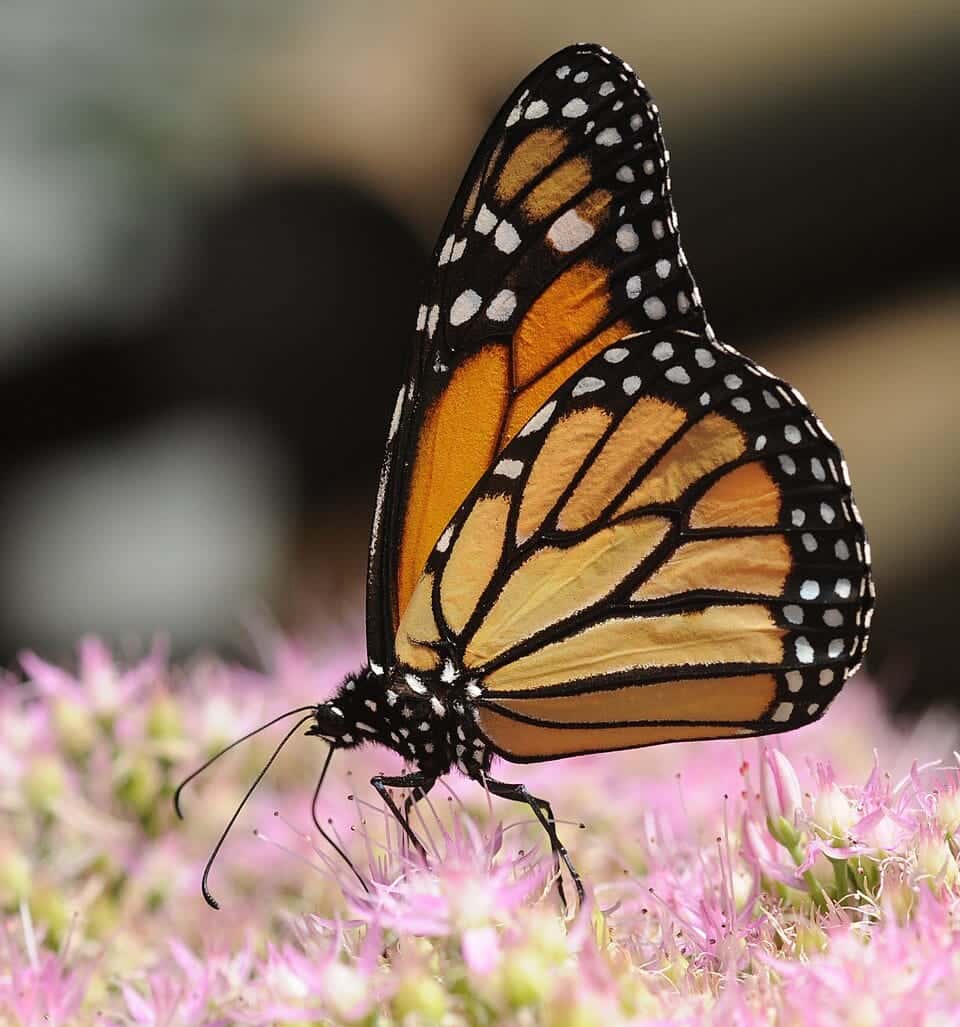
If you planted milkweed for monarchs, late July is when to start checking it closely — this is peak breeding season, and the striped caterpillars can appear almost overnight. But monarchs are not the only thing that eats milkweed, and a couple of look-alikes fool people every summer. Here is how to know exactly what you are looking at.
How to Identify a Monarch Caterpillar
A mature monarch caterpillar is one of the most recognizable insects in North America: plump, smooth, and boldly ringed in yellow, white, and black stripes all the way around the body, growing to just under two inches. The clinching detail is a pair of black, wiry tentacles at each end — two up front and two at the back — that wave gently as it moves. Look for:
- Smooth (not fuzzy) body ringed in repeating yellow, white, and black bands
- Two pairs of soft black filaments — one pair near the head, one near the tail
- Found on or under milkweed leaves, often beside a distinctive C-shaped bite
- Up to about 1¾ inches long when fully grown
The Youngest Stages Are Easy to Miss
Monarchs pass through five growth stages, and the first ones look nothing like the famous striped form. A newly hatched caterpillar is tiny — a pale, translucent, greenish-white speck barely a couple of millimeters long, with no obvious stripes yet. Check the undersides of leaves, new buds, and stems, and look for a tiny hole chewed near where a pinhead-sized egg was laid. The bold stripes develop as the caterpillar molts through later stages.
The Main Look-Alike: Milkweed Tussock Moth
The one that fools people most is the milkweed tussock moth caterpillar, which shows up on the same plants from July into August. Older ones are unmistakable once you know them: dense tufts of black, orange, and white hair, nothing like the monarch's smooth stripes. They also feed in crowded clusters, often stripping the tougher older leaves, whereas monarch caterpillars are usually solitary. They look dramatic but are native insects doing no real harm — leave them be.
Other Milkweed Regulars
You will also meet the milkweed bugs — the large and small milkweed bug — orange-and-black true bugs that gather on the seed pods, mostly in late summer and fall. They suck seeds rather than chew leaves and do not threaten the plant. Bright coloring is a theme here: many milkweed insects wear orange and black as a warning that they have absorbed the plant's bitter toxins, which is exactly the defense monarchs rely on too.
Helping the Monarchs
- Leave the caterpillars on the plant and skip insecticides on or near milkweed
- Plant milkweed species native to your region so late-season caterpillars have healthy leaves
- Expect some chewed, ragged plants — that damage is the milkweed doing its job
Not sure whether that caterpillar on your milkweed is a monarch, a tussock moth, or something else? Snap a photo and Spotter will identify it in seconds and tell you what is sharing your garden.
Try Spotter free on iPhone or Android
Plants, animals, fungi and rocks from one photo. 5 free identifications every day, no card required.