
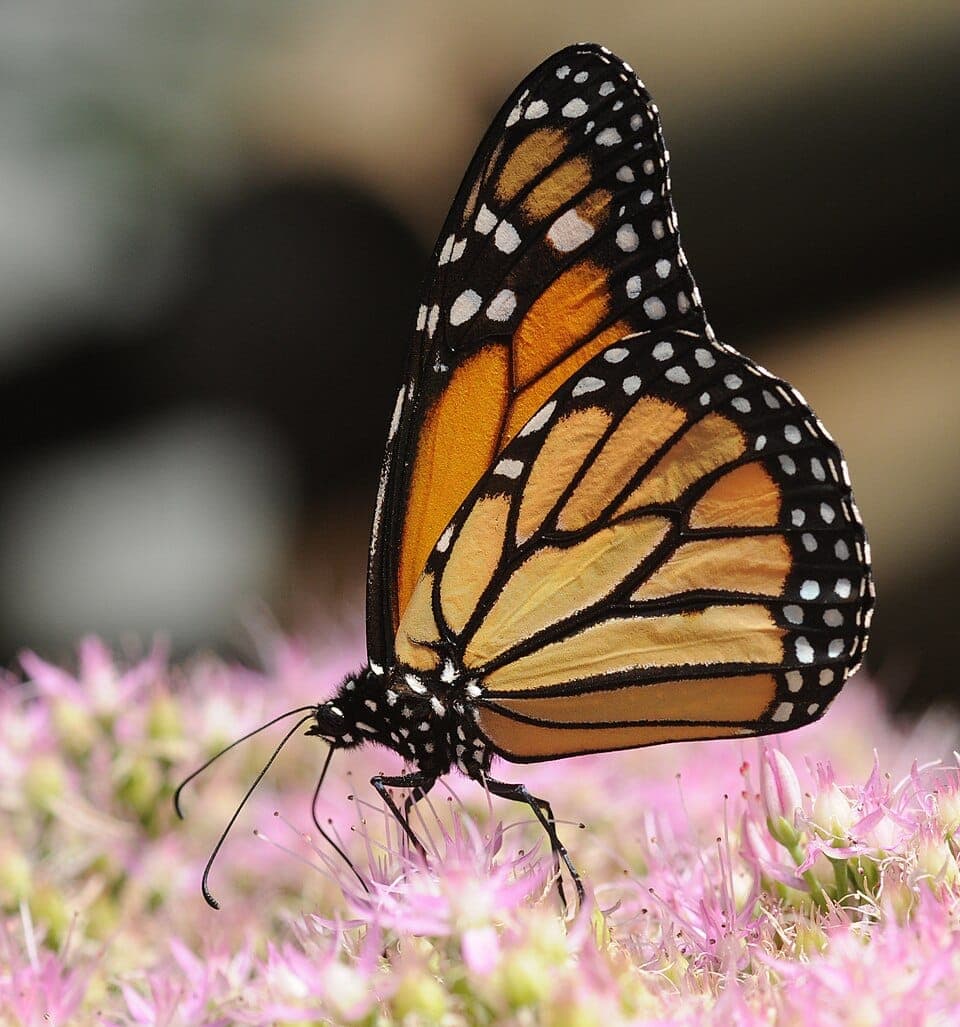
Somewhere around mid-August, people all across the eastern United States and Canada start noticing the same thing: monarch butterflies, which had been scarce all summer, are suddenly everywhere. They nectar heavily on late-summer flowers, they drift through in ones and twos all heading the same direction, and in some places they gather in the dozens in a single tree at dusk. What you are watching is the leading edge of the monarch fall migration — a multi-thousand-mile journey to central Mexico made by a butterfly that has never been there before and will never come back.
The "Super Generation" That Migrates
The monarchs you are seeing now are not the same kind of monarch that flew in June. Through spring and early summer, monarchs live fast: each adult survives only a few weeks, breeds, and dies, producing several short-lived generations that push the population north. But the monarchs that emerge from about mid-August onward are physiologically different. Triggered by shortening days and cooler nights, they hatch into a state called reproductive diapause — they do not mate or lay eggs. Instead they pour all that energy into flying south and living for months. This single long-lived generation is sometimes called the "super generation," and it is the one that makes the entire trip to Mexico.
Why You See Them Now and Not Before
The surge you notice in late August and September has a few overlapping causes:
- The migratory generation is emerging all at once across a huge area, so many butterflies appear over a short window
- They are actively moving, funneling along coastlines, ridgelines, and river valleys, which concentrates them where people can see them
- They fuel up hard for the journey, so they linger on nectar-rich flowers — goldenrod, asters, ironweed, zinnias — instead of scattering
- On cool evenings they cluster together to roost in trees, a dramatic sight that draws attention
Try Spotter Free on iOS & Android
Plants, animals, fungi, and rocks — all from a photo. 5 free identifications every day, no credit card required.
How to Know It Is Really a Monarch
Monarchs are large orange butterflies with a bold black web of veins and a black border studded with white dots. Their most reliable look-alike is the smaller viceroy, which has an extra black line curving across each hindwing that a monarch never shows. In late summer you may also see fast-flying orange fritillaries and the occasional painted lady, but neither has the monarch’s stained-glass pattern of heavy black veins. If the butterfly is gliding in a slow, purposeful, southward drift rather than bouncing around a flowerbed, that steady travel is itself a migration clue.
How to Help Them on the Way
Migrating monarchs are running a marathon on a nectar budget, and small backyard choices make a real difference:
- Leave late-blooming native flowers standing — goldenrod and asters are prime monarch fuel, not the allergy culprits they are blamed for
- Hold off on cutting back the garden and mowing meadow edges until the migration passes through your area
- Skip insecticides on flowering plants in late summer, when butterflies are feeding constantly
- If you want to go further, community-science projects tag and count migrating monarchs each fall and welcome new observers
The 2026 season has been an encouraging one, with sightings climbing sharply into late summer across much of the range — a hopeful sign for the eastern population that overwinters in Mexico’s high-elevation fir forests.
Watching an orange butterfly work your flowers and wondering whether it is a monarch, a viceroy, or a fritillary joining the migration? Snap a photo and let Spotter help you identify it, so you can log your part of one of nature’s greatest journeys.
Try Spotter Free on iOS & Android
Plants, animals, fungi, and rocks — all from a photo. 5 free identifications every day, no credit card required.