
Most falls, an orange butterfly drifting past gets an easy label: monarch. But some years the orange butterflies arrive all at once — dozens or hundreds bouncing across a field, streaming low over roads, mobbing every aster and zinnia in the garden, and moving with a fast, erratic flutter that does not match the monarch's slow, sailing glide. When orange butterflies show up in these sudden numbers, they are very often not monarchs at all but painted ladies (Vanessa cardui), one of the most widespread butterflies on Earth and a species famous for unpredictable, boom-and-bust mass migrations. Here is how to recognize a painted lady and tell it apart from the monarch it gets mistaken for.
How to Identify a Painted Lady
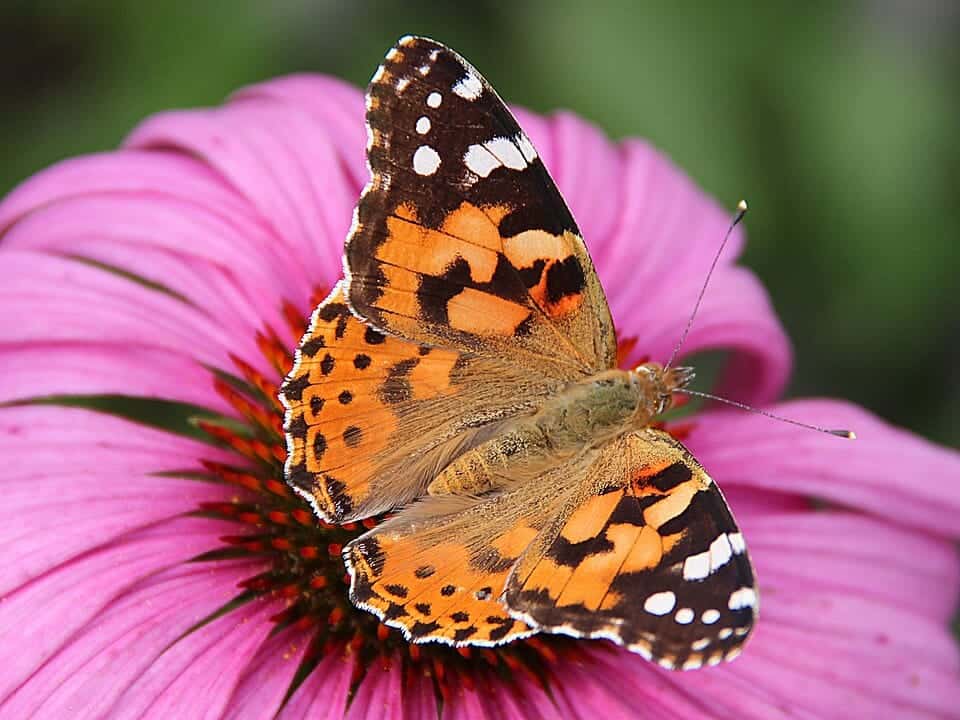
The painted lady is a medium-sized butterfly with a busy, marbled pattern that looks very different from a monarch once you know what to check:
- The size: medium, with a wingspan around 2 to 2.9 inches — noticeably smaller than a monarch
- The upperside: orange, black, and brown in a complex, marbled pattern, with black wingtips marked by several small white spots — busier and less orderly than a monarch's clean stitching
- The lack of veins: it does not have the bold network of thick black veins that defines a monarch's wings — this is one of the fastest tells
- The underside: a subtle, camouflage-like mosaic of gray, brown, tan, and white, with a row of four small eyespots — completely unlike anything on a monarch
- The flight: fast, low, and erratic, often skimming just above the ground or vegetation rather than sailing high and slow
A medium orange butterfly with black-and-white wingtips, a busy marbled pattern, no bold vein network, and a fast bouncing flight is a painted lady. If it flew by fast and low in a group, painted lady is even more likely than monarch.
Try Spotter free on iPhone or Android
Plants, animals, fungi and rocks from one photo. 5 free identifications every day, no card required.


Painted Lady vs. Monarch
The monarch is the butterfly everyone reaches for first, so it is worth lining the two up side by side. The monarch is larger, a deeper solid orange, and crossed by a bold, evenly spaced network of thick black veins with white dots along the black borders — a crisp, almost stained-glass look. The painted lady is smaller, its orange broken up with brown and black into a marbled, mottled pattern, its wingtips black with white spots, and it lacks the heavy vein network entirely. Their behavior differs too: monarchs on migration tend to glide and sail, while painted ladies flutter fast and low. If you have seen the earlier posts here comparing the monarch with the viceroy, the painted lady is a third look-alike to add to the mental file — busier, browner, and quicker than either.
Why They Sometimes Come in Clouds
The painted lady is the most widespread butterfly in the world, found on every continent except Antarctica, and it is a restless, long-distance migrant. Unlike the monarch, whose migration follows a fairly predictable annual rhythm, painted lady movements are erratic and irregular from year to year, driven by weather and by how much their caterpillar host plants have grown in their breeding areas. In some years conditions line up and populations explode, producing the spectacular mass flights people remember for decades — clouds of butterflies dense enough to distract drivers and blanket gardens. In other years you might see only a handful all season. Painted ladies also breed as they travel, so the butterflies moving through in fall are often several generations removed from the ones that headed north in spring.
Other Orange Look-Alikes
A few other orange butterflies can add to the confusion. The American lady is a close cousin that looks very similar but shows two large eyespots on the underside of the hindwing instead of the painted lady's row of four smaller ones. Fritillaries — like the great spangled fritillary — are orange with black markings but are patterned with rows of dots and, underneath, bright silvery spots. The much smaller pearl crescent is orange and black but only about an inch and a half across. When you see an orange butterfly moving fast and low in numbers, especially in a big fall push, the painted lady is usually the answer.
Caught in a sudden wave of orange butterflies and not sure if they are monarchs? Snap a photo of one at rest, ideally showing both the upper and lower wings, and let Spotter help you tell a painted lady from a monarch, a fritillary, or an American lady — and turn a roadside blur of orange into a species you can name.
Try Spotter free on iPhone or Android
Plants, animals, fungi and rocks from one photo. 5 free identifications every day, no card required.