On a calm, warm afternoon in late summer or fall, the air around you suddenly seems full of tiny white flecks drifting past — floating lint, slow-motion snowflakes, or what some people call "fairy flies" or "angel bugs." They barely seem to fly so much as hang in the air and drift, and if one lands on your sleeve you can see it is a tiny insect trailing a puff of white cottony fuzz. They can appear by the hundreds on a still evening, glowing when the low sun catches them. Those drifting white fuzzballs are woolly aphids, and they are a classic sight this time of year. Here is how to identify them.
How to Identify a Woolly Aphid
Woolly aphids are a group of small sap-feeding insects that coat themselves in white waxy strands. The flying, drifting individuals you notice in the air are winged adults on the move:
- Size: very small — roughly an eighth to a quarter inch — so each one reads more as a floating speck of fluff than as a recognizable "bug"
- The fuzz: a coating of white, waxy, cottony filaments trailing from the body, which is what makes them look like drifting lint or tiny tufts of cotton
- Body: under the wax the insect is small and often blue-gray, blue-green, or purplish; winged forms have two pairs of clear wings
- Movement: a weak, drifting, floating flight rather than a fast buzz — they seem to hover and waft on the lightest breeze
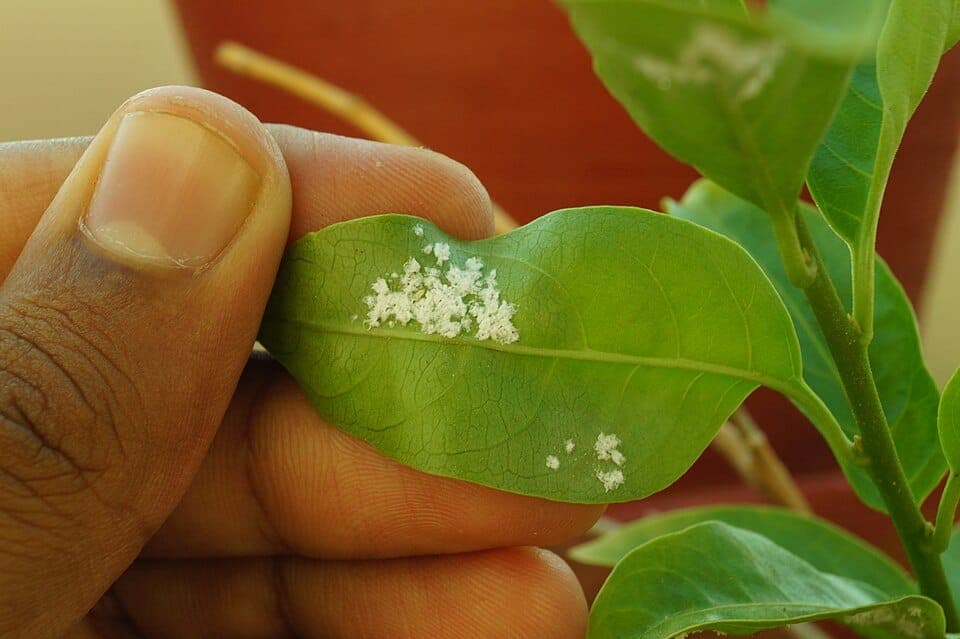
- On plants: where they feed, you may see fuzzy white clusters massed along twigs, branches, or leaf undersides that look like patches of mold or cotton
The floating white "fairy" in the air and the cottony patch on a twig are the same insect in different stages. The waxy wool is a defense — it makes the soft-bodied aphids harder for predators to grab and helps shed water.
Try Spotter Free on iOS & Android
Plants, animals, fungi, and rocks — all from a photo. 5 free identifications every day, no credit card required.
Why They Suddenly Appear in Late Summer and Fall
Woolly aphids have a complex life cycle that often involves two different host plants across a season — many, like the woolly alder aphid, spend part of the year on one kind of tree (such as silver maple) and part on another (such as alder). The drifting swarms you notice now are the fall generation: as the season turns, a wave of winged adults is produced that takes to the air to move between host plants and to lay the eggs that will overwinter. Warm, calm, dry conditions in late summer and fall are ideal for these flights, which is why they seem to erupt all at once on a pleasant afternoon.
Are Woolly Aphids Harmful?
To you, no. Woolly aphids do not bite or sting people, they are not venomous, and they carry no disease — one landing on you is completely harmless, if a little startling when you realize the "fluff" is alive. They are one of the more benign insects you can have drifting around the yard, and they are a valuable food source for beneficial predators like lady beetles and lacewings.
For plants they are usually a minor, cosmetic issue rather than a real threat. Like other aphids they feed on sap and excrete a sticky, sugary "honeydew," which can make surfaces beneath an infested tree tacky and encourage a harmless black sooty mold to grow, and the sticky honeydew also draws ants and yellowjackets. On a healthy, established tree a woolly aphid population rarely causes lasting harm and tends to be kept in check by predators, so control is seldom necessary beyond hosing off a heavy cluster.
Woolly Aphid Look-Alikes
A few other things get mistaken for the drifting white fuzz, and the details separate them:
- Mealybugs: also coat themselves in white waxy fluff, but they are slow crawlers on houseplants and stems rather than insects drifting through open air
- Cottony scale and cottony cushion scale: produce white fluffy masses fixed on stems and leaves, but these stay put and do not fly
- Wind-blown seed fluff: cottonwood, willow, and milkweed release drifting white plant down too, but that fluff has no body inside and no wings — a woolly aphid has a tiny live insect at its core
Not sure whether the white specks drifting past you are woolly aphids, another fuzzy insect, or just plant down on the wind? Catch one on your sleeve, snap a photo, and let Spotter identify it as a starting point for getting to know the tiny travelers that fill the air each fall.
Try Spotter Free on iOS & Android
Plants, animals, fungi, and rocks — all from a photo. 5 free identifications every day, no credit card required.