The spongy moth (Lymantria dispar), long known as the gypsy moth, is one of North America's most destructive invasive forest pests. Introduced to Massachusetts in the late 1860s, its caterpillars strip the leaves from oaks and other hardwoods across the Northeast and Great Lakes in booming outbreak years. Here is how to recognize it.
How to Identify the Spongy Moth
The caterpillar is the stage that does the damage and the easiest to identify:
- Caterpillars: dark and hairy, with a row of five pairs of blue dots followed by six pairs of red dots down the back — a unique combination
- Egg masses: tan, fuzzy, spongy patches (the source of the new name) on trunks, branches, firewood, and outdoor surfaces
- Adult females: white with faint dark markings; heavy-bodied and flightless
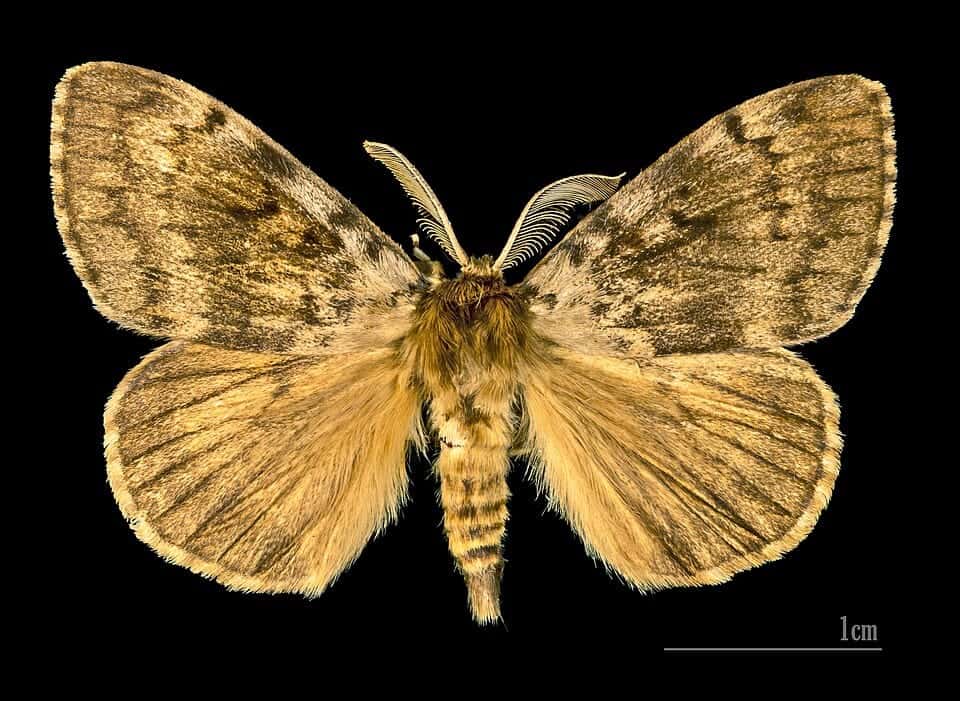
- Adult males: smaller, gray-brown, and strong fliers
Why It Matters
In outbreak years, spongy moth caterpillars can completely defoliate whole hillsides of oak forest. Healthy trees can regrow leaves, but repeated defoliation weakens and kills them, especially when combined with drought or disease. The caterpillars' hairs can also irritate skin.
What to Do If You Find One
- Scrape egg masses off trees and surfaces into soapy water in fall and winter to reduce next year's caterpillars
- Never move firewood — it is a main way egg masses travel to new areas
- Report heavy infestations to your state forestry or agriculture agency
Not sure if the hairy caterpillar on your oak is a spongy moth? Photograph it and Spotter will identify it, flag whether it is the invasive spongy moth, and tell you what to do.
Try Spotter free on iPhone or Android
Plants, animals, fungi and rocks from one photo. 5 free identifications every day, no card required.