You are trimming the arborvitae hedge or looking over a spruce, juniper, or cedar in the yard when you notice them: dozens of small, spindle- or teardrop-shaped bags, an inch or two long, hanging from the branch tips. Each one looks oddly like part of the plant, because it is knit together from bits of the tree’s own needles, scales, and twig fragments, and some dangle from a short thread of silk that lets them sway in the wind. They can look like miniature pinecones, tiny hanging ornaments, or clumps of debris caught in the branches — until you realize there are far too many of them, all the same shape. These are bagworms, the larvae of a small moth, sealed inside cases they build from the very plant they are eating. Here is how to identify them.
How to Identify Bagworms
The common bagworm (Thyridopteryx ephemeraeformis) is best known not from the moth itself but from the distinctive bag its caterpillar carries around. Look for this combination of traits:
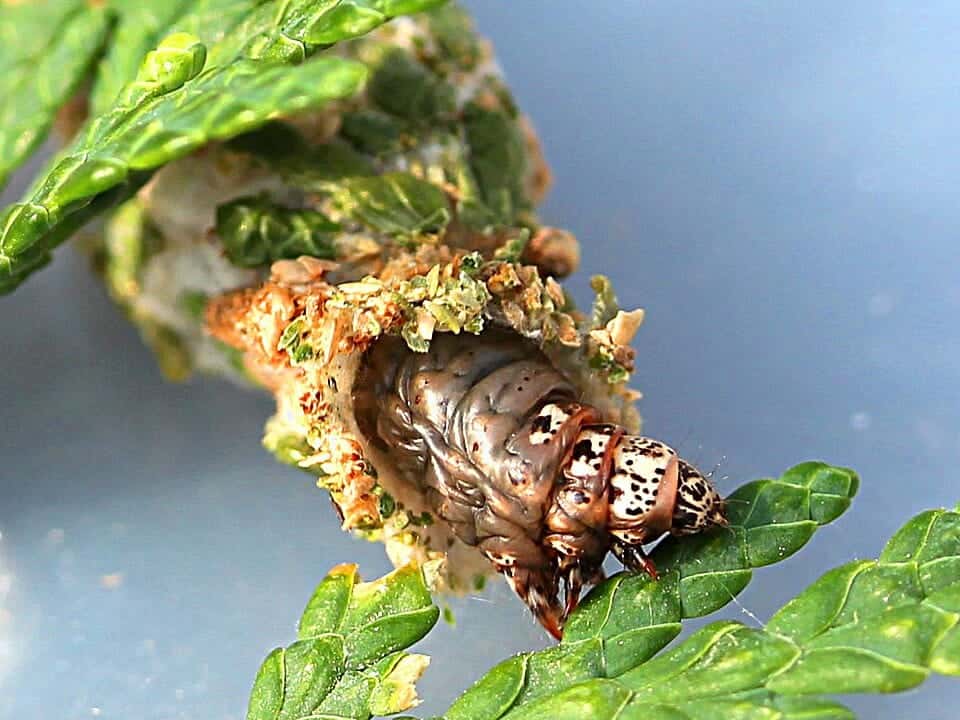
- The bags: tough, spindle- or cone-shaped silken cases, roughly one to two inches long when mature, hanging point-down from the branches
- The camouflage: each bag is covered in fragments of the host plant — short green or brown needle bits, scale-leaves, and tiny twig pieces woven into the silk — so it blends in with the foliage and is easy to overlook
- The caterpillar: if you catch one feeding, only the head and front legs of a small dark caterpillar poke out of the top of the bag as it drags its case along; disturb it and it pulls back inside
- The favorite hosts: evergreens above all — arborvitae, juniper, red cedar, spruce, and false cypress — but also honeylocust, maple, and many other trees and shrubs, whose bags then carry broad-leaf pieces instead of needles
- The damage: scattered browning, thinning, or bare patches where the caterpillars have stripped the foliage, sometimes concentrated on one side or the top of a plant
The single easiest tell is that the "cocoon" is made of the plant itself and hangs like an ornament. A true cocoon or a spider egg sac is smooth silk; a bagworm case is shaggy with needles and twig bits, because the caterpillar builds its home from whatever it is chewing on. Once you spot one and your eye adjusts, you usually find many more on the same plant.
Try Spotter free on iPhone or Android
Plants, animals, fungi and rocks from one photo. 5 free identifications every day, no card required.


The Odd Life Cycle Behind the Bags
Bagworms have one of the stranger life stories in the backyard. A tiny caterpillar hatches in late spring and immediately begins spinning a silk case, adding plant material as it grows and enlarging the bag around itself all summer while it feeds. It never leaves the bag — it drags the whole case along, head poking out to eat, and can even balloon on a strand of silk to a new plant when young. By late summer and early fall the fully grown caterpillar fastens its bag to a twig and pupates inside. The adults are where it gets strange: the male becomes a small, dark, clear-winged moth that flies to find mates, while the female never develops wings, legs, or functional eyes and stays inside her bag her whole life. She mates through the case, fills it with hundreds of eggs, and dies, leaving the egg-filled bag to overwinter on the plant. That is why the bags you see hanging on an evergreen in late summer and fall matter: many are packed with next year’s eggs.
Why It Is Worth Acting On
Bagworms are one of the few "what is this?" finds that is genuinely worth doing something about, because unlike many harmless look-alikes they can seriously damage or even kill evergreens. Deciduous trees usually releaf and shrug off a season of feeding, but arborvitae, juniper, and spruce do not regrow needles from bare wood, so heavy infestations can leave permanent dead patches or kill a plant outright. Because the female never leaves, a plant’s bagworms tend to stay and build up year after year if ignored. The simplest, most satisfying control on a small tree or hedge is to handpick the bags off through fall and winter — clip or pull each one, since it holds hundreds of eggs, and dispose of it away from the plants rather than dropping it beneath them. For larger or heavier infestations, timing a treatment to when the tiny caterpillars are actively feeding in early summer is far more effective than spraying the tough late-season bags, so identifying them now helps you plan for next spring.
Not sure whether the little needle-covered bags on your arborvitae are bagworms, spider egg sacs, or just pinecones? Snap a photo and let Spotter help you identify them as a starting point — the sooner you know it is bagworms, the easier they are to keep in check.
Try Spotter free on iPhone or Android
Plants, animals, fungi and rocks from one photo. 5 free identifications every day, no card required.