Grasshoppers are a summer-long presence, but late summer is when they really get your attention. This is when the year’s hatch has grown to full size, so the ones bursting out from underfoot are big, loud, and hungry — and it is when garden damage, roadside swarms of hoppers, and the occasional oversized, brightly colored giant all peak. If you are trying to figure out exactly what just rattled off your tomato plants, here is how to sort grasshoppers out from the insects they get confused with.
How to Know It Is a Grasshopper
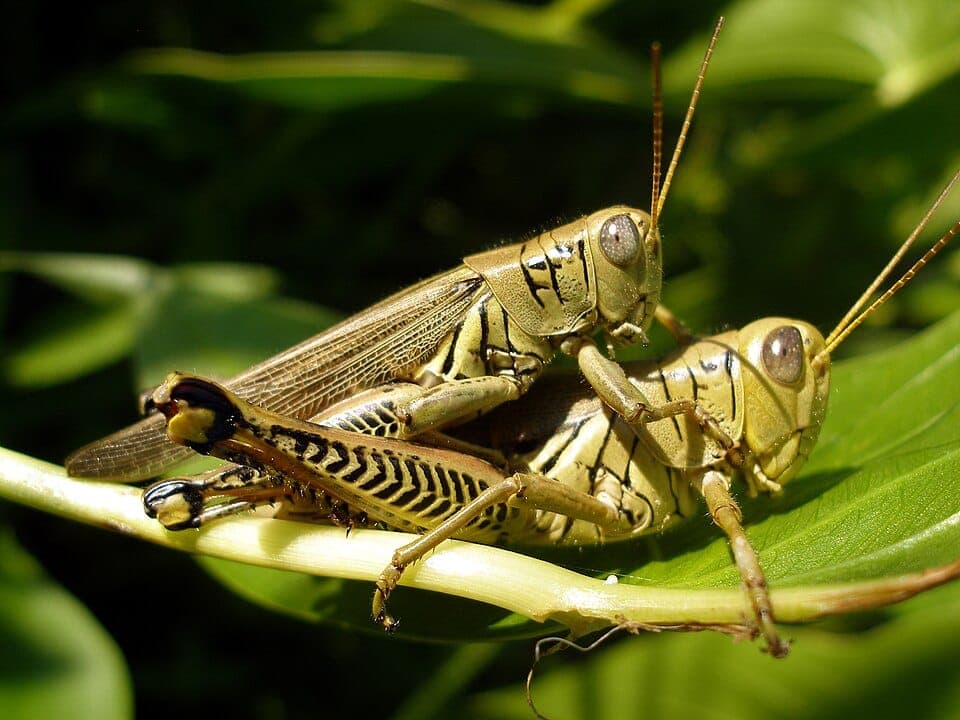
Grasshoppers are big-legged, plant-eating insects built to jump. A few features separate them from their relatives:
- Short, stout antennae — usually shorter than the body, and much thicker than a thread
- Powerful, oversized hind legs for jumping, often held folded high above the body like cocked springs
- Active by day, out in open sun on grass, weeds, and garden plants
- A blunt, chunky face and body, most often brown, tan, or green for camouflage in dry grass
Grasshopper, Katydid, Cricket, or Locust?
These insects are all cousins, and people mix them up constantly. The antennae and the timing are the quickest tells:
- Katydid: long, hair-thin antennae far longer than its body, usually leaf-green with a leaf-shaped body, and it sings at night from trees and shrubs
- Cricket: also long-antennaed and nocturnal, but stouter and ground-dwelling, with the familiar chirping song after dark
- Grasshopper: short, thick antennae, active by day, making sharp buzzes or clicks — not the mellow night songs of the other two
- Locust: not a separate insect at all — "locust" is the name for certain grasshopper species when they mass together and swarm; the same species can look and behave differently in a crowd
Try Spotter Free on iOS & Android
Plants, animals, fungi, and rocks — all from a photo. 5 free identifications every day, no credit card required.
The One to Leave Alone: Lubber Grasshoppers
Most grasshoppers are harmless to handle, but there is one striking exception worth knowing, especially in the South. Lubber grasshoppers are huge — several inches long — heavy-bodied, and almost comically slow, with stubby wings that leave them barely able to fly. Many are boldly colored in black with yellow, orange, or red, and that loud coloring is a warning: when threatened, lubbers can hiss, ooze a foul-smelling toxic froth, and are poisonous to many animals that try to eat them. They are not aggressive and will not hurt you if left alone, but they are best admired rather than handled, and pets should be kept from eating them.
Are Grasshoppers a Problem?
A few grasshoppers in the yard are a normal, healthy part of a summer ecosystem — they are food for birds, spiders, and countless other animals. In most gardens the chewed leaves they leave behind are cosmetic, and the population crashes on its own with the first hard frosts of fall. It is only in big outbreak years, when hot dry weather lets their numbers explode, that they overwhelm crops and gardens. For a backyard, healthy plants and a little tolerance usually see you through to the end of the season.
Not sure whether the jumper in your garden is an ordinary grasshopper, a katydid, or a lubber you should steer clear of? Snap a photo and let Spotter help you identify it — so you know what is sharing your yard, and which ones to simply watch.
Try Spotter Free on iOS & Android
Plants, animals, fungi, and rocks — all from a photo. 5 free identifications every day, no credit card required.