
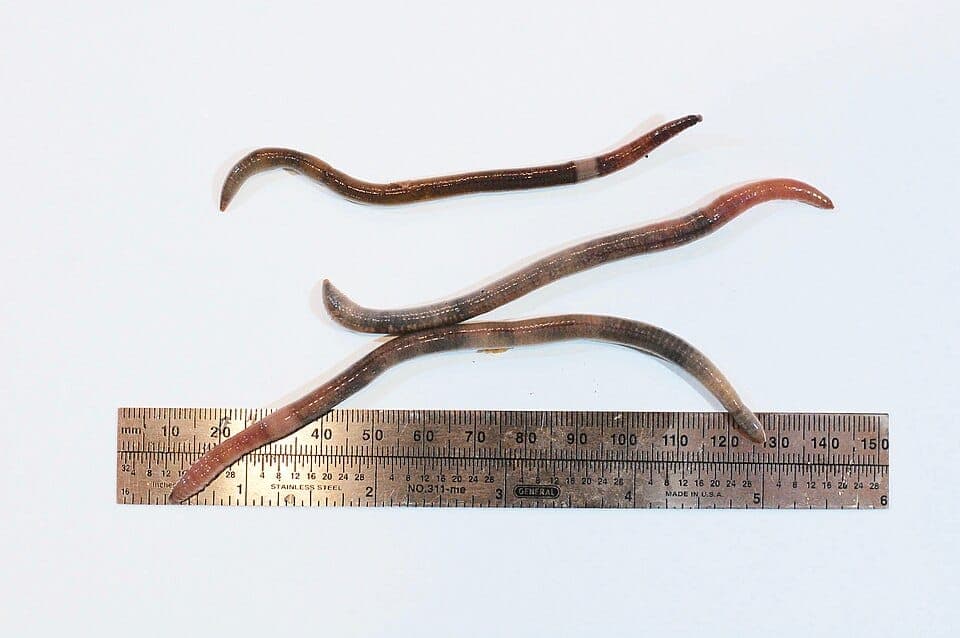
Not all earthworms are the helpful garden allies we grew up believing in. Late summer is when Asian jumping worms — also called crazy worms, snake worms, or Georgia jumpers — reach full size and become most noticeable, right as gardeners are turning compost and moving plants. If a worm in your beds behaves less like a lazy nightcrawler and more like a landed fish, thrashing violently and even shedding its tail to escape, you are probably looking at one of these invaders. They are established across much of the East, Midwest, and parts of the West, and wildlife agencies from Wisconsin to Colorado are now asking people to learn the ID and report sightings.
The Behavior Is the First Giveaway
The name is earned. When you disturb a jumping worm it does not calmly retreat — it whips its whole body back and forth in a frantic, snake-like thrashing, sometimes flipping several inches into the air. Ordinary earthworms just contract and burrow. This wild, erratic motion is the single most obvious clue, and it is usually the thing that makes someone stop and go "what is that?" in the first place.
Try Spotter Free on iOS & Android
Plants, animals, fungi, and rocks — all from a photo. 5 free identifications every day, no credit card required.
What a Jumping Worm Looks Like
Beyond the behavior, a few physical features separate jumping worms from the common nightcrawlers and other earthworms in your yard:
- The clitellum — the raised band near the head — is smooth, milky white to light gray, and sits flush with the body rather than being raised and saddle-shaped like a common earthworm’s pinkish band
- On a jumping worm the band wraps completely around the body and is close to the head; on many familiar earthworms it is more raised, more orange-pink, and farther back
- The body is often glossy and firm, gray to reddish-brown, and can range from a couple of inches up to about six inches long
- They live at the soil surface and in leaf litter rather than deep in burrows, so you tend to find them right under mulch, not down in the dirt
The Signature They Leave in the Soil
Even when the worms themselves are not out, they leave a telltale sign: the soil where they have been feeding turns into a loose, grainy material that looks and feels like dry coffee grounds or taco meat. That crumbly, uniform texture is castings — the worms rapidly consuming the organic layer and stripping it of nutrients. Unlike beneficial earthworms, whose tunnels aerate soil and whose castings enrich it, jumping worms devour the surface layer and leave behind a dry, granular bed that holds water poorly and starves the plants and native seedlings that depend on that top layer.
Why It Matters — and How to Avoid Spreading Them
Jumping worms are harmless to people — they do not bite, sting, or carry disease — but they are a serious problem for gardens and forests. There is no proven way to eradicate an established population, so the emphasis is entirely on not moving them to new places. Their tiny cocoons travel unseen in soil, mulch, compost, and the root balls of shared or purchased plants. To slow the spread, buy mulch and compost that has been properly heat-treated, rinse soil off the roots of plants before swapping them with friends, clean soil off tools and boots between sites, and never dump a bait container of worms in the wild. If you find them, many state agriculture and DNR offices want a report, because tracking where they turn up helps neighbors know to be careful.
Not sure whether the worm in your beds is an ordinary earthworm or one of these invaders? Snap a clear photo of its band and body and let Spotter help you narrow it down, so you know whether you are looking at a harmless helper or something worth reporting before it spreads.
Try Spotter Free on iOS & Android
Plants, animals, fungi, and rocks — all from a photo. 5 free identifications every day, no credit card required.