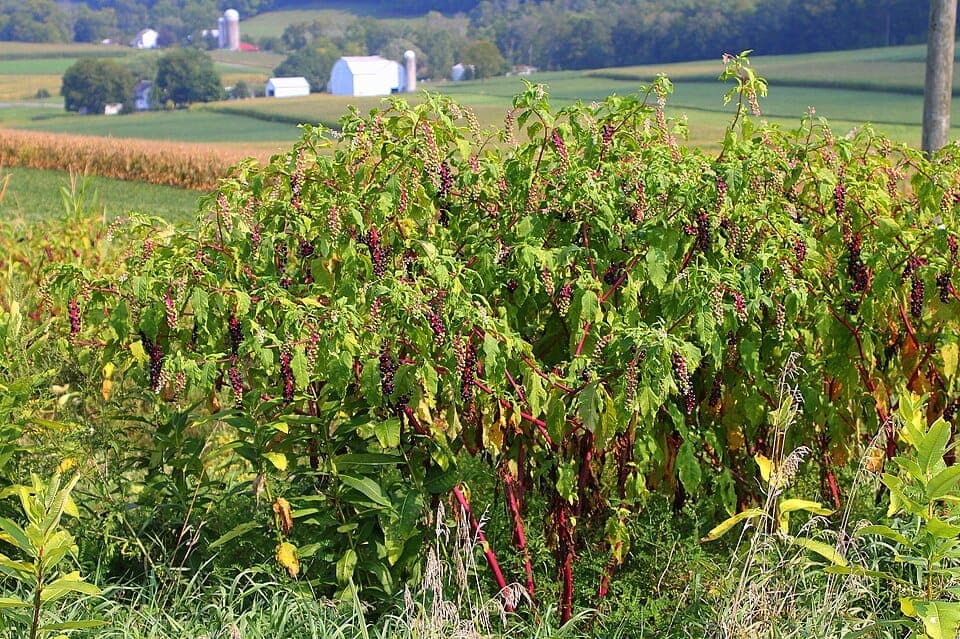
It seems to appear out of nowhere. One summer a single weedy stalk turns up along the fence, in the alley, or at the brushy edge of the yard, and by August it has become a small, sprawling shrub as tall as you are, with thick magenta-red stems and long, drooping strings of glossy dark-purple berries. The berries are genuinely striking — deep grape-purple, hanging in neat clusters — and that beauty is exactly what makes pokeweed dangerous. It is one of the most widespread native poisonous plants in the eastern and central United States, and its ripe berries look enough like wild grapes or elderberries to fool a curious child or an overconfident forager.
How to Identify Pokeweed
Pokeweed (Phytolacca americana) is a large, fast-growing perennial that dies back each winter and returns bigger the next year from a massive taproot. By late summer, a mature plant is hard to miss. Look for this combination:
- Tall, robust growth — often 4 to 10 feet in a single season, forming a bushy, many-branched plant
- Smooth, hollow stems that turn a vivid magenta, pink, or reddish-purple, especially as the season goes on — one of the best field marks
- Large, simple, alternate leaves, often 6 to 12 inches long and lance- to oval-shaped, with a strong unpleasant smell when crushed
- Long, drooping clusters (racemes) of small greenish-white flowers in summer that give way to green then shiny dark-purple, almost black, berries
- Each round berry slightly flattened, like a tiny pumpkin, hanging on a bright pink stalk
The pairing of hollow magenta stems with drooping strings of purple berries is the signature no other common weed quite matches. This is what most often trips people up: pokeberries hang in clusters that can suggest wild grapes, and the ripe fruit resembles elderberries at a glance. But grapes grow on woody, climbing vines with tendrils, and elderberry berries sit in flat-topped, umbrella-like clusters on a woody shrub — not on the soft, herbaceous, hot-pink stalks of pokeweed. When in doubt, the stem color and growth habit give it away.
Try Spotter Free on iOS & Android
Plants, animals, fungi, and rocks — all from a photo. 5 free identifications every day, no credit card required.
Why Pokeweed Is Poisonous — All of It
Every part of pokeweed is toxic to people, pets, and livestock — the roots most of all, then the mature stems and leaves, then the seeds and berries. The berries are the biggest hazard in a yard simply because they are attractive and within reach of small children, who may mistake them for grapes or berries they have eaten before. According to poison-control sources, eating even a small number of raw berries can cause stomach pain, nausea, vomiting, and diarrhea, and larger amounts are more serious, particularly in children. The plant also stains hands and clothes a vivid purple-red, which is worth knowing if you find purple juice on a child.
You may have heard that pokeweed shoots are eaten as "poke sallet" in some regional cooking traditions. That preparation depends on very specific handling of only the youngest growth, and getting it wrong has made people seriously ill — so treat wild pokeweed as a plant to identify and avoid, not to eat. This article is for identification only, not foraging or medical advice. If someone has swallowed any part of a pokeweed plant, or if a pet or child has eaten the berries, contact Poison Control or a medical professional right away rather than waiting to see what happens.
What to Do If It Is Growing in Your Yard
Pokeweed spreads readily because birds eat the berries and drop the seeds everywhere, and its deep taproot makes an established plant tough to remove. If you want it gone, the safest approach is to dig out young plants before they set seed, wearing gloves and long sleeves because the sap can irritate skin, and to bag the berry clusters rather than leaving them to reseed or tempt children and pets. Large, well-rooted plants often need repeated removal over a season or two. If you simply want to leave it for the birds in a spot well away from where kids and animals roam, that is a reasonable choice too — just know exactly what it is.
Not sure whether that stand of purple berries is pokeweed, wild grape, or elderberry — and whether it is something to worry about with kids or a dog around? Snap a photo and let Spotter help you identify the plant, so you can decide what to do from a place of knowing rather than guessing.
Try Spotter Free on iOS & Android
Plants, animals, fungi, and rocks — all from a photo. 5 free identifications every day, no credit card required.