As the first hints of fall arrive, a new wave of color spreads across meadows, roadsides, and the edges of woods: clouds of small daisy-like flowers in purple, violet, lavender, and sometimes white and pink, each with a bright yellow or golden center. They often bloom in great drifts, frequently right next to the golden plumes of goldenrod, and together the purple-and-gold pairing is one of the signature looks of late summer into fall. Those purple daisies are asters, and they are among the very last wildflowers of the year to put on a show. Here is how to identify them.
How to Identify an Aster
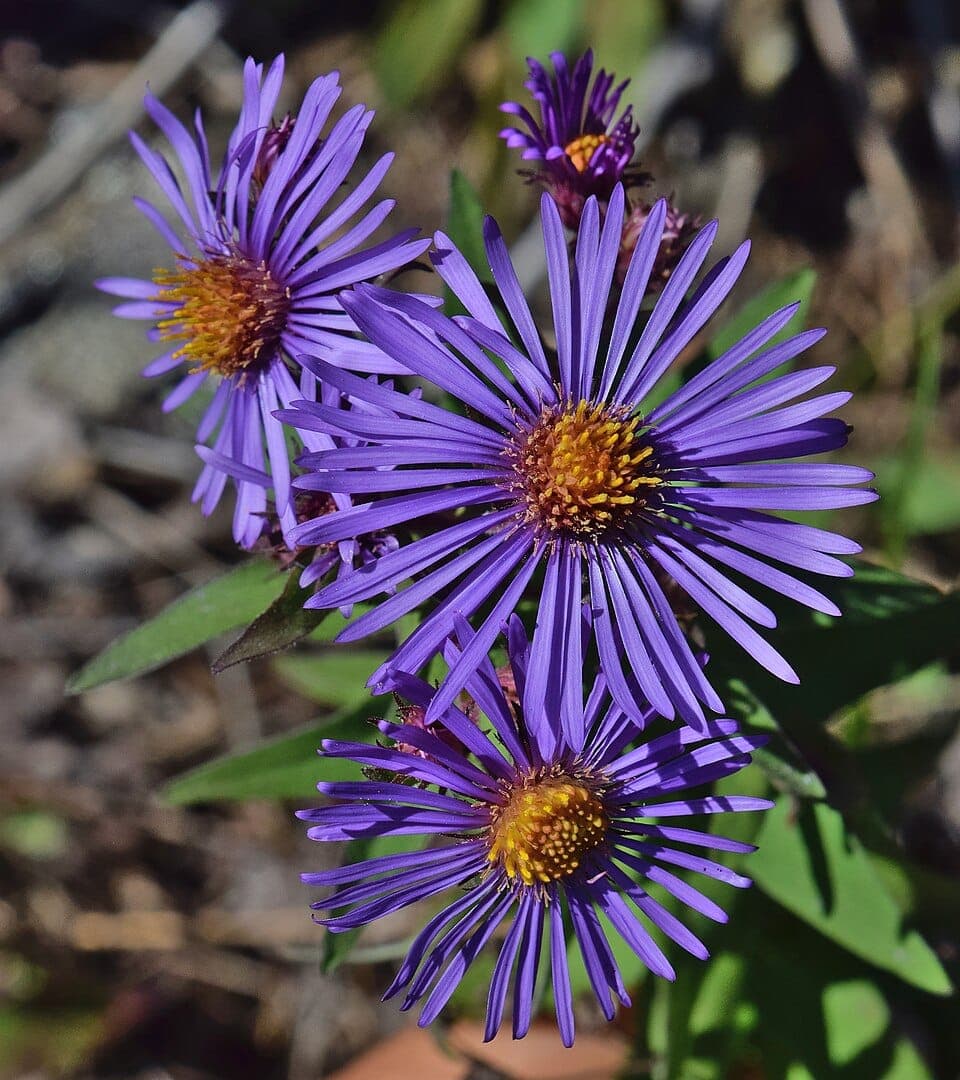
Asters are a large group of native fall-blooming wildflowers (many now classified in the genus Symphyotrichum). The New England aster is one of the most familiar and showy, but the whole group shares a recognizable look:
- Flowers: small, daisy-like blooms, each with a ring of many slender colored "petals" (ray florets) — purple, violet, lavender, pink, or white — surrounding a central disk of tiny yellow or golden flowers
- Abundance: dozens to hundreds of these small flower heads on a single bushy plant, creating a cloud-like mass of color rather than one big bloom
- Bloom time: late summer into mid- or late fall, often continuing until the first hard frosts — much later than most summer wildflowers
- Height and habit: many are 1–5 feet tall, growing in clumps in fields, prairies, roadsides, wet meadows, and disturbed ground
- Leaves: generally narrow and lance-shaped, running up the stem; in the New England aster the leaves clasp the stem, nearly wrapping around it, and the stems are noticeably hairy
The quickest confirmation is the flower structure combined with the season: a bushy plant covered in many small purple or violet daisies with yellow centers, blooming when almost everything else is going to seed, is almost certainly an aster.
Try Spotter Free on iOS & Android
Plants, animals, fungi, and rocks — all from a photo. 5 free identifications every day, no credit card required.
Asters and Goldenrod: The Classic Fall Pair
Asters and goldenrod bloom at the same time and thrive in the same sunny, open habitats, so you will constantly see purple asters and golden goldenrod woven together along roadsides and field edges. It is one of the most reliable color combinations in nature, and it is no accident — both are late-season nectar powerhouses competing for the same pollinators. If you learn to recognize the pair together, you have most of the fall roadside wildflower show covered. Unlike ragweed (the plain green plant that actually causes fall allergies), neither asters nor goldenrod is a meaningful allergy source, because their heavy, sticky pollen is carried by insects rather than the wind.
Why Asters Matter So Much in Fall
Asters are far more than a pretty roadside display. Because they bloom so late, they are one of the most important food sources for pollinators heading into winter. The generation of monarch butterflies that migrates south each fall depends on late nectar to fuel the journey, and asters — along with goldenrod — are prime fueling stations along the way. Native bees preparing to overwinter, migrating butterflies, and countless other insects all rely on that last burst of nectar. Leaving asters standing rather than mowing them down in early fall is one of the simplest things a yard can do for wildlife.
Aster Look-Alikes
A few other fall flowers get mixed up with asters, and the details separate them:
- Fleabane: also has small daisy-like flowers, but blooms earlier (spring into summer) and has even thinner, more numerous, hair-like petals
- Chicory: roadside flowers of a similar blue-purple, but with larger, squared-off, fringed petals and blooms that close by midday, on nearly leafless wiry stems
- Coneflowers and black-eyed Susans: share the yellow center but have larger, fewer, more robust petals and a raised or cone-shaped middle
- Michaelmas daisies: these are simply garden-grown asters — the same group, selected for showier color
Not sure whether the purple fall daisies along your walk are New England asters, a different aster species, or something else entirely? Snap a photo and let Spotter identify it as a starting point for getting to know the last wildflowers of the year.
Try Spotter Free on iOS & Android
Plants, animals, fungi, and rocks — all from a photo. 5 free identifications every day, no credit card required.