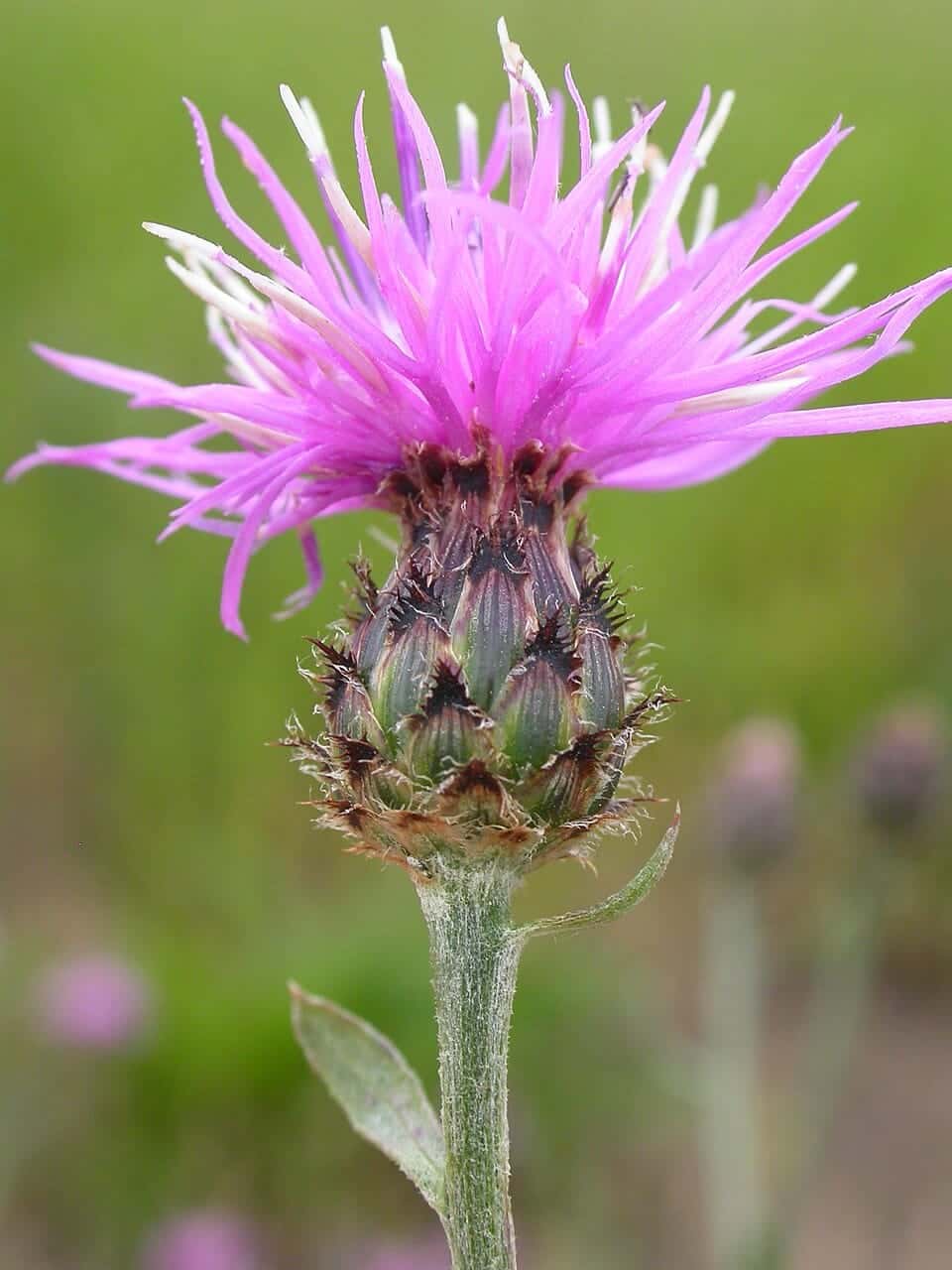
Spotted knapweed (Centaurea stoebe) is an invasive weed from Europe that has overrun pastures, prairies, and roadsides across much of North America, especially the West and Upper Midwest. Its pretty purple flowers hide an aggressive plant that crowds out native vegetation. Here is how to recognize it.
How to Identify Spotted Knapweed
- Pink-to-purple, thistle-like flower heads about an inch across, but with no spines on the plant itself
- Stiff, branching stems 1 to 4 feet tall, gray-green and slightly hairy
- The key mark: flower bracts tipped with a small black, comb-like fringe, giving a "spotted" look
- Deeply divided, gray-green leaves, mostly toward the base
Why It Matters
A single plant can produce thousands of seeds, and knapweed releases chemicals that suppress neighboring plants, letting it form dense stands that displace native grasses and wildflowers. It reduces forage for livestock and wildlife and increases bare soil and erosion.
What to Do
- Pull or dig small patches before they set seed, wearing gloves (the sap can irritate skin)
- Bag and dispose of flower heads rather than leaving them to seed
- Report large infestations to your county weed board or extension office for a control plan
Not sure if that purple roadside flower is invasive knapweed or a native aster or thistle? Photograph it and Spotter will identify it and tell you whether it is a problem where you live.
Try Spotter free on iPhone or Android
Plants, animals, fungi and rocks from one photo. 5 free identifications every day, no card required.