Late summer is when Joe-Pye weed steals the show. Along damp roadsides, in ditches, at the edges of meadows and increasingly in native garden borders, you see it: a tall, upright plant — often chest-high to well over head-high — topped with big, softly rounded clusters of tiny dusty pink-to-mauve flowers, and almost always alive with swallowtails, monarchs, and bumblebees. If you have found a towering wildflower that seems to be a butterfly magnet right now, there is a good chance it is Joe-Pye weed, one of the most ecologically important native perennials of the season. It is a refreshing thing to identify — not a pest or a poison, just a native powerhouse for pollinators.
How to Identify Joe-Pye Weed
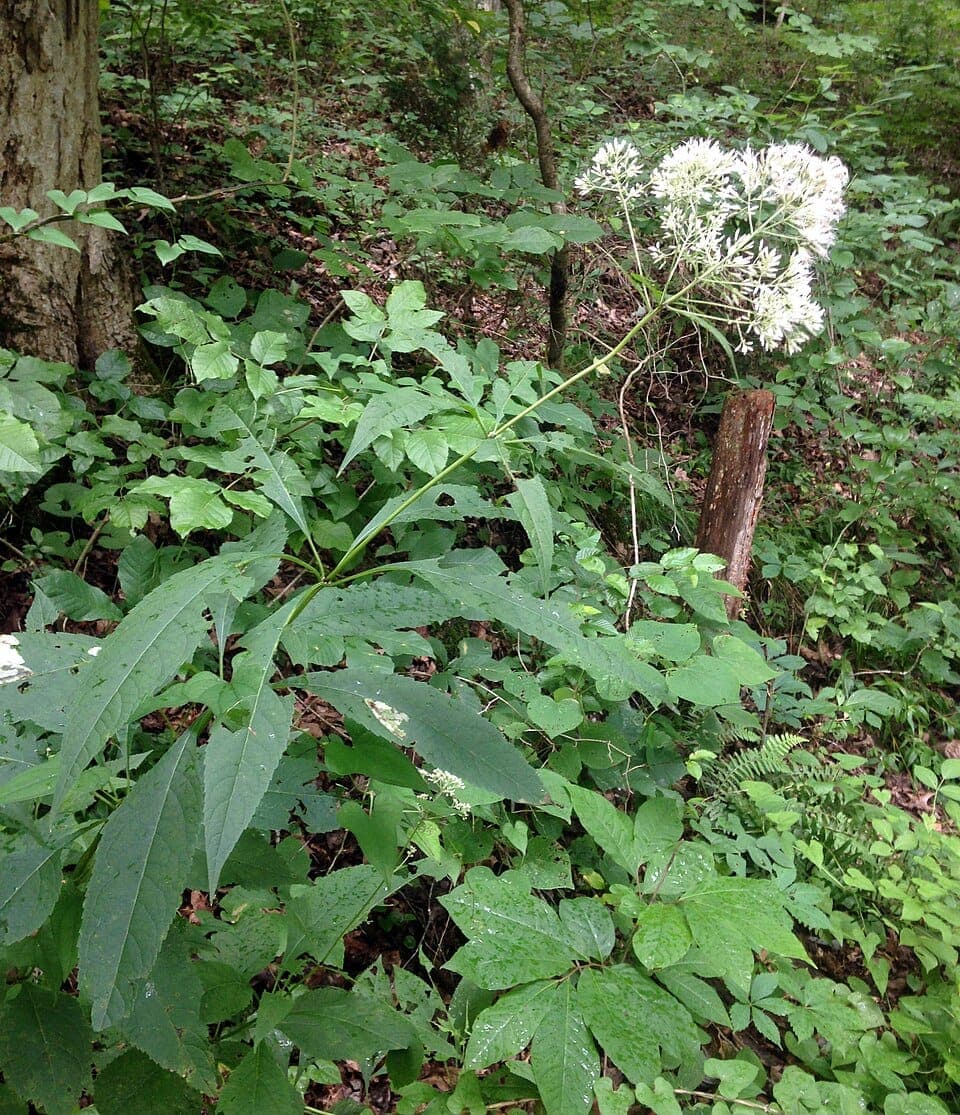
Joe-Pye weeds (a group in the genus Eutrochium, formerly lumped with Eupatorium) share a recognizable look:
- Height: tall and commanding, commonly 4–7 feet and sometimes reaching 9–10 feet in rich, moist ground
- Flowers: large, softly domed or slightly flattened clusters of many tiny fuzzy florets in dusty rose, mauve, or pale pinkish-purple, blooming from mid-summer into early fall
- Leaves: large and lance-shaped with toothed edges, arranged in distinctive whorls of three to seven leaves radiating from the same point around the stem
- Stems: stout and often mottled or flushed with purple, sometimes purple mainly at the leaf joints
- Habitat: moist to wet ground — stream banks, wet meadows, ditches, pond edges, and moist garden beds — usually in full sun to part shade
The combination of great height, whorled leaves, and big dusty-pink flower domes covered in pollinators is the signature. The whorled leaves in particular help separate it from most other tall late-summer wildflowers.
Joe-Pye Weed vs. Ironweed
The plant most often confused with Joe-Pye weed is ironweed (genus Vernonia), which grows in the same tall, late-summer, moist-meadow niche. The quickest way to tell them apart is color and flower shape:
- Color: Joe-Pye weed is a soft, dusty rose-to-mauve; ironweed is a far more intense, saturated royal-to-magenta purple that almost glows
- Flower clusters: Joe-Pye forms large rounded domes; ironweed carries looser, flatter-topped sprays of small brushy purple flower heads
- Leaves: Joe-Pye has whorls of several leaves at each node; ironweed leaves are typically alternate (one per node), narrower, and more willow-like
Both are native, both are excellent for pollinators, and both are welcome sights — so there is no wrong answer here, just two different beautiful natives worth knowing apart.
Try Spotter Free on iOS & Android
Plants, animals, fungi, and rocks — all from a photo. 5 free identifications every day, no credit card required.
Why Joe-Pye Weed Matters
Timing is everything for pollinators. Joe-Pye weed blooms in that late-summer stretch when many spring and early-summer flowers have finished, offering abundant nectar exactly when migrating monarchs, other butterflies, and native bees need to fuel up before the season turns. That makes it one of the highest-value plants you can have in a native or pollinator garden — and one reason it has jumped from "roadside weed" to prized landscape perennial. It also supports specialist insects and provides seed for birds as the flower heads fade, so leaving the stems standing into fall and winter is a small gift to wildlife.
Joe-Pye Weed Look-Alikes
A few other tall pink-to-purple late-summer plants can cause momentary confusion:
- Ironweed: the main look-alike — deeper, more vivid purple and alternate leaves (see above)
- Purple loosestrife: a tall wetland invader, but with slender upright magenta flower spikes rather than rounded domes, and paired or whorled unstalked leaves
- Common milkweed and dogbane: pinkish summer flowers in wet or open ground, but shorter, with rounded flower clusters and milky sap, blooming earlier
Curious whether the towering pink wildflower drawing all the butterflies is Joe-Pye weed, ironweed, or something else? Snap a photo and let Spotter identify it as a starting point for learning the native plants blooming around you this time of year.
Try Spotter Free on iOS & Android
Plants, animals, fungi, and rocks — all from a photo. 5 free identifications every day, no credit card required.