
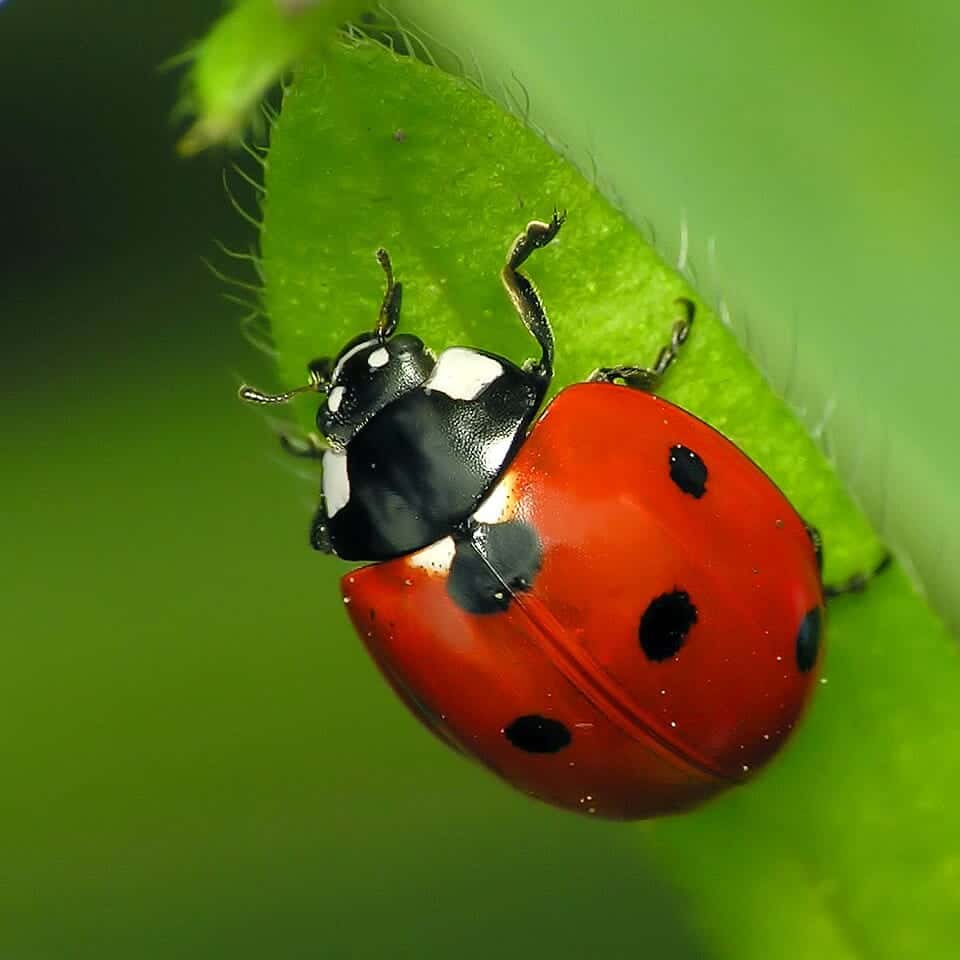
There are more kinds of insects than every other animal group combined, so what is this bug is one of the most-asked questions in nature. You will not memorize millions of species, but a few structural clues sort almost any creepy-crawly into the right group fast.
Insect or Spider? Count the Legs
- Six legs and three body segments, usually with antennae and often wings — an insect
- Eight legs and two body segments, no antennae or wings — a spider or other arachnid
That one check settles a surprising number of questions before you even look closer.
Then Look at the Wings and Body
- Hard wing covers that meet in a straight line down the back — a beetle
- Two pairs of scaly wings — a butterfly or moth
- A narrow waist between segments — an ant, bee, or wasp
- Long body and two pairs of clear wings — a dragonfly or damselfly
Note the Size, Color, and Where You Found It
A metallic-green beetle on a rose, a brown moth at a porch light, a striped caterpillar on milkweed — the setting and host plant are real clues. Note whether it was on a plant, in water, under a log, or indoors.
The Easy Answer: Snap a Photo
Insects rarely sit still for a leisurely inspection, so get a photo and let Spotter do the sorting. You will get the species, whether it bites or stings, its role in the ecosystem, and where it is found. Spotter identifies spiders, caterpillars, beetles, bees, and the rest — alongside the plants, birds, and fungi you find nearby.
Try Spotter free on iPhone or Android
Plants, animals, fungi and rocks from one photo. 5 free identifications every day, no card required.


A quick leg count and a look at the wings will place most bugs in the right family. For the exact name — and whether the one on your arm is friendly — a photo is the fastest, calmest way to find out.