
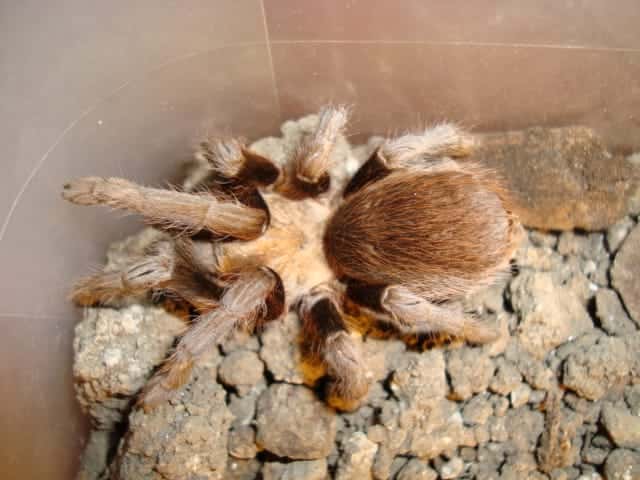
It is a warm evening in early fall and you are driving a two-lane road through open prairie, ranch country, or desert scrub when your headlights pick out a shape on the pavement: a big, dark, hairy spider — easily the size of your palm — walking slowly and purposefully across the road. Then you notice another a little farther on, and another, all lumbering the same slow march across the open ground. If you live in the western and southwestern United States, you may have driven straight into one of the season’s strangest spectacles: the annual autumn appearance of wandering tarantulas, which every fall gets breathlessly reported as a tarantula "migration." It looks like an invasion, but the truth is a love story. These big spiders are almost all males, and they are making the one great journey of their lives to find a mate before winter. Here is how to recognize them and understand the walk.
How to Identify a Wandering Tarantula
The tarantulas people see crossing roads and trails in fall are mature males on the move, and a few traits and habits give them away:
- The size: very large for a spider — a leg span roughly the width of an adult’s palm, three to four inches or more, far bigger than any common house or garden spider
- The look: thick, densely hairy body and legs, usually a uniform dark brown, tan, or blackish, sometimes with reddish or coppery hairs, giving a plush, velvety appearance
- The build of a roaming male: males on the walk tend to be longer-legged and leaner-bodied than the bulkier females, and mature males often have small hook-like spurs on the front legs used to hold a female’s fangs during mating
- The behavior: walking slowly and steadily out in the open — across roads, trails, driveways, and fields — most often in the late afternoon and evening during warm days of late summer and fall
- The habitat: dry, open country in the West and Southwest — grassland, prairie, and desert — where tarantulas live in silk-lined burrows in the ground rather than in webs
A large, hairy, palm-sized spider strolling across open ground in the West on a warm fall evening is almost certainly a mature male tarantula on his mating walk. In North America the wanderers are typically native species such as the Texas brown tarantula (Aphonopelma hentzi) and its desert relatives — docile, ground-dwelling spiders that pose no threat to people, pets, or livestock. The much larger, more colorful tarantulas some people keep as pets are tropical species from other parts of the world; the ones on the road are our own quiet natives.
Try Spotter free on iPhone or Android
Plants, animals, fungi and rocks from one photo. 5 free identifications every day, no card required.


Why They Walk — and Why It Is Not Really a Migration
Despite the headlines, this is not a migration in the way that monarchs or geese migrate — the spiders are not traveling to a distant wintering ground and back. It is a mating march. Female tarantulas can live for decades, spending nearly their whole lives in or near a single burrow. Males, by contrast, grow slowly for eight to ten years before reaching maturity, and once they do, they abandon their burrows for good and set out to find females. A wandering male may cover a surprising distance — potentially miles — following scent cues to the burrows of receptive females, tapping at the entrance to announce himself and coax her out to mate. Because males across a region mature and leave their burrows around the same stretch of warm fall weather, they seem to appear all at once, which is what creates the impression of a mass movement across the landscape. The walk is a one-way trip: after mating, males do not return to a burrow and rarely survive the coming winter, so this single autumn journey is the finale of a long life. The females they mate with will go on living and producing egg sacs for years to come.
Where and When to See Them
The tarantula walk is a Western and Southwestern show. Colorado’s southeastern grasslands are famous for it — the town of La Junta even holds an annual tarantula festival timed to the event — and good numbers also turn up across Texas, Oklahoma, Kansas, New Mexico, Arizona, Nevada, and parts of California. The peak generally runs from late summer through October, often building toward the weeks around Halloween, with the most spiders on the move on warm afternoons and evenings after the summer heat begins to ease. If you want to catch it, drive rural roads through open grassland or desert in the late-day and early-evening hours during that window and watch the shoulders and pavement — and, if you can, slow down and give the slow walkers room to cross, since road traffic is one of the biggest hazards a wandering male faces.
Are They Dangerous? A Word on Safety
North America’s native tarantulas are famously mild-mannered and are not considered dangerous to people. They are not aggressive and would far rather walk away than confront you; a bite is a last resort if one is grabbed or squeezed, and for our native species the venom is weak, with a bite generally compared to a bee sting rather than a medical emergency. The more common nuisance is defensive: like other North American tarantulas, they can flick tiny barbed hairs off the abdomen when harassed, and those hairs can irritate skin and are especially uncomfortable if they reach the eyes — a good reason not to handle one and to keep curious pets back. The sensible approach is the same one that is best for the spider: look, don’t grab. Admire a road-crossing male from a respectful distance, resist the urge to pick him up, and let him continue on his way. He has waited the better part of a decade for this walk.
Spotted a big hairy spider marching across a road or trail this fall and want to confirm it is a harmless native tarantula on his mating walk? Snap a clear photo from a safe distance and let Spotter help you identify it as a starting point, so you can put a name to one of the West’s most unforgettable autumn sights.
Try Spotter free on iPhone or Android
Plants, animals, fungi and rocks from one photo. 5 free identifications every day, no card required.