
It happens in almost every home in late summer and early fall: you flip on a light and there is a big spider parked on the wall, or one bolts across the floor and vanishes under the couch, or a leggy shape is suddenly hanging in the corner of the ceiling where there was nothing the day before. For a few weeks in September and October it can feel like the spiders have staged an invasion, and the usual assumption is that they are streaming indoors to escape the coming cold. It is one of the most common nature questions of the season — and the real answer is both more interesting and a lot less alarming than an invasion. The spiders you are seeing were, for the most part, already living in your house. What changed is not their number but their behavior: it is mating season, and the wanderers on your wall are males out searching for a mate. Here is what is actually going on and how to recognize the spiders behind it.
Why You See More Spiders in Fall
The "fall spider invasion" is mostly a trick of timing and visibility. The house spiders that turn up now are typically species that live indoors year-round, tucked away in basements, crawlspaces, garages, wall voids, and the dark spaces behind furniture and appliances. You rarely notice the females and juveniles because they stay hidden in their webs or retreats. In late summer those spiders reach maturity, and the adult males abandon their hiding spots to roam in search of females. That is why the spiders you spot in fall are so often out in the open, moving fast across a floor or wall in the evening rather than sitting quietly in a web — you are watching males on the prowl. A second, smaller factor is shelter: as nights cool, a few outdoor species will slip inside through gaps, though researchers who study house spiders emphasize that the classic indoor spiders are not fleeing the cold so much as simply becoming active and visible at this time of year. Either way, the takeaway is reassuring: your home is not being overrun by newcomers.
The Usual Suspects Indoors
A handful of harmless spiders account for most fall sightings. Learning their look and habits takes the mystery out of the encounter:
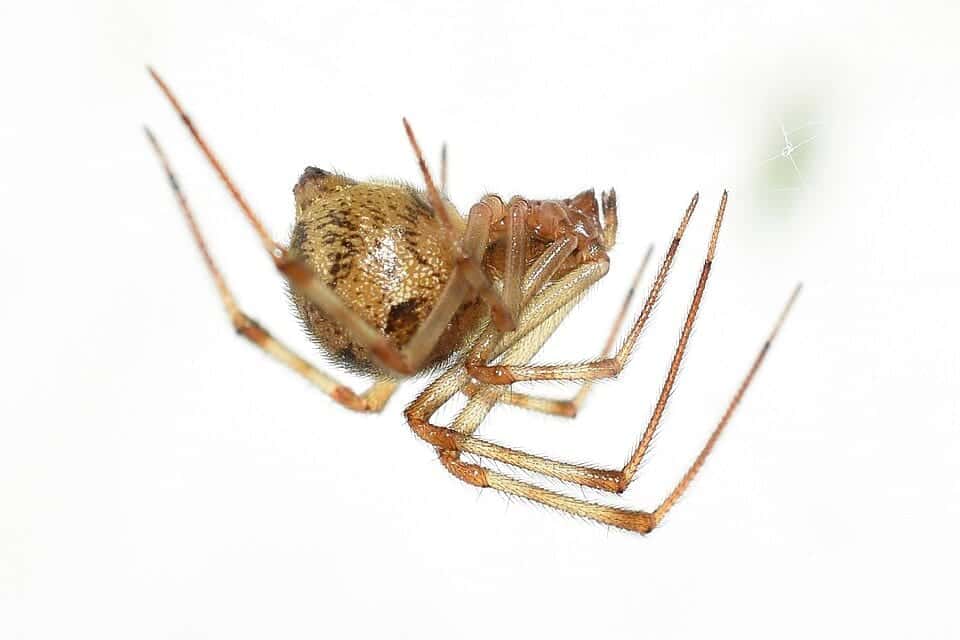
- Common house spider: a small-to-medium brown spider with a rounded, mottled abdomen that builds tangled cobwebs in corners, window frames, and basements — the classic "cobweb" maker of ceilings and garages
- Grass or funnel spiders that wander in: fast, brownish spiders with long spinnerets that normally build sheet-and-funnel webs outdoors but occasionally stray inside in fall
- Wolf spiders: large, hairy, fast-running ground hunters that do not build a web to catch prey and may sprint across a floor at night — intimidating but not aggressive, and important garden predators
- Cellar spiders ("daddy longlegs" of the basement): pale, tiny-bodied spiders with extremely long, thin legs that hang in loose webs in cool corners and shake rapidly when disturbed
- Long male legs and a small body: many of the wanderers are leggy males, which look larger and spindlier than the rounder females you might find in a web
The overwhelming majority of spiders you find indoors in the fall are entirely harmless to people — they cannot meaningfully hurt you and have no interest in doing so. In fact they earn their keep, quietly eating flies, mosquitoes, gnats, and other pest insects that make it inside. The two medically significant spiders in North America — the black widow and the brown recluse — are shy, region-specific, and rarely the animal on your living-room wall, but if you live within their range it is worth learning their marks so you can tell them apart with confidence. When in doubt, a clear photo beats a squash.
Try Spotter free on iPhone or Android
Plants, animals, fungi and rocks from one photo. 5 free identifications every day, no card required.


What to Do About Them
Because the fall spiders are mostly harmless and short-lived — the wandering males have only a few weeks to find a mate — the simplest approach is often to leave them be and let them thin out your other insects. If you would rather not share the space, the humane and effective move is the cup-and-card catch: place a cup over the spider, slide a piece of stiff paper underneath, and carry it outside. Reaching for a shoe is rarely necessary and does nothing to change next fall. If you want fewer of them indoors generally, focus on prevention rather than pesticides: seal gaps around doors, windows, and utility lines; add or repair weatherstripping and screens; reduce clutter in basements and garages where they hide; and knock down cobwebs as they appear. Cutting back the insects that spiders feed on — for instance by switching outdoor lights to less bug-attracting bulbs — removes the buffet that draws them in the first place.
When to Take a Closer Look
For nearly every fall house spider, "identify and relocate" is the whole story. The exceptions are the two spiders worth positively identifying if you are inside their range: the black widow, a glossy black spider with a red hourglass on the underside of its abdomen, which hides in undisturbed spots like woodpiles, garages, and sheds; and the brown recluse, a modest tan spider with a violin-shaped mark behind its eyes, found mainly in the south-central United States. Both are reclusive and bite only when trapped against skin, but knowing their marks lets you handle the rare real one calmly instead of fearing every spider on the wall. If a spider genuinely worries you, do not handle it — get a photo from a safe distance and identify it first.
Found a big fall spider on your wall and want to know whether it is a harmless house spider or something worth a second look? Snap a clear photo — ideally showing the body shape, leg length, and any markings — and let Spotter help you identify it as a starting point, so you can tell the lovesick wanderer from the rare spider worth respecting.
Try Spotter free on iPhone or Android
Plants, animals, fungi and rocks from one photo. 5 free identifications every day, no card required.