
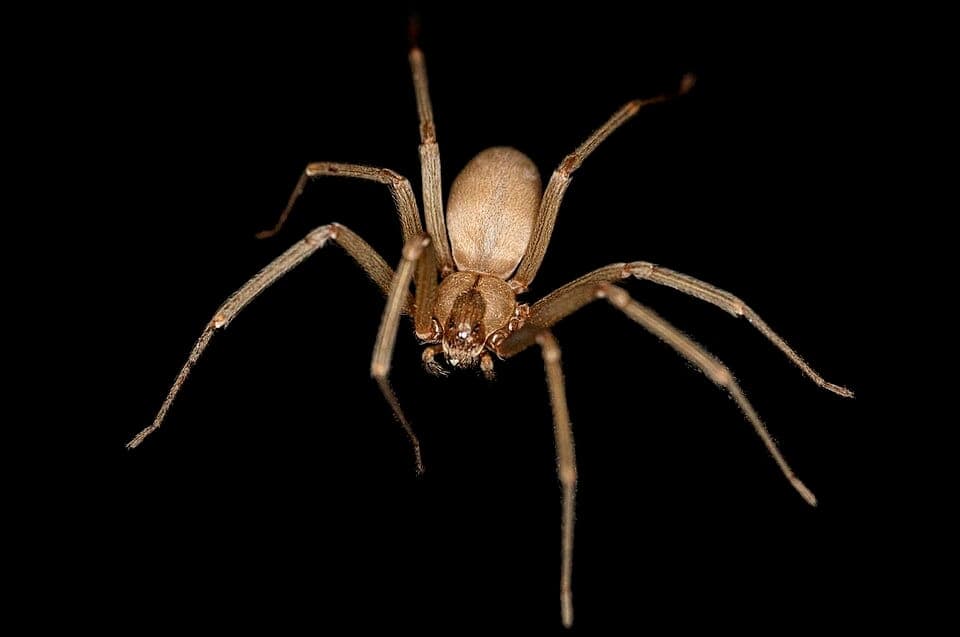
Find a smallish brown spider in the basement, the garage, or a stack of firewood, and the first name that jumps to mind is often "brown recluse." It is one of the most feared spiders in the country, and for understandable reasons — but it is also one of the most wildly over-reported. Arachnologists who study these spiders point out that the overwhelming majority of suspected brown recluses turn out to be harmless look-alikes, in large part because the one clue everybody has heard about — the violin marking — is close to useless in untrained hands. Learning what actually identifies a recluse, and what does not, is the difference between a sensible response and needless panic.
Why the "Violin" Myth Fools Almost Everyone
You have probably read that a brown recluse has a dark violin- or fiddle-shaped mark behind its head. That is technically true of the species — but it is a terrible field mark for the public, because a great many ordinary brown spiders have some patch, blotch, or shading that a worried person can imagine into a violin shape. Experts note that people fixate on the "fiddle" and forget everything else, so all sorts of unrelated spiders get condemned as recluses. The marking also varies, can be faint, and means nothing without the features below. If your entire identification rests on "I think I see a violin," you almost certainly do not have enough to go on.
The Feature That Actually Identifies a Recluse: Its Eyes
The single most reliable way to identify a brown recluse is its eye pattern — and it is not something you should try to check on a live, cornered spider up close. Most spiders have eight eyes, usually in two rows of four. A recluse has only six eyes, arranged in three distinct pairs (dyads) in a wide semicircle. Beyond the eyes, a genuine recluse shows this full combination:
- Six eyes in three pairs, not the eight most spiders have — the definitive trait
- A uniformly colored abdomen (no stripes, spots, or bold patterns) covered in fine hairs
- Legs that are a solid tan to brown, with no bands, stripes, or spines — just fine hairs
- A body (not counting legs) roughly the size of a pencil eraser, about a quarter to a half inch
- A generally smooth, "plain" look overall — bold markings on the legs or abdomen essentially rule a recluse out
If a spider has banded or spiny legs, a patterned abdomen, or eight eyes, it is not a brown recluse — full stop. Those single details eliminate the vast majority of the brown spiders people worry about, including many common house and yard spiders that are completely harmless.
Try Spotter Free on iOS & Android
Plants, animals, fungi, and rocks — all from a photo. 5 free identifications every day, no credit card required.
Where Brown Recluses Actually Live
Geography matters more than most people realize. Despite the urban legend that recluses lurk everywhere in the U.S., research places their native range in the central and southern Midwest and parts of the South — think a band roughly from Nebraska and Iowa down through Texas and east toward Georgia and Kentucky. Outside that core range, verified recluses are rare, and a "recluse" reported from the coasts or the far north is almost always a misidentification. As their name suggests, they are shy and hide in undisturbed places: cardboard boxes, closets, attics, basements, woodpiles, and clothing or shoes left in storage. They are not aggressive and bite defensively, typically when trapped against skin.
A Safety-First Word
Take spiders seriously without letting fear drive the decision. Do not handle a spider you cannot confidently identify; if you need to move one, coax it into a jar rather than grabbing it, and shake out stored shoes, gloves, and clothing in areas where recluses genuinely occur. This article is for identification, not medical advice — bite reactions vary, many suspected "recluse bites" turn out to have other causes entirely, and any wound that becomes severe, spreading, or worrying should be evaluated by a healthcare professional. The goal is calm, accurate identification, not swatting every brown spider on sight.
Found a brown spider and want to know whether it is genuinely a recluse or one of the many harmless look-alikes it gets confused with? Take a clear photo from a safe distance and let Spotter help you identify it, so you can respond based on what it actually is.
Try Spotter Free on iOS & Android
Plants, animals, fungi, and rocks — all from a photo. 5 free identifications every day, no credit card required.