
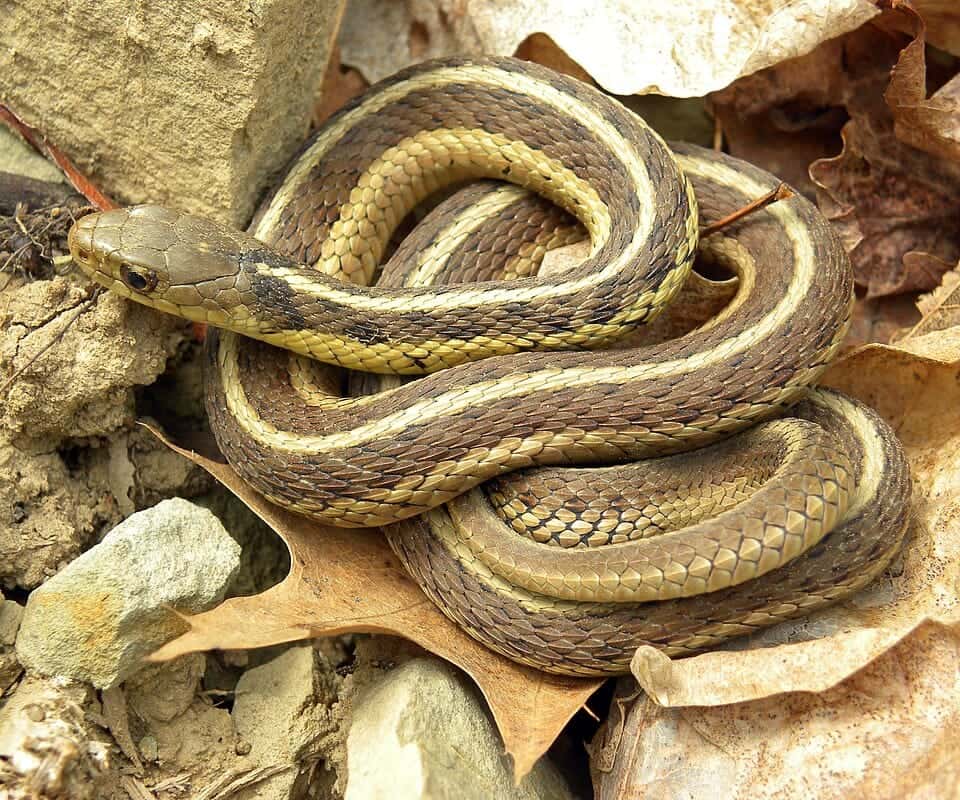
Finding a snake is startling, and the first question is almost always the same: is it dangerous? Most snakes are harmless and are far more interested in avoiding you than confronting you. The single most important rule of snake identification is this: identify from a distance, never by handling.
Never pick up, corner, or try to move a snake to identify it. Give it space. A photo from a safe distance tells you everything you need without any risk.
What to Look At (From a Safe Distance)
- Pattern and color — bands, diamonds, blotches, stripes, or solid
- Body build — thick and heavy-bodied, or slender and quick
- Head shape — many venomous species have a broad, triangular head, though this is not reliable on its own
- Tail — a rattle is a clear warning sign on rattlesnakes
- Behavior — coiled and holding ground, or moving away
Why Rhymes and Rules of Thumb Are Not Enough
You may have heard rhymes about red and yellow bands, or that a triangular head means venom. These shortcuts fail often — harmless snakes mimic dangerous ones, flatten their heads to look threatening, and vary by region. Do not stake your safety on a rhyme. Confirm the species.
Get a Photo, Get the Species
Spotter identifies snakes and other reptiles from a photo you can take from several feet away, and returns the species along with habitat and behavior notes. Use it to satisfy your curiosity safely — and remember that it is an identification and learning tool, not a substitute for medical advice.
Try Spotter free on iPhone or Android
Plants, animals, fungi and rocks from one photo. 5 free identifications every day, no card required.


If Someone Is Bitten
Treat any snakebite as a medical emergency and contact a poison control center or emergency services immediately — do not wait to identify the snake first, and do not attempt folk remedies. A photo can help responders, but getting care comes first. When in doubt about any wild animal, keep your distance and let the experts weigh in.