FG-0001 · Wildlife · 5 species
Identifying Snakes in Texas
By Derek Gauger · Updated
Overview
Texas is home to more snake species than any other U.S. state — around 75 in all — thanks to its enormous range of habitats, from Gulf marshes to Hill Country limestone to West Texas desert. The great majority are non-venomous and beneficial, but a handful are venomous and worth knowing.
The golden rule of snake identification is to do it from a distance. Never handle, corner, or try to move a snake to identify it — a photo from several feet away is all you need. This guide covers the snakes you are most likely to encounter and how to tell them apart.
Key species to know
FG-0001.01
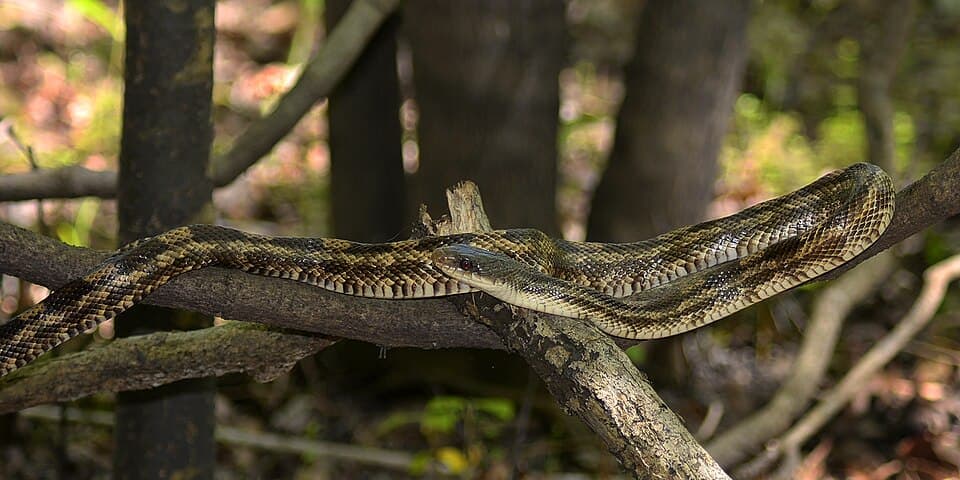
Texas Rat Snake
Pantherophis obsoletus lindheimeri
A large, non-venomous constrictor with blotchy brown-and-tan markings and a tendency to climb. Often found near barns and outbuildings, where it hunts rodents. Harmless but will rattle its tail and bluff when cornered.
Habitat: Woodlands, farmland, suburbs, and along waterways across most of the state.
FG-0001.02
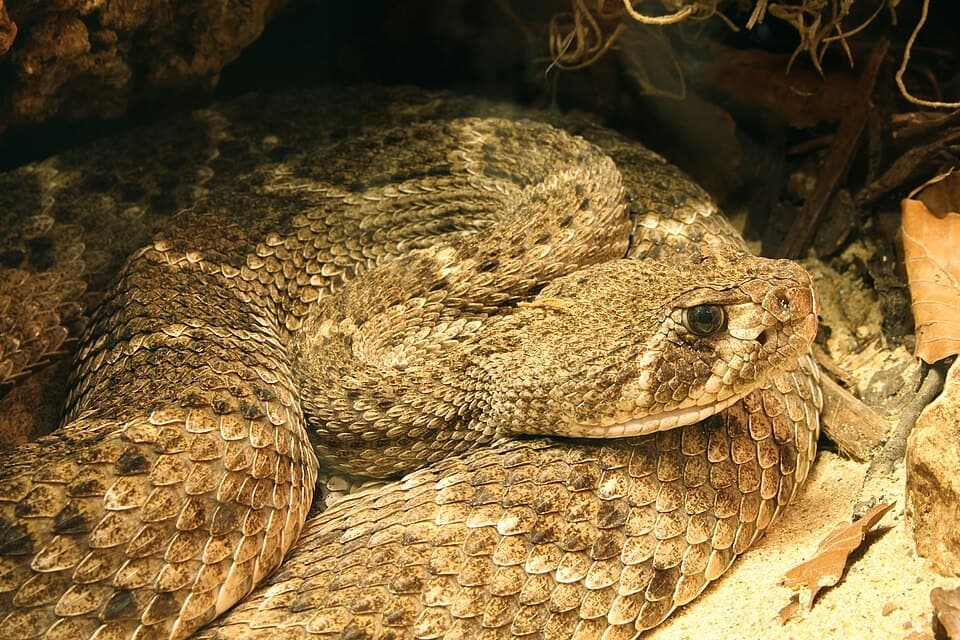
Western Diamondback Rattlesnake
Crotalus atrox
Texas's most widespread rattlesnake — heavy-bodied with diamond-shaped blotches and a black-and-white "coon tail" just before the rattle. Venomous; gives a clear buzzing warning when threatened.
Habitat: Dry brush, rocky slopes, and grassland, especially in central and western Texas.
Venomous. Keep well back and never attempt to handle or kill it — most bites happen during those attempts.
FG-0001.03
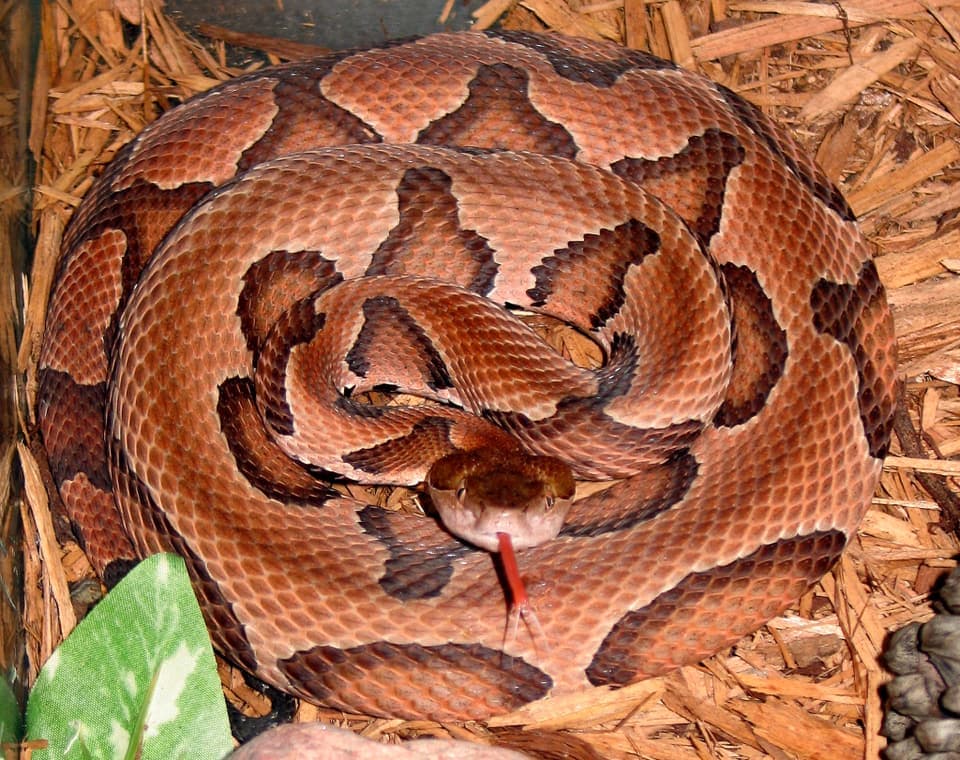
Copperhead
Agkistrodon contortrix
A pit viper with hourglass-shaped chestnut bands over a tan body, blending superbly into leaf litter. Venomous but generally mild; relies on camouflage and often stays still.
Habitat: Wooded areas, creek bottoms, and suburban edges in eastern and central Texas.
Venomous. Watch where you step and reach in leaf litter and woodpiles.
FG-0001.04
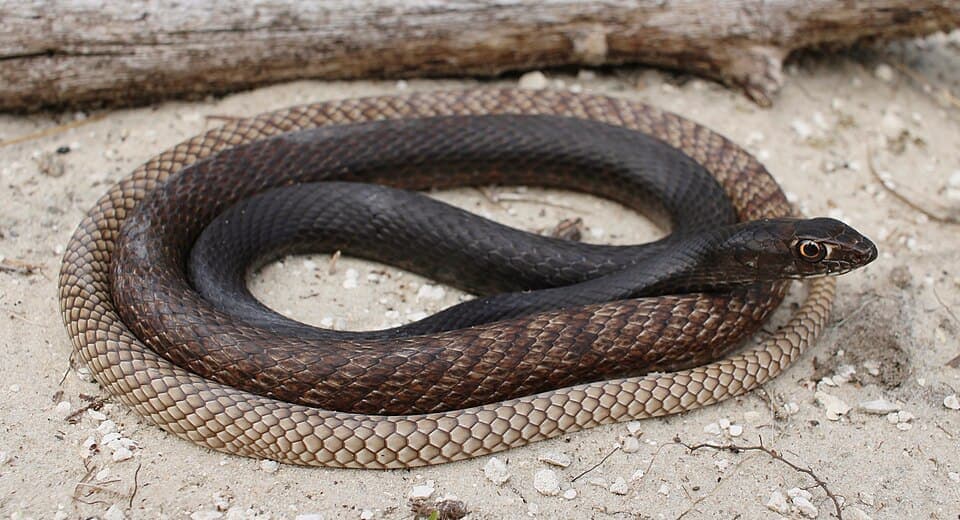
Coachwhip
Masticophis flagellum
A long, slender, fast-moving non-venomous snake, often two-toned with a braided-whip look to its tail. Curious and quick to flee rather than fight.
Habitat: Open country — grassland, brush, and sandy areas statewide.
FG-0001.05
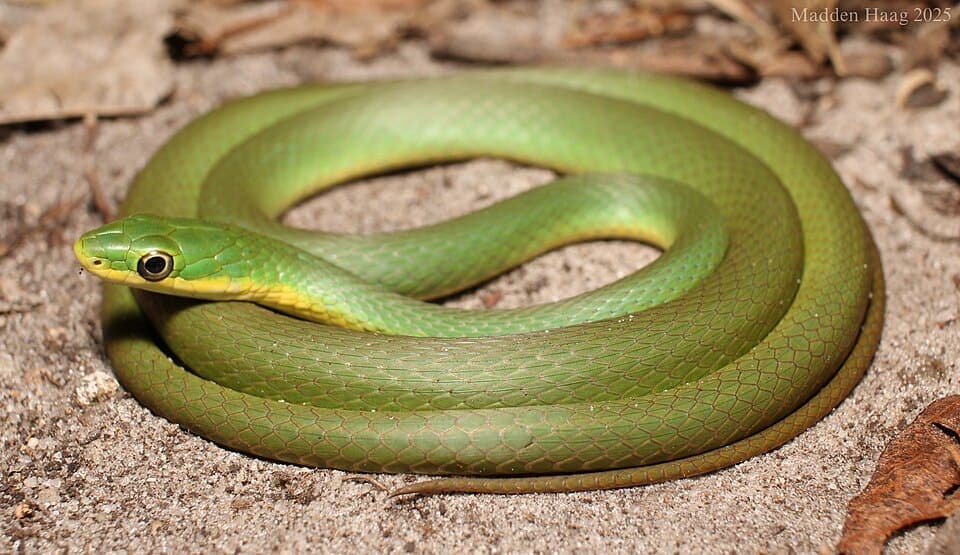
Rough Green Snake
Opheodrys aestivus
A slim, bright-green, harmless snake that lives in shrubs and vines, nearly invisible among leaves. Feeds on insects and is completely gentle.
Habitat: Dense vegetation near water, especially in eastern Texas.
Through the seasons
- Snakes are most active in spring and fall, and on warm evenings in summer.
- Watch your step around rock piles, woodpiles, and tall grass, and reach only where you can see.
- Most bites occur when people try to handle or kill a snake — give any snake room and it will leave.
Questions
- How many venomous snakes are in Texas?
- Texas has four groups of venomous snakes: copperheads, cottonmouths, rattlesnakes, and coral snakes. The western diamondback rattlesnake and copperhead are among the most commonly encountered.
- What is the best way to identify a snake safely?
- From a distance. Take a photo from several feet away and use an app like Spotter to identify the species — never pick up or corner a snake to get a closer look.
From Field Notes
Not sure what you found?
Take a photo with Spotter for the name, field marks, look-alikes and safety notes in seconds.


In this guide
- Species
- 5
- Region
- Texas