The quickest way to identify petrified wood is to look for two things at once: the piece still shows the grain, rings, knots, or bark texture of a tree, yet it is as hard and heavy as quartz and feels cold and stony rather than warm and light like real wood. Petrified wood is fossilized wood in which silica — the mineral in quartz — has replaced the original plant tissue cell by cell over millions of years, so a specimen can look convincingly like a chunk of log while weighing far more and refusing to be scratched by a knife. If a woody-looking rock is surprisingly heavy, cannot be scratched by steel, and shows faithful wood grain running through solid stone, you are almost certainly holding petrified wood. Here is how to identify it with confidence and tell the real thing from fakes and look-alikes.
How to Identify Petrified Wood
Petrified wood sits at an odd crossroads — it is a fossil, a rock, and a near-perfect copy of a tree all at once. That is exactly what makes it identifiable: it has to pass as wood in appearance and as quartz in hardness and weight. Work through the texture, the hardness, the heft, the color, and where you found it, and a genuine piece confirms itself.
It looks like wood: grain, rings, and bark
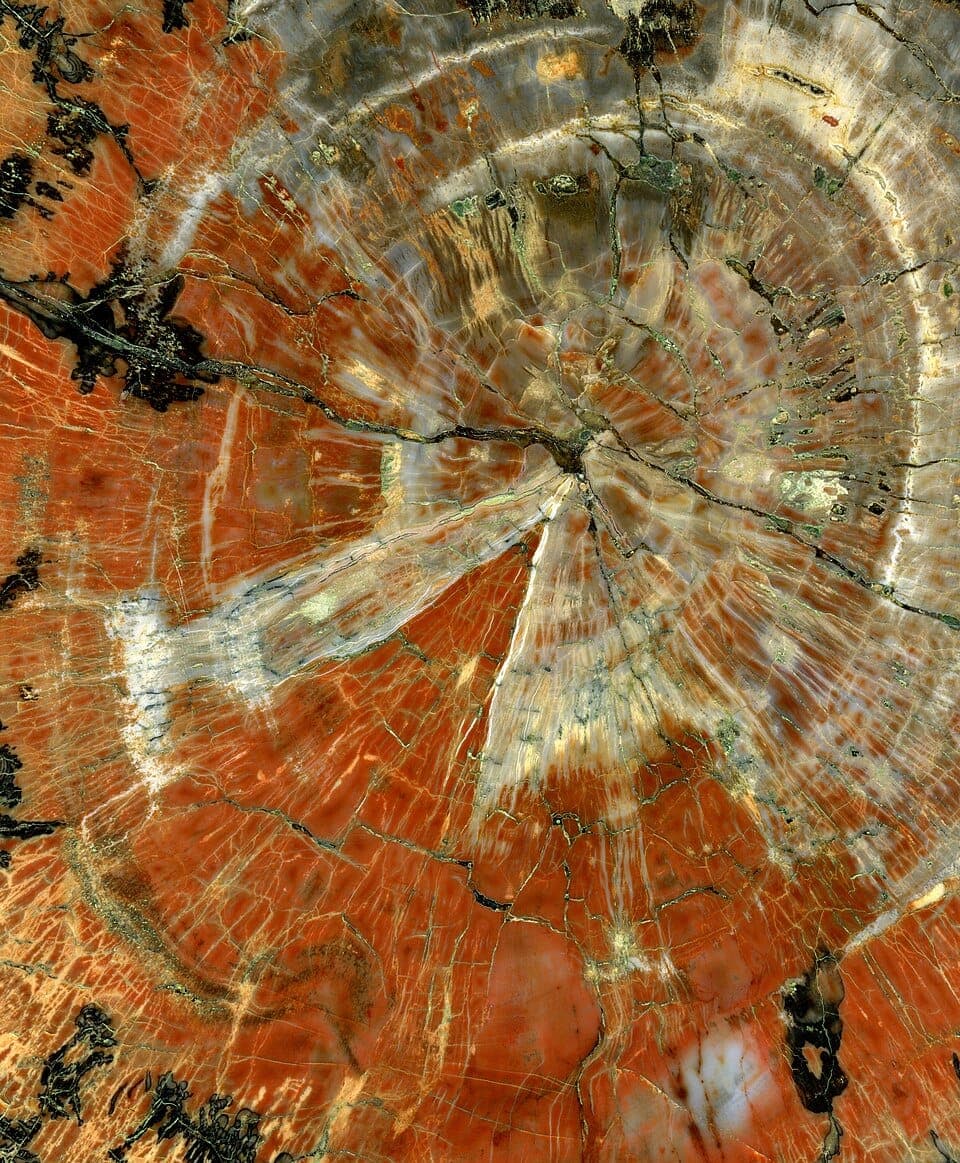
The first clue is visual. Real petrified wood preserves the original tree’s structure — straight or wavy grain lines, growth rings, knots, branch scars, and sometimes the rough texture of bark on the outside. Under a hand lens you can often see the microscopic cell structure faithfully reproduced in stone. This inherited wood pattern is what separates petrified wood from ordinary agate, jasper, or chert, which can be the same minerals but show banding or random swirls rather than true wood grain.
It is hard: the quartz scratch test
Because the wood has been replaced by silica, petrified wood is genuinely hard — about 6.5 to 7 on the Mohs scale, the same as quartz. A steel knife blade or nail (hardness about 5.5) will not scratch it; instead, a sharp edge of petrified wood will scratch glass and even leave a mark on steel. If your "petrified wood" is soft enough to gouge with a knife or your fingernail, it is not silicified wood — it may be plain dried wood, chalk, soft shale, or a modern imitation.
It is heavy and cold
Pick it up. Petrified wood is far denser than ordinary wood and feels like a rock of the same size — noticeably heavy for its bulk — and it stays cool to the touch the way stone does, rather than the slight warmth of real wood. A piece of genuine driftwood or a dried branch will feel light and warm; a convincing lump of stone that still shows grain is the tell-tale combination of petrified wood.
Color and polish
Trace minerals stain petrified wood in rich, often banded colors: browns and tans from organic carbon, reds and oranges and yellows from iron oxides, blacks and purples from manganese, and occasional greens and blues from copper or chromium. Because it is essentially quartz, it takes a glassy, high polish, which is why tumbled and cut petrified wood is popular with collectors. Colors in a real piece tend to follow the grain and feel consistent and natural rather than blotchy or painted-on.
Where you find it
Petrified wood turns up where ancient sediments are eroding: the arid West is the classic home — Arizona, Utah, Nevada, Oregon, Washington, and the Dakotas — but pieces wash into river gravels, dry washes, road cuts, and badlands across much of the country. It weathers out of soft sedimentary rock and then survives as hard chunks scattered on the surface, long after the mudstone around it has crumbled. Finding a wood-grained stone in gravel far from any living tree is a strong hint.
Try Spotter Free on iOS & Android
Plants, animals, fungi, and rocks — all from a photo. 5 free identifications every day, no credit card required.
Real Petrified Wood vs. Fakes and Look-Alikes
Several things get mistaken for petrified wood, and a few products are sold as it. Here is how the real thing differs:
- Ordinary dried wood or driftwood — light, warm, and soft enough to dent with a fingernail; it will float or burn, while petrified wood sinks like the rock it is and never burns.
- Resin-stabilized or "cast" fakes — wood soaked in resin, or molded resin and concrete, can mimic the grain but are much lighter, can be scratched, and often fluoresce bright blue under a UV light, where real petrified wood glows weakly orange or not at all.
- Plain jasper, agate, or chert — the same silica minerals and similar hardness, but they show banding, swirls, or solid color instead of true wood grain, rings, and bark.
- Coal or charcoal — black and woody-looking but very light, soft, sooty to the touch, and it will mark your hands; petrified wood is hard, heavy, and clean.
- Concrete or ceramic imitations — uniform, often too perfect, lighter than expected, and lacking the fine cell-level grain of real petrified wood.
- Fossil bone — also heavy and stony, but shows a spongy internal honeycomb rather than parallel wood grain.
A simple confirmation for the carbonate imposters: a drop of dilute vinegar or household acid will fizz on limestone or concrete but does nothing to silica-rich petrified wood. Combine the no-scratch hardness, the heavy cold heft, and visible wood grain and you have ruled out almost every fake.
Collecting Petrified Wood Responsibly
If you want to pick up a piece, know the rules first. Collecting petrified wood is strictly illegal in national parks and monuments — Petrified Forest National Park in Arizona is the famous example, and rangers take it seriously. On other public land the rules vary: some Bureau of Land Management areas allow limited personal collecting of surface pieces, while state and private lands require permission. Always check local regulations before you take anything, take only what the rules allow, and leave scientifically important or large specimens where they are so others can enjoy them.
Frequently Asked Questions
How can I tell petrified wood from a regular rock?
Look for inherited wood structure. A regular rock shows crystals, layers, or random patterns; petrified wood shows the grain, growth rings, knots, or bark of a tree preserved in stone. Combine that with quartz-level hardness (it will not scratch with a knife) and you can be confident.
Is it petrified wood or just driftwood or charcoal?
Weight and hardness settle it instantly. Driftwood is light and warm and floats; charcoal is light, soft, and sooty. Petrified wood is heavy, cold, hard as quartz, and will not burn, dent, or rub off on your hands.
Is petrified wood worth anything?
It depends entirely on quality. Common brown pieces are abundant and modest, while specimens with vivid colors, sharp preserved detail, agatized "rainbow" sections, or large polished rounds are prized by collectors. Condition, color, and how well the wood structure shows matter far more than size alone.
Can I pick up petrified wood I find?
Only where it is legal. It is prohibited in national parks and monuments, allowed in limited amounts on some BLM land, and off-limits on private land without the owner’s permission. Check the specific rules for where you are standing before you collect anything.
Found a wood-grained stone and not sure if it is the real thing? Snap a clear, well-lit photo — ideally showing the grain and a fresh or polished surface — and let Spotter help you identify it.
Try Spotter Free on iOS & Android
Plants, animals, fungi, and rocks — all from a photo. 5 free identifications every day, no credit card required.