
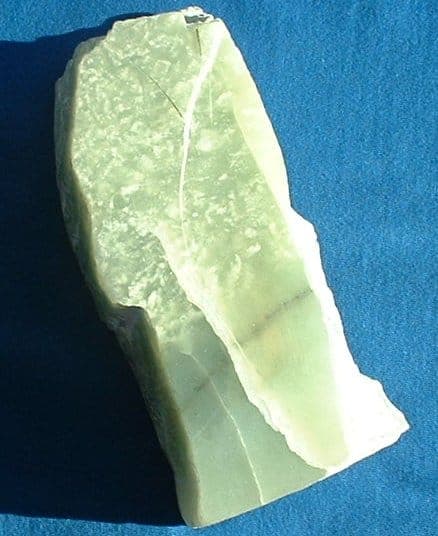
Real jade can be identified by its cool, dense feel, its soft waxy-to-oily glow rather than a glassy shine, and its extraordinary toughness — it resists scratching and chipping in a way that glass and plastic cannot. The two true jades, jadeite and nephrite, both feel noticeably heavy and cold for their size, show subtle variation in color rather than a flat even dye, and ring with a clear tone when tapped. If a green "jade" is light, warm to the touch, perfectly uniform in color, and cheap, it is probably dyed stone, glass, or plastic. Here is how to identify genuine jade and run a few simple checks before you buy or trust a piece.
How to Identify Jade
The word "jade" covers two different minerals that look alike and have been carved for thousands of years: jadeite and nephrite. Both are prized for the same reason — a dense, interlocking crystal structure that makes them exceptionally tough. Identifying real jade means reading a handful of properties together, because no single one is proof on its own. Work through color, luster, feel, toughness, and sound.
Color
Jade comes in far more than green. Jadeite ranges from white and lavender to yellow, orange, black, and the famous rich "imperial" emerald green; nephrite is usually green to creamy white, often a spinach or olive green. The key is that natural jade shows subtle variation — soft gradations, cloudy patches, and faint inclusions — rather than one flat, electric, perfectly even color. A green that looks too bright, too uniform, or has visible dye concentrated in cracks is a warning sign of dyed or fake material.
Luster and glow
Hold the piece to the light and study its surface. Polished jade has a distinctive waxy, greasy, or soft oily luster, and better translucent pieces seem to glow softly from within rather than sparkle on the surface. Glass imitations look glassy and bright with a hard shine, and often contain tiny round bubbles you can spot with a loupe. Plastic looks and feels obviously cheap and lightweight. That soft inner glow is one of the hardest things for a fake to reproduce.
Feel and temperature
Pick the piece up. Jade is dense — denser than most imitations — so a genuine piece feels surprisingly heavy for its size. It is also a good conductor of heat, so it feels cool and smooth against your skin and stays cool for a moment even as your hand warms it. Glass can mimic the coolness but not the heft, and plastic fails both tests: it feels light and warms up almost instantly in your hand.
Toughness and hardness
Jade’s signature property is toughness — its resistance to breaking and chipping, which comes from its felted, interlocking crystals. This is different from hardness, which is resistance to scratching. Jadeite rates about 6.5 to 7 on the Mohs scale and nephrite about 6 to 6.5, so both are hard enough to lightly scratch glass (hardness 5.5) while glass cannot scratch them. Jade also will not chip or flake at the edges the way glass does. Be careful with scratch tests, though: do them on an inconspicuous spot, and never assume a scratch test alone proves authenticity.
Sound
Gently tapping two pieces of jade together, or tapping a piece with a coin, produces a clear, bright, bell-like "ting" that resonates for a moment. Glass and plastic imitations give a duller, flatter, more hollow click. The sound test takes a little practice and is most useful as a supporting clue alongside feel and luster.
Jadeite vs. Nephrite
- Jadeite — rarer and slightly harder, with a broader color range including the most valuable imperial green and vivid lavender; often more translucent with a finer, more granular texture.
- Nephrite — more common and slightly softer and tougher, typically in greens and creamy whites with a smoother, more fibrous, oily look; the traditional jade of ancient China and the "jade" of many historic carvings.
- Both — are genuine jade and share the same cool, dense feel and waxy glow; telling them apart precisely usually takes a gemologist, but distinguishing either from a fake is something you can do yourself.
Common Fakes and How to Spot Them
- Dyed quartz or quartzite (often sold as "Malaysia jade" or "mountain jade") — real stone but artificially colored; look for dye pooled in cracks and an unnaturally even, bright color.
- Dyed or polymer-treated jade ("Type B" and "Type C") — real jade that has been chemically altered or injected with resin; it can look great but is far less valuable and may show a slightly resinous surface under magnification.
- Glass — looks glassy and bright, may contain round air bubbles, feels lighter than jade, and gives a dull tap.
- Serpentine, aventurine, and other green stones — genuine minerals passed off as jade; usually softer, and often more translucent or more sparkly than real jade.
- Plastic and resin — light, warm to the touch, and easily scratched; the easiest fake to catch by weight and feel.
Try Spotter Free on iOS & Android
Plants, animals, fungi, and rocks — all from a photo. 5 free identifications every day, no credit card required.
Simple At-Home Checks
- 1Heft it: a genuine piece feels heavy and dense for its size, and stays cool against your skin for a moment.
- 2Study the luster: look for a soft, waxy, oily glow rather than a hard glassy shine, and check for tiny bubbles with a loupe.
- 3Look at the color: natural variation, cloudiness, and faint inclusions are good signs; perfectly uniform, electric color and dye in cracks are bad signs.
- 4Tap it: listen for a clear, bell-like ring rather than a dull, hollow click.
- 5For anything valuable, get it checked: a jeweler or gemologist can confirm jadeite versus nephrite and detect treatments with the right tools.
Frequently Asked Questions
How can you tell real jade from fake?
Real jade feels cool and heavy for its size, has a soft waxy glow rather than a glassy shine, shows natural variation in color, resists scratching, and rings with a clear tone when tapped. Fakes are usually lighter, warmer, too uniform in color, and give a dull sound. Use several checks together rather than relying on one.
What color is real jade?
Jade comes in many colors, not just green. Jadeite can be white, lavender, yellow, orange, black, or deep emerald green, and nephrite is usually green to creamy white. The most prized color is the translucent "imperial" green of fine jadeite, but green is far from the only genuine color.
Does real jade scratch glass?
Yes. Both jadeite and nephrite are harder than ordinary glass, so real jade can lightly scratch a glass surface while glass cannot scratch the jade. Test gently on a hidden spot, and remember that some other hard stones can also scratch glass, so use this as one clue among several, not proof on its own.
What is the difference between jadeite and nephrite?
They are two distinct minerals that are both called jade. Jadeite is rarer, slightly harder, and comes in a wider range of colors including the most valuable imperial green; nephrite is more common, slightly tougher, and usually appears in greens and creamy whites. Both are authentic jade.
Found a green stone or carving and not sure whether it is real jade? Snap a photo and let Spotter help you identify it as a starting point, then confirm it with the feel, the glow, and a careful look at the color.
Try Spotter Free on iOS & Android
Plants, animals, fungi, and rocks — all from a photo. 5 free identifications every day, no credit card required.