By late summer the black-and-yellow insects buzzing around your picnic, soda can, or garbage bin get bolder and more numerous — and more likely to sting. "Wasp," "yellowjacket," and "hornet" get used interchangeably, but they are different insects with different tempers and different nests. Telling them apart helps you know how much space to give one and where a nest might be hiding.
Yellowjackets
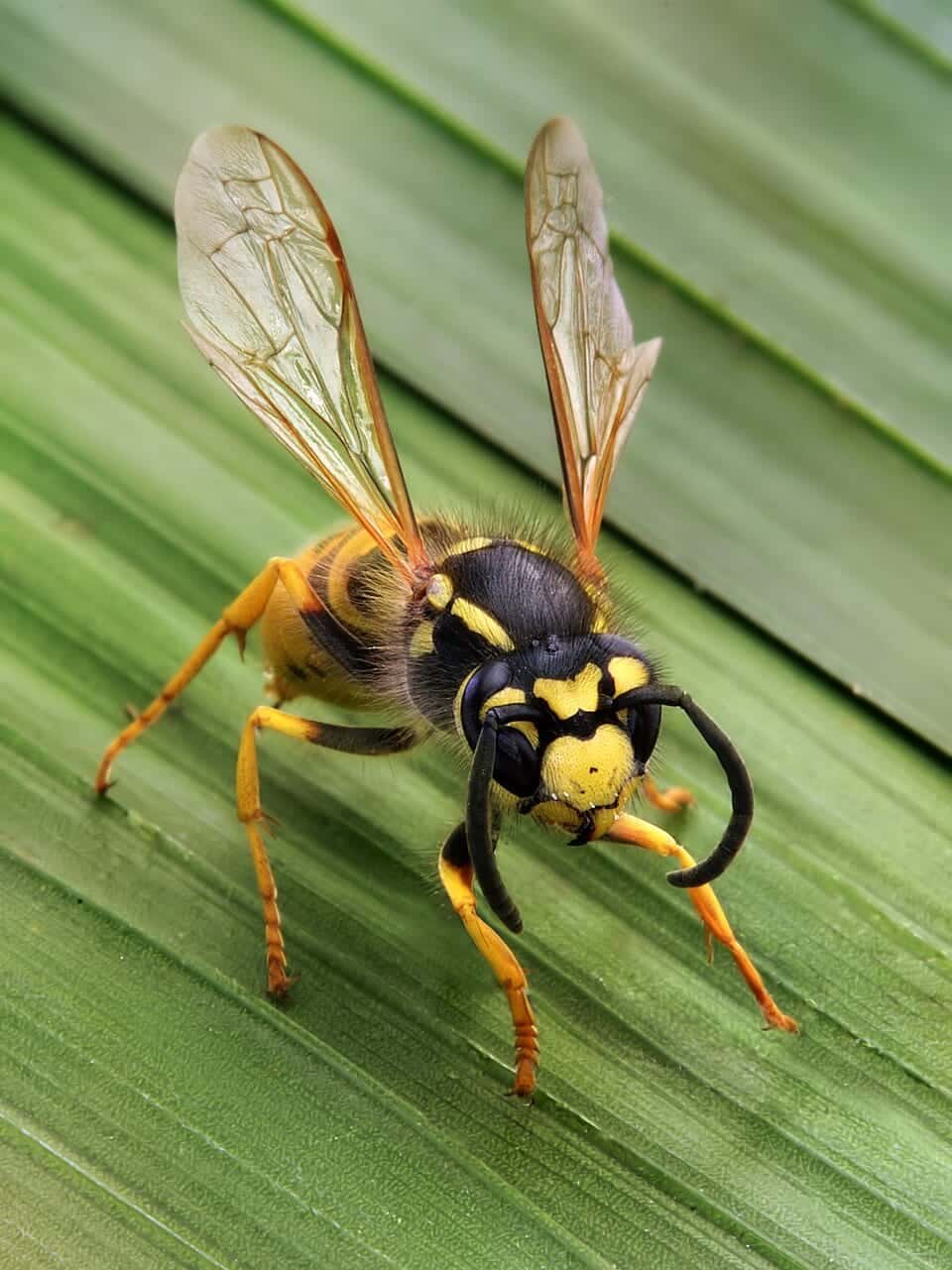
Yellowjackets are the small, bright, hot-tempered ones — about half an inch long, boldly banded in crisp yellow and black, with a smooth shiny body and a tightly pinched waist. In flight they tuck their legs in close, giving a compact, bullet-like silhouette. They are the insects most likely to crash your cookout: by late summer their colonies peak and natural food runs short, so they scavenge meat, sweets, and drinks aggressively. Their nests are usually hidden — underground in old rodent burrows, or inside wall voids and hollow logs.
Paper Wasps
Paper wasps are longer and more slender — around an inch — with a noticeably narrow, thread-like waist and long legs that dangle in flight, giving a leggy, drifting look. They are usually reddish-brown to dark brown with yellow markings. They build the open, umbrella-shaped combs of gray papery cells you see hanging under eaves, railings, and mailbox lids, with the cells visible from below. Of the three, paper wasps are the most easygoing and generally will not bother you unless you disturb the nest directly.
Bald-Faced Hornets
Despite the name, the bald-faced hornet is actually a large aerial yellowjacket. It is bigger — around three-quarters of an inch — and marked in black and ivory-white rather than yellow, with a pale patterned face that gives it its name. It builds the big enclosed, gray, football- or teardrop-shaped paper nests that hang from tree branches, shrubs, or building eaves. They defend those nests vigorously, so a large hanging paper nest is one to admire from a distance.
Quick Tells at a Glance
- Small, bright yellow-and-black, legs tucked in, raiding your food → yellowjacket
- Long, slender, dangling legs, open umbrella nest under an eave → paper wasp
- Black-and-white, chunky, with a big enclosed paper nest in a tree → bald-faced hornet
- Any of them can sting repeatedly — none lose the stinger the way a honeybee does
Which Is Most Likely to Sting?
Yellowjackets are responsible for most painful stinging encounters, especially in August when colonies are largest and food is scarce; they will defend a hidden ground nest you never saw coming. Bald-faced hornets are highly defensive right around their nest but rarely bother you away from it. Paper wasps are the calmest of the three. In all cases, give a nest a wide berth, avoid swatting — crushing a yellowjacket can release an alarm scent that summons others — and never seal or spray a large nest yourself if you are sensitive to stings; call a professional.
Not sure whether the stinger patrolling your patio is a mellow paper wasp or a short-fused yellowjacket? Snap a photo from a safe distance and Spotter will identify it in seconds so you know how much room to give it.
Try Spotter free on iPhone or Android
Plants, animals, fungi and rocks from one photo. 5 free identifications every day, no card required.