
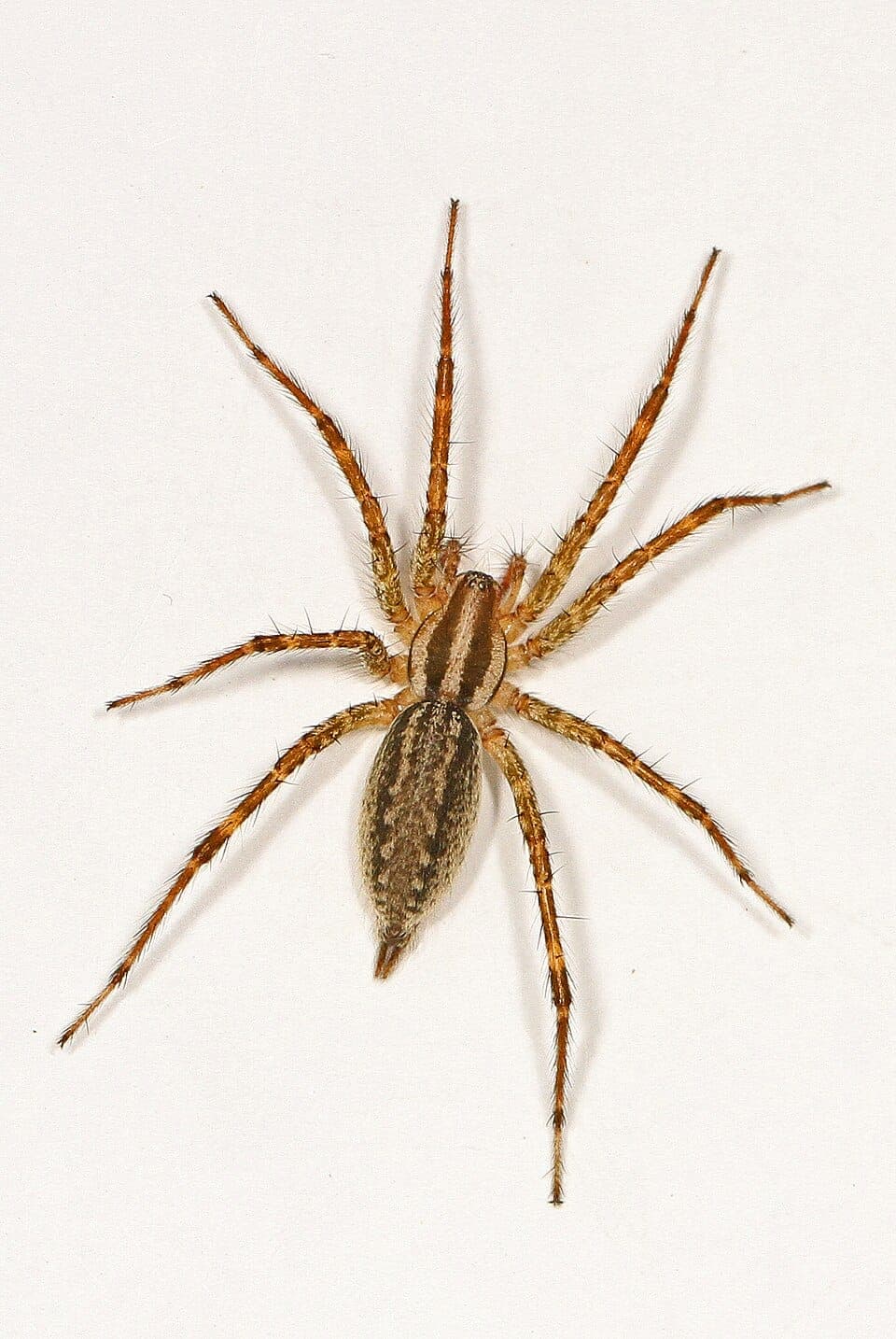
On the right morning in late summer it can look like the lawn was decorated overnight: dozens of flat, sheet-like webs strung low across the grass, each one with a small tunnel or funnel leading down into the blades. Heavy dew catches on the silk and makes every web glow, so a yard that looked normal yesterday seems suddenly full of them. The webs did not appear overnight, and the spiders that built them are almost certainly grass spiders — some of the most common and least threatening spiders in North America.
Why They Seem to Appear Overnight
Grass spiders spin their webs all summer, but the silk is nearly invisible when it is dry. It takes a cool, humid night to reveal them: as temperatures drop toward morning, dew condenses on every strand and outlines each flat sheet in tiny water droplets. That is why the webs seem to materialize all at once on the first dewy mornings of late August and September. At the same time, the spiders that hatched in spring have spent the summer growing, so by late season there are simply more of them, and their webs are bigger.
How to Recognize the Web — and the Spider
The web is the easiest tell. Grass spiders build a wide, roughly horizontal sheet of non-sticky silk with a funnel-shaped retreat at one edge or corner. The spider waits hidden in the funnel and, when an insect stumbles onto the sheet, sprints out at remarkable speed to grab it — these spiders rely on quickness rather than sticky silk. The spider itself is brownish and long-legged, usually a half-inch to an inch across including the legs, with two dark stripes running down the top of the head region and a pair of long, finger-like spinnerets trailing from the rear.
- Flat, sheet-like web with a funnel or tunnel leading down into grass, a shrub, or a wall crevice
- Web is not sticky — the spider chases prey down instead
- Brownish body with two lengthwise dark stripes on the head region
- Fast-moving and shy; darts into the funnel when disturbed
- Most visible on cool, dewy late-summer and fall mornings
Try Spotter Free on iOS & Android
Plants, animals, fungi, and rocks — all from a photo. 5 free identifications every day, no credit card required.
Are Grass Spiders Dangerous?
Grass spiders are not considered dangerous to people. They are shy and non-aggressive, they flee rather than confront, and bites are rare and generally minor. The main source of worry is that they superficially resemble the hobo spider, another funnel-web builder found in parts of the Pacific Northwest — but even the hobo spider is no longer regarded by most experts as medically significant, and telling the two apart reliably takes a microscope. For everyday purposes, a fast brown spider living in a funnel web in your lawn is a beneficial predator quietly eating pest insects.
What to Do About the Webs
Nothing, in most cases. The webs do no harm to the grass and vanish from view as soon as the dew burns off. If you find them unsightly, a pass with the mower or a spray of water breaks them up, though the spiders will simply rebuild. Because they prey on the very insects most people want out of the yard, the easiest approach is to enjoy the free morning light show and leave them to their work.
Not sure whether the fast brown spider in the funnel is a harmless grass spider or something you want to keep your distance from? Snap a photo and let Spotter help you identify it, so you can tell the beneficial lawn dwellers from the few spiders worth respecting.
Try Spotter Free on iOS & Android
Plants, animals, fungi, and rocks — all from a photo. 5 free identifications every day, no credit card required.