As summer turns to fall, the sky fills with them: huge flocks of dark birds streaming over fields and highways, settling onto lawns and stubble in a moving carpet, or pouring into a stand of trees or a marsh at dusk in a roar of chatter. On some evenings a flock rises and rolls through the air as one shifting, smoke-like cloud, pinching and billowing into shapes before spilling down to roost — a display called a murmuration. After the quieter, territorial days of the nesting season, the sudden appearance of thousands of black birds together can be startling. They are almost always a mix of a few common species — European starlings, common grackles, red-winged blackbirds, and brown-headed cowbirds — flocking up for the season. Here is how to tell them apart.
The Usual Suspects
What looks like one anonymous mass of "blackbirds" is usually several species traveling together. The most common members of a fall flock are:
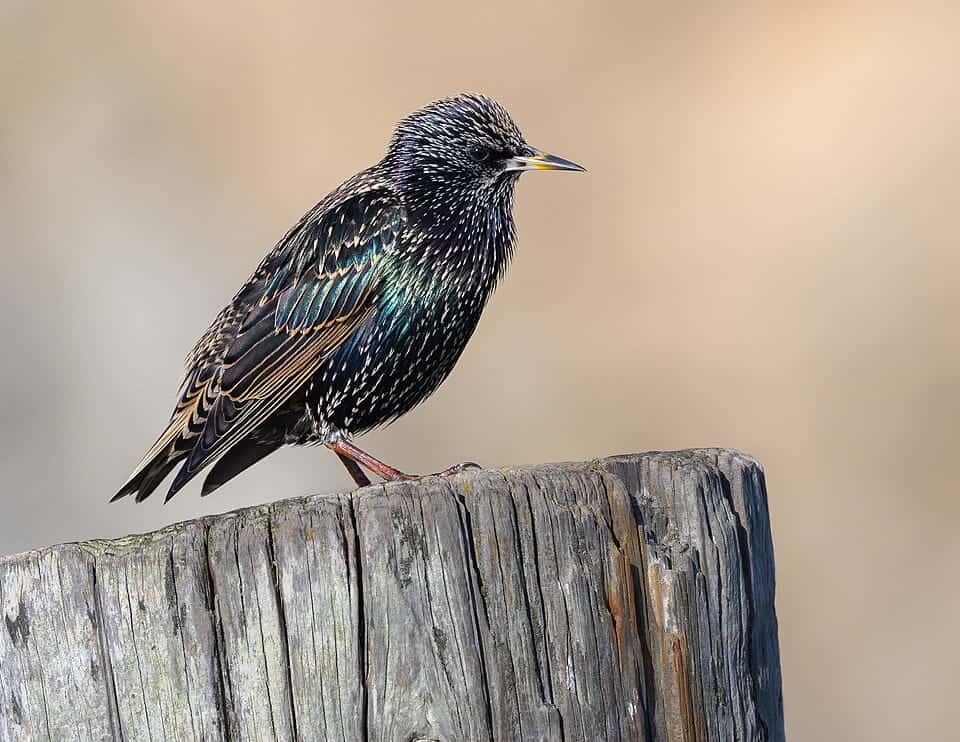
- European starling: chunky and short-tailed with a pointed bill and a stout, triangular look in flight; glossy black with a green-and-purple sheen, and in fall heavily spangled with white and buff spots, with a dark bill that turns yellow by spring
- Common grackle: larger and lankier with a long, keel-shaped tail and a pale yellow eye; glossy black with an iridescent bronze or blue-purple sheen, and a longer, heavier bill than a starling
- Red-winged blackbird: the male is solid glossy black with a bright red-and-yellow shoulder patch (often hidden at rest), while the streaky brown female looks almost like a big sparrow
- Brown-headed cowbird: the smallest of the group, the male black with a distinctly brown head and a short, finch-like bill, the female plain gray-brown
- Common grackles look long-tailed and glossy, starlings look short-tailed and spotted, red-wings flash red shoulders, and cowbirds are small with a stubby bill — sorting a flock starts with tail length and bill shape
Try Spotter free on iPhone or Android
Plants, animals, fungi and rocks from one photo. 5 free identifications every day, no card required.


Starling or Grackle? The Quick Tell
The two that get mixed up most are starlings and grackles, because both are common, glossy, and abundant in fall flocks. A few features separate them fast:
- Tail length: the single best mark — grackles have a long tail, often held in a V-shaped crease, that makes them look stretched-out; starlings have a short, stubby tail and look compact and front-heavy
- Eye color: grackles show a piercing pale yellow eye; starlings have a dark eye
- Body shape: starlings are stocky with short tails and pointed wings, giving a little four-pointed-star shape in flight; grackles look long, loose, and slender
- Plumage detail: in fall, starlings are covered in fine white spots, while grackles stay glossy and iridescent without the speckling
Why They Flock
Once nesting is over, many of these birds abandon their summer territories and gather into large flocks to feed and roost together through fall and winter — a strategy built on safety in numbers. In a flock of thousands, many eyes watch for hawks and falcons, and the swirling, ever-shifting murmurations of starlings make it hard for a predator to single out any one bird. They pack into communal night roosts in trees, reedbeds, and marshes for warmth and protection, and fan out by day to feed on waste grain, seeds, insects, and fruit in fields and lawns. These gatherings build through fall and peak in the colder months, so the flocks you notice now often keep growing. They are a normal, seasonal spectacle, though very large roosts near buildings can become a noise and mess nuisance. Either way, a sky full of wheeling dark birds is one of the signature sights of the changing season.
Caught a photo of a black bird from the flock and not sure whether it is a starling, a grackle, a red-winged blackbird, or a cowbird? Snap a shot showing the tail, bill, and any markings, and let Spotter help you narrow it down, so you can name the birds swirling over the fields this fall.
Try Spotter free on iPhone or Android
Plants, animals, fungi and rocks from one photo. 5 free identifications every day, no card required.