You hear them before you see them: a thin, high, trilled whistle drifting down from the treetops. Then a tight flock of sleek, soft-brown birds drops onto a fruiting tree or shrub — a crabapple, a serviceberry, a holly, a tangle of wild fruit — and begins plucking and swallowing berries one after another. Within minutes the group lifts off together and is gone, leaving branches picked clean. Those elegant, restless birds are cedar waxwings, and their nomadic, fruit-following flocks are one of the quiet pleasures of fall and winter. Here is how to recognize a cedar waxwing and understand the wandering habits that bring them to your yard.
How to Identify a Cedar Waxwing
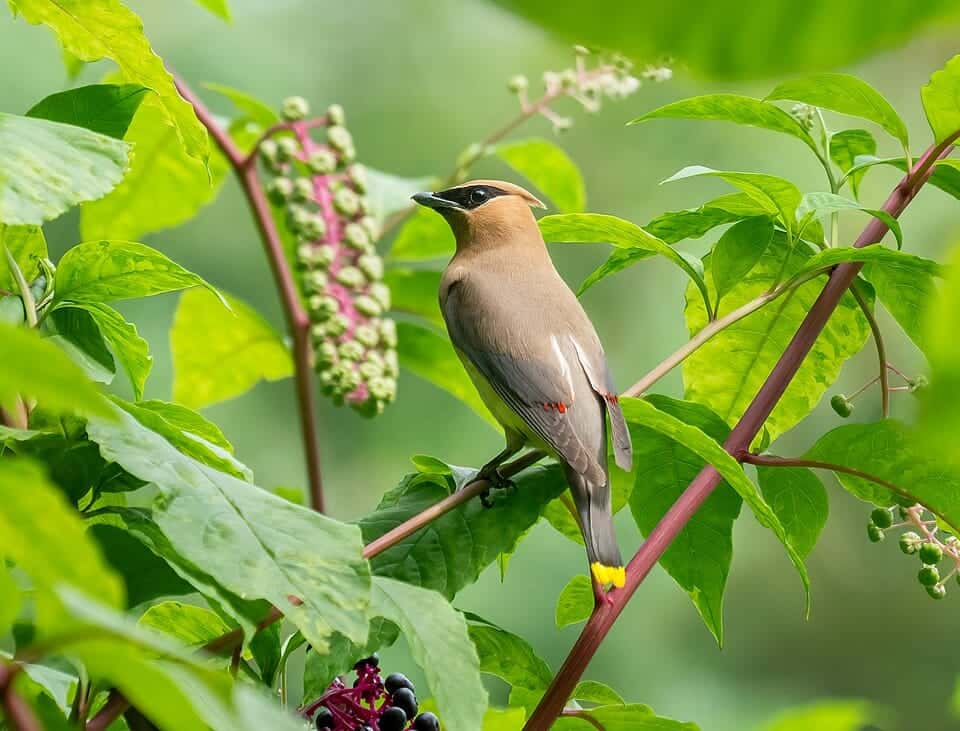
Waxwings look almost too polished to be real — a smooth, painted quality that sets them apart from any other backyard bird:
- The overall look: silky, sleek plumage in soft fawn-brown that fades to gray on the wings and tail, with a pale yellow wash on the belly and no streaks or spots to break up the smoothness
- The head: a jaunty crest that can be raised or lowered, and a sharp black mask edged in thin white running across the eyes like a bandit
- The tail tip: a bright, crisp band of yellow across the end of the tail — one of the easiest marks to see as the bird perches or flies
- The "wax": small, brilliant red, waxy-looking droplets on the wingtips of many birds, the odd feature that gives the waxwing its name (they can be hard to see at a distance)
- The behavior: highly social, almost always in flocks, feeding on berries and giving constant thin, high-pitched whistles rather than songs
A sleek, crested, fawn-brown bird with a black mask and a yellow-tipped tail, moving in a tight flock that strips a fruit tree and whistles thinly overhead, is a cedar waxwing. Few birds are as unmistakable once you know the mask and the crest.
Try Spotter free on iPhone or Android
Plants, animals, fungi and rocks from one photo. 5 free identifications every day, no card required.


Why Waxwings Wander in Flocks
Cedar waxwings are among the most fruit-dependent birds in North America, and that diet shapes everything about them. Instead of defending a fixed winter territory, they roam widely in flocks in search of trees and shrubs loaded with small berries — cedar and juniper "berries," crabapples, serviceberries, hawthorn, holly, dogwood, mountain-ash, and many ornamentals. When they find a good source they can descend by the dozens or hundreds, strip it efficiently, and move on to the next, which is why they seem to appear and disappear so suddenly. This wandering makes them unpredictable: a yard can host waxwings one week and none the next, entirely depending on what is fruiting nearby. Fall and winter, when berries dominate the landscape, are prime time to see the big flocks.
One well-known quirk: because they rely so heavily on fruit, waxwings occasionally gorge on overripe or fermented berries and can become briefly intoxicated and clumsy. It is a reminder of just how committed to a berry diet these birds are.
When and Where to See Them
Listen first: the high, thin, trilled "seee" whistle of a passing flock is often your earliest clue, since waxwings frequently travel high overhead between feeding stops. Then check any tree or shrub that is heavy with small fruit, especially in fall and winter — that is where flocks concentrate. If you want to invite them, native fruiting plants such as serviceberry, dogwood, winterberry, and eastern red cedar are magnets. Scan big, restless flocks carefully, too: waxwings are roughly starling-sized and can travel in loose, shifting groups, so a "flock of small birds" wheeling over a fruiting tree is worth a second look. Once you catch the crest, the mask, and the yellow-tipped tail, you will start noticing waxwings all season.
Not sure whether that mask-and-crest bird in the berry bush is a cedar waxwing, or what the tree it is feeding on actually is? Photograph the bird or the fruit and let Spotter help you identify both, so you can follow the waxwings from one fruiting tree to the next.
Try Spotter free on iPhone or Android
Plants, animals, fungi and rocks from one photo. 5 free identifications every day, no card required.