FG-0006 · Wildflowers · 6 species
Wildflowers of the Pacific Northwest
By Derek Gauger · Updated
Overview
The Pacific Northwest offers some of the most spectacular wildflower displays in North America. The Cascades and Olympic ranges produce superbloom conditions each summer, while the coast ranges bloom from late winter through spring. The diversity is staggering — from the fog-loving Hooker's onion of the coast to the sun-drenched arrowleaf balsamroot of the eastern slopes.
The peak wildflower season in the high Cascades runs from late June through August, depending on snowpack. Lower elevations bloom weeks to months earlier. The Columbia River Gorge offers some of the most accessible wildflower hiking in the region, with dozens of species visible from trail level.
Key species to know
FG-0006.01
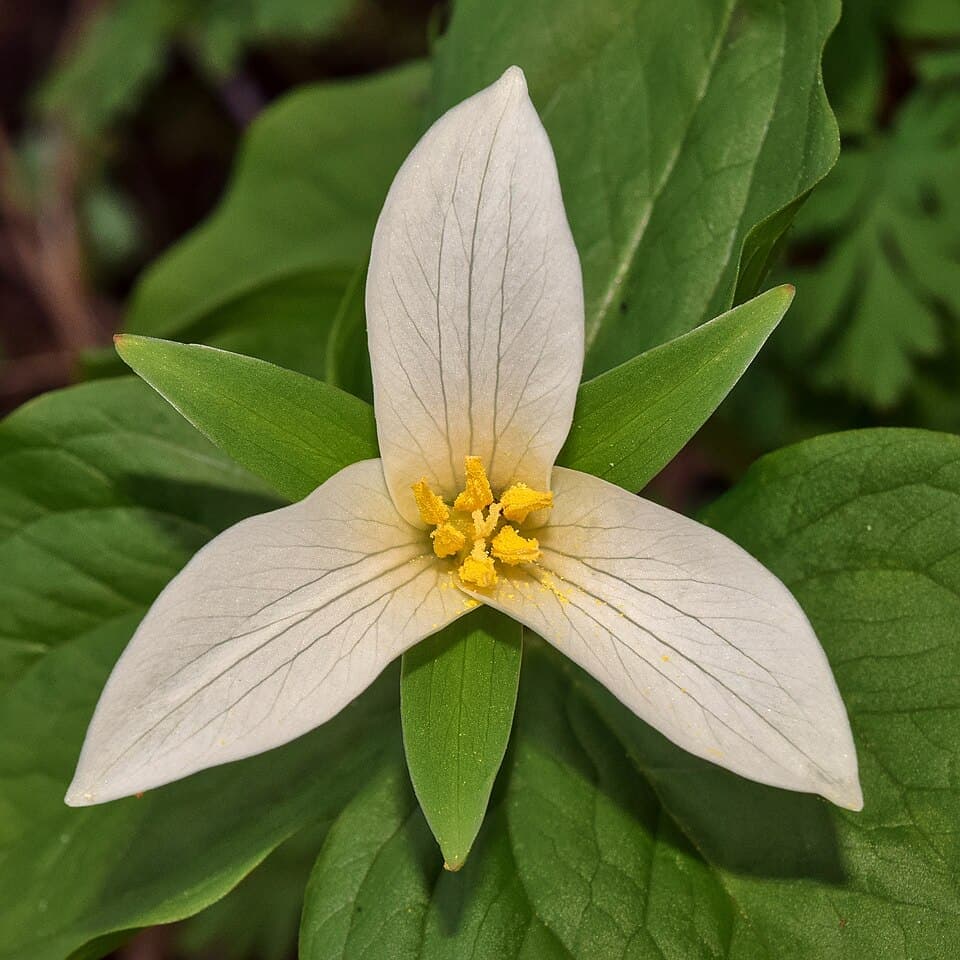
Western Trillium
Trillium ovatum
February–June (elevation-dependent)
An iconic spring wildflower with three broad leaves and a single white three-petaled flower that fades to pink and purple with age. One of the most recognized forest wildflowers in the region.
Habitat: Moist, shaded forest floors under conifers and bigleaf maple; lower to middle elevations.
Protected in Washington State. Do not pick or disturb — plants take 7–10 years to bloom from seed.
FG-0006.02
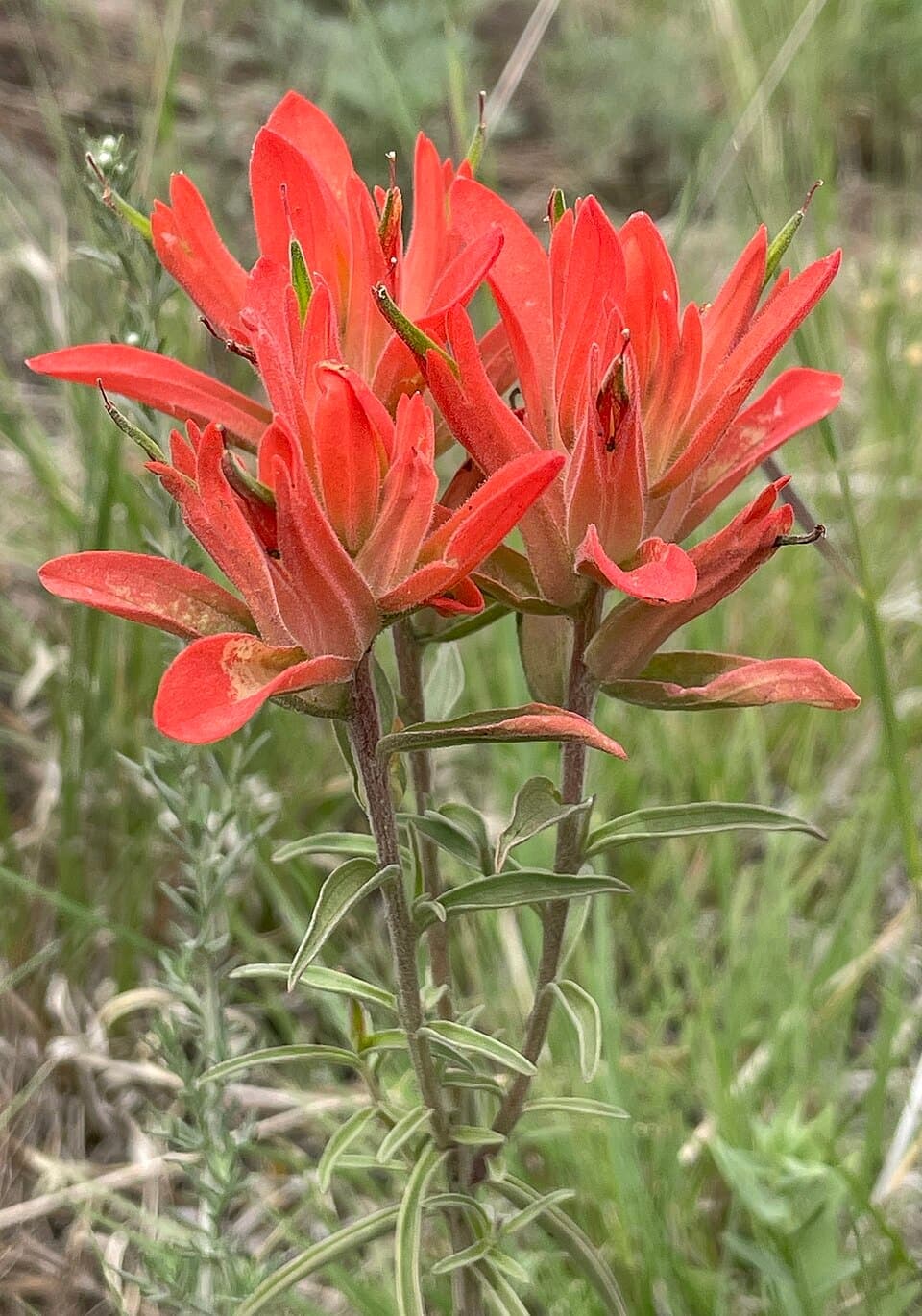
Indian Paintbrush
Castilleja species
May–September
Brilliant red, orange, or pink flame-like bracts surround inconspicuous flowers. A hemiparasite that taps into the roots of nearby plants for water and nutrients. Over 30 species occur in Oregon and Washington.
Habitat: Open meadows, rocky slopes, and subalpine zones; often growing with grasses.
FG-0006.03
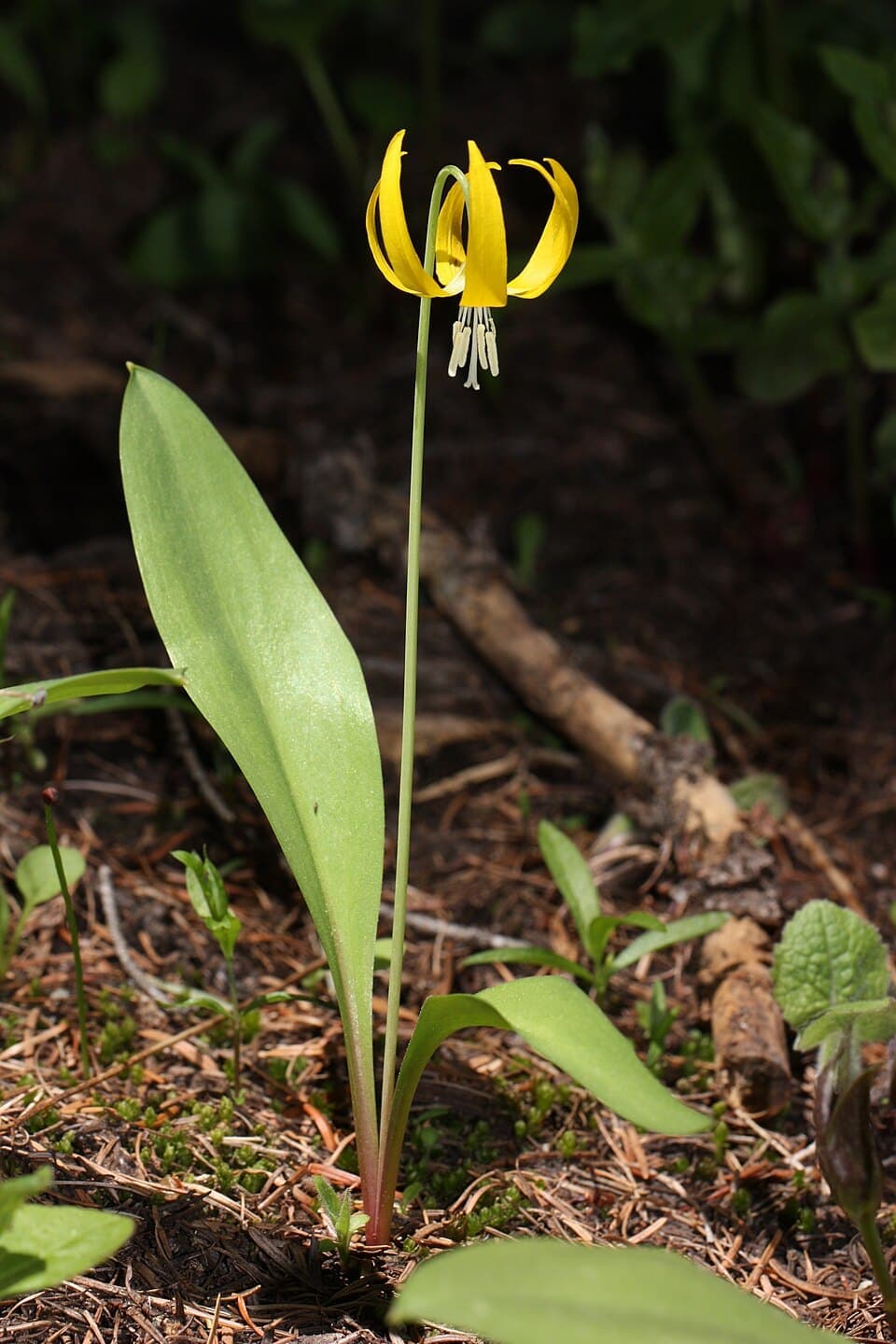
Glacier Lily
Erythronium grandiflorum
May–August (snow-dependent)
Brilliant golden-yellow reflexed petals on nodding stems, often appearing at the edge of melting snowfields. One of the first flowers to bloom at high elevation each spring.
Habitat: Subalpine meadows, often at snowfield margins from 4,000–8,000 ft elevation.
FG-0006.04
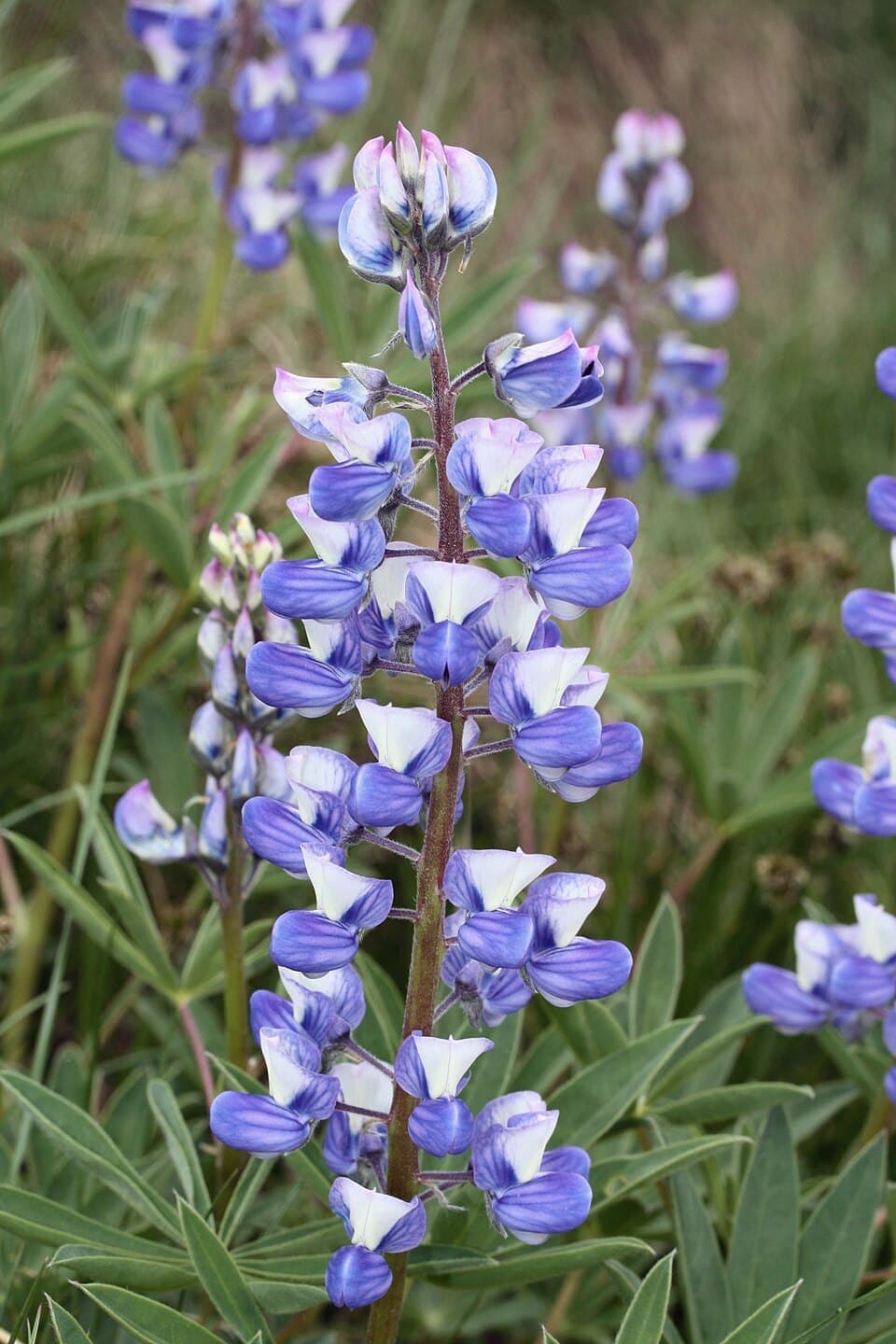
Lupine
Lupinus latifolius
June–August
Tall spikes of blue-purple to violet flowers above palmate leaves. Forms dense, spectacular colonies across alpine meadows and forest clearings. Highly attractive to pollinators.
Habitat: Subalpine meadows, roadsides, forest clearings, and slopes throughout the Cascades.
Seeds and pods are toxic, especially to children. Do not eat any part of lupine.
FG-0006.05
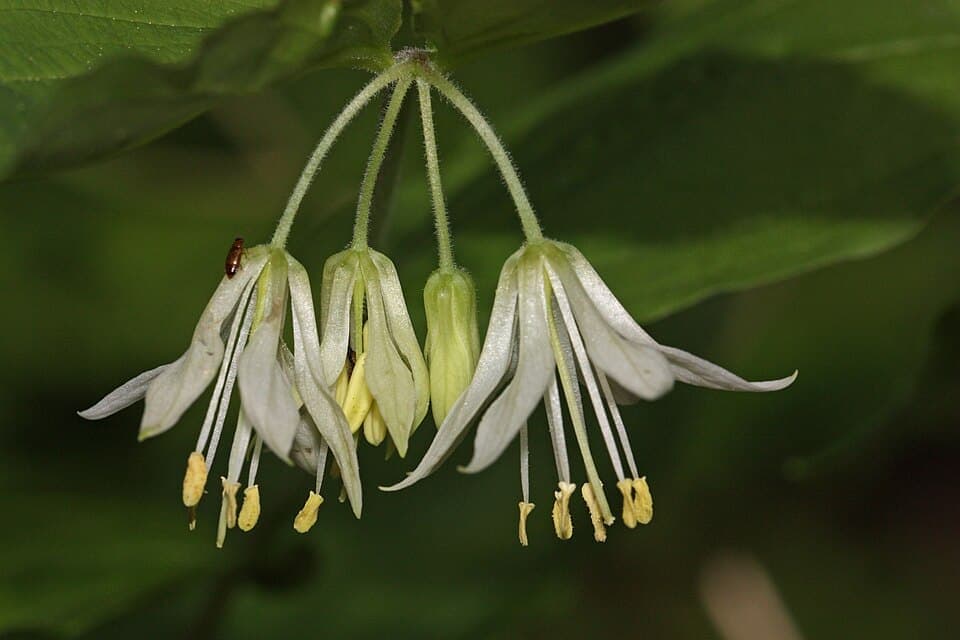
Hooker's Fairybells
Prosartes hookeri
InedibleApril–June (flowers); September (berries)
A graceful forest understory plant with small white bell-shaped flowers and oval orange-red berries. Often found in lush, old-growth forest settings.
Habitat: Shady, moist coniferous and mixed forests at low to mid elevations.
Berries are considered inedible and mildly toxic. Enjoy visually only.
FG-0006.06
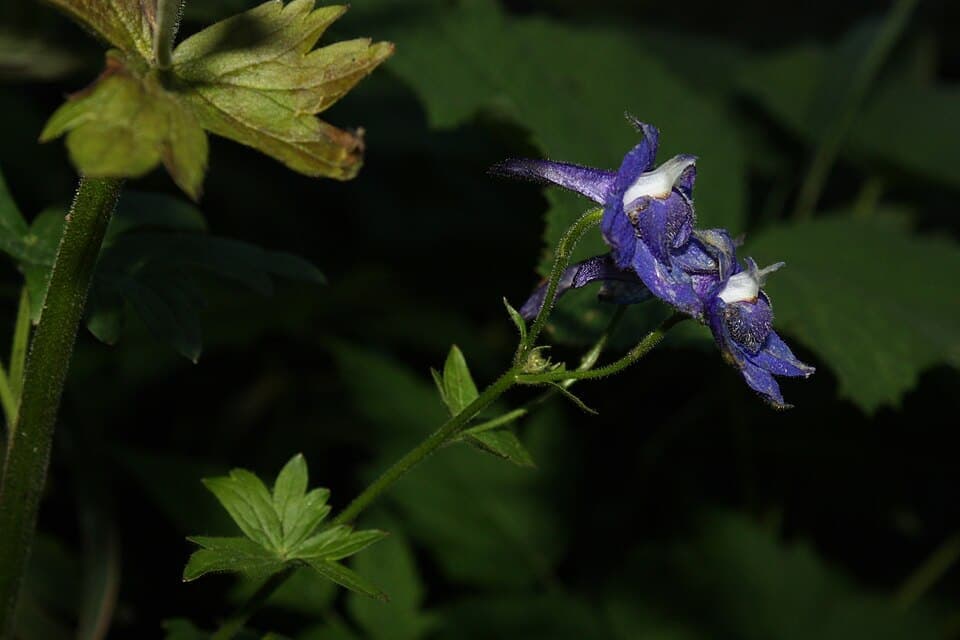
Columbia Larkspur
Delphinium trolliifolium
ToxicApril–June
Stunning deep blue-purple spikes with distinctive backward-pointing spurs. Grows in lush stands along Columbia River Gorge trails.
Habitat: Moist, shaded stream banks and talus slopes; especially prolific in the Columbia Gorge.
ALL larkspurs are toxic. Historically the leading plant-related cause of livestock losses in the West. Never eat any part.
Through the seasons
- February–April: Coast range and valley floor species bloom — trillium, fawn lily, and shooting stars.
- April–June: Columbia River Gorge peak season — larkspurs, paintbrush, and Oregon sunshine.
- June–August: Cascade subalpine meadows peak — lupine, paintbrush, glacier lily, and heather.
- September: Fall color begins; gentians and asters continue blooming at high elevation.
Questions
- Where is the best place to see wildflowers in Washington State?
- Mount Rainier National Park's Paradise meadows are legendary for summer wildflowers (July–August). Hurricane Ridge in Olympic National Park and the Columbia River Gorge's Dog Mountain trail are also top destinations.
- When do wildflowers peak in Oregon's Cascade Range?
- The Cascades typically peak from mid-July through early August at subalpine elevations (above 5,000 ft). Lower elevation trails like Ramona Falls and Eagle Creek bloom from April through June.
- Can I pick wildflowers on national forest land in Oregon?
- Small quantities of common wildflowers can be picked on national forest land for personal use, but commercial picking requires a permit. Protected species and flowers in wilderness areas should never be picked. Many species are protected at the state level.
From Field Notes
- How to Identify Wildflowers on the Trail: A Practical Guide
- What Is the White, Ghostly Plant With No Leaves? Indian Pipe (Ghost Plant)
- What Is the Purple Daisy-Like Wildflower Blooming in Fall? Identifying Asters
- What Is the Tall Pink-Purple Wildflower Buzzing With Butterflies in Late Summer? Identifying Joe-Pye Weed
Not sure what you found?
Take a photo with Spotter for the name, field marks, look-alikes and safety notes in seconds.


In this guide
- Species
- 6
- Edible
- 0
- Toxic
- 1
- Region
- Pacific Northwest