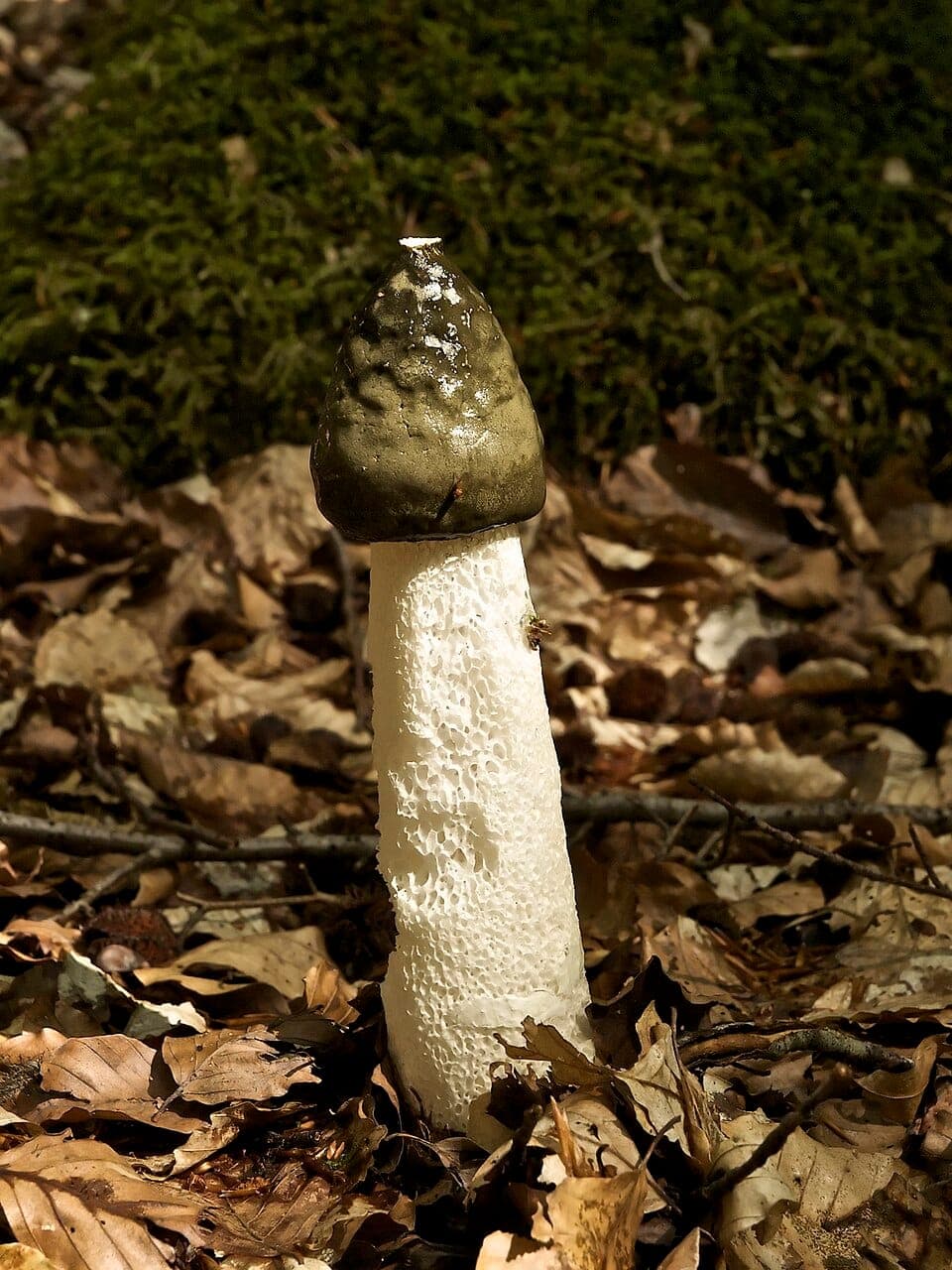
It usually starts with the smell. You step into the garden on a warm, damp morning in late summer or fall and catch a foul odor drifting up from the flower bed — something like rotting meat, spoiled fish, or dog waste — strong enough that you go looking for a dead animal. Instead you find a mushroom: a slimy, finger- or horn-shaped growth pushing up out of the mulch, its tip coated in a dark, glistening slime that flies are crawling all over. It looks alien and it smells worse, and it seems to have appeared overnight. That is a stinkhorn, and as unpleasant as it is, it is harmless. Here is how to identify one.
How to Identify a Stinkhorn
Stinkhorns are a group of related fungi (family Phallaceae) that share a distinctive design and, above all, a distinctive smell. The details vary by species, but the signature is unmistakable:
- The smell: a strong, foul, rotting-meat or sewage-like stench — usually the first thing you notice, and often detectable from several feet away
- Shape: most are horn-, finger-, or column-shaped, standing roughly 3 to 8 inches tall; some species instead form a hollow orange lattice ("cage") or a set of red arms like an octopus or starfish
- The slimy tip: the upper part is coated with a dark olive-green to brown, glistening slime (the gleba) that carries the spores — this is the source of both the smell and the flies
- Color: stalks are often white, pinkish, or spongy-looking, while cage and "stinky squid" types can be bright orange to red
- The "egg": stinkhorns emerge from a soft, whitish, partly buried egg-shaped sac about the size of a golf ball; a torn egg with a gelatinous interior at the base is a good confirming clue
- Where it grows: in mulch, wood chips, rich garden soil, compost, and lawn edges — anywhere there is decaying organic matter — appearing fast during warm, wet weather
The combination of a horn-, cage-, or arm-shaped mushroom, a slimy dark tip covered in flies, and that unmistakable rotting stench in mulch or garden soil is the classic stinkhorn calling card. If you catch one still in its egg stage, you will see a soft white ball that can be mistaken for a puffball until it splits open and the horn shoots up.
Try Spotter Free on iOS & Android
Plants, animals, fungi, and rocks — all from a photo. 5 free identifications every day, no credit card required.
Why Do Stinkhorns Smell So Bad?
The stench is not an accident — it is the whole point. Most mushrooms release their spores into the wind, but a stinkhorn wraps its spores in that sticky, foul slime and uses the smell to advertise. The rotting-flesh odor is finely tuned to attract flies, beetles, and other insects that feed on carrion and dung. They land on the slimy tip, feed, get the spore-laden goo stuck to their bodies and feet, and then fly off and spread the spores wherever they go next — doing the job the wind does for other fungi. It is a clever, if revolting, strategy, and it is why you almost always find flies working over a fresh stinkhorn.
Stinkhorns thrive on decaying organic matter, which is why fresh wood-chip mulch, compost, and rich beds are their favorite haunts. Warm temperatures plus rain or heavy watering trigger them to fruit quickly, so they tend to erupt during the humid stretches of late summer and early fall — often several at once, and often right after you have mulched or watered.
Are Stinkhorns Dangerous or Harmful?
No — stinkhorns are not harmful to people, pets, plants, or your lawn. They are decomposers that feed on dead organic material, not living roots, so they will not hurt your garden; in fact they are part of the natural process breaking mulch down into soil. They are not considered toxic, but this is an identification guide, not a foraging guide: never eat any wild mushroom based on an app, a photo, or an article, and the foul smell of a mature stinkhorn makes it thoroughly unappetizing anyway. The main real-world concern is the odor and the flies it draws. If a pet is prone to eating things off the ground, it is sensible to discourage that and to check with a veterinarian if your dog swallows any wild mushroom.
If the smell is bothering you, there is no need for fungicide. The fungus lives throughout the mulch as a network of threads, so the visible horns are just the fruiting bodies. You can simply pluck or rake out the stinkhorns (and the underground eggs, which look like small white balls) and bag them, ideally before they mature and reek. They tend to come and go with the weather, and they do not signal that anything is wrong.
Common Stinkhorn Look-Alikes
Stinkhorns come in several forms, and it helps to know the main ones you might meet in a North American yard:
- Common (or elegant) stinkhorn: the classic single white-to-pinkish horn with a slimy dark tip — the shape most people picture
- Dog stinkhorn: a slimmer, smaller version with an orange or tan tip, often in mulch and lawns
- Lattice or basket stinkhorn: a hollow, bright orange to red hollow ball made of a lattice of arms, so odd it is sometimes mistaken for a discarded plastic object
- Stinky squid / octopus stinkhorn: several red or pink arms spreading from a shared base, splayed out like tentacles, with the smelly slime on the inner surfaces
- Puffballs: a young stinkhorn egg can be confused with a small puffball, but slicing it reveals a gelatinous layer and the outline of the folded horn inside, rather than the uniform solid white flesh of a true puffball
Not sure whether the smelly, slimy growth in your mulch is a stinkhorn or something else? Snap a photo and let Spotter identify it as a starting point for understanding the fungi at work in your garden — no need to get too close for the picture.
Try Spotter Free on iOS & Android
Plants, animals, fungi, and rocks — all from a photo. 5 free identifications every day, no credit card required.