FG-0004 · Mushroom Foraging · 6 species
Identifying Wild Mushrooms in Wisconsin
By Derek Gauger · Updated
Overview
Wisconsin's forests, prairies, and wetlands host an extraordinary diversity of wild mushrooms. The state's mix of hardwood forests, pine plantations, and river bottoms creates ideal habitat for hundreds of fungal species, from spring morels to summer chanterelles and the massive brackets of fall.
This guide is about learning to recognize Wisconsin's common mushrooms — their key identifying features, the habitats they favor, and the lookalikes they are confused with. Use it to build your field-ID skills and to understand what you're seeing on a walk in the woods.
Key species to know
FG-0004.01
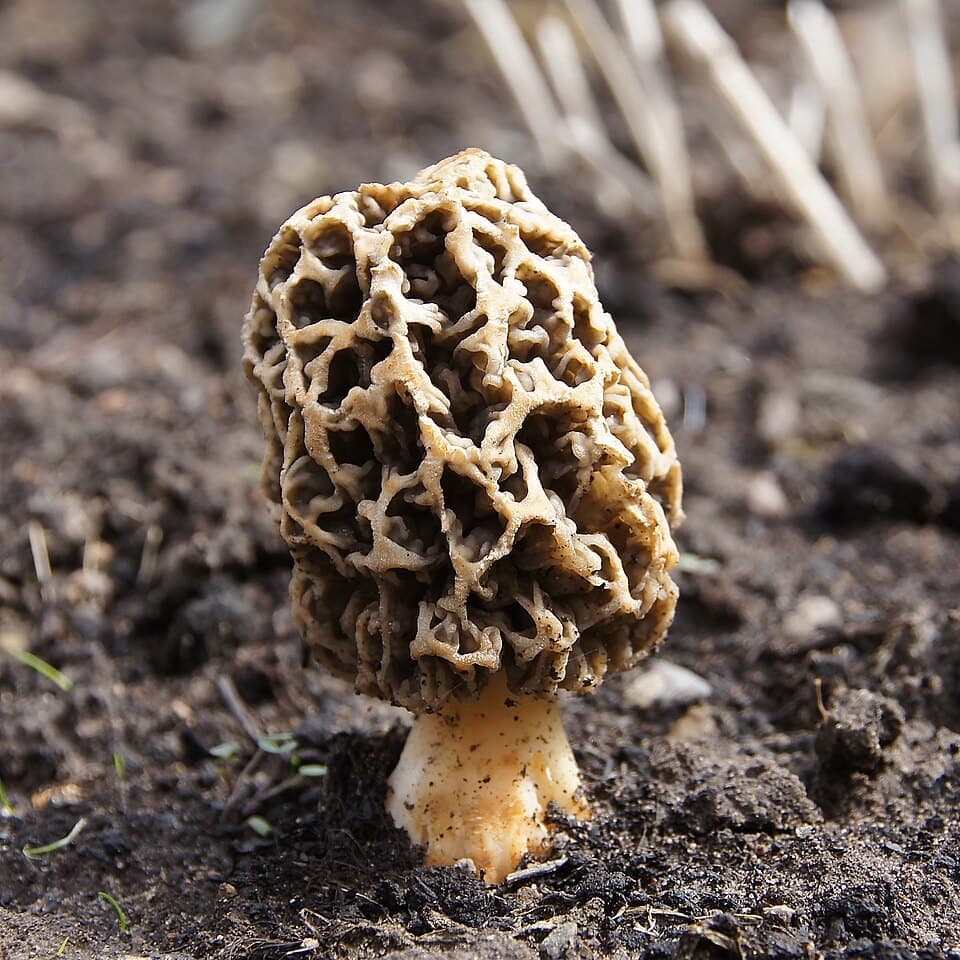
Morel Mushroom
Morchella esculenta
April–May
Wisconsin's most celebrated wild mushroom, with a honeycomb-patterned cap on a hollow white stem. Appears for a brief 2–3 week window each spring when soil temperatures reach 50°F.
Habitat: Beneath dying elm, ash, and apple trees; disturbed areas after fires; river bottoms.
Distinguish from false morels (Gyromitra species), which have wrinkled, brain-like caps rather than a pitted honeycomb. A true morel is completely hollow when sliced lengthwise — cap and stem form a single chamber.
FG-0004.02
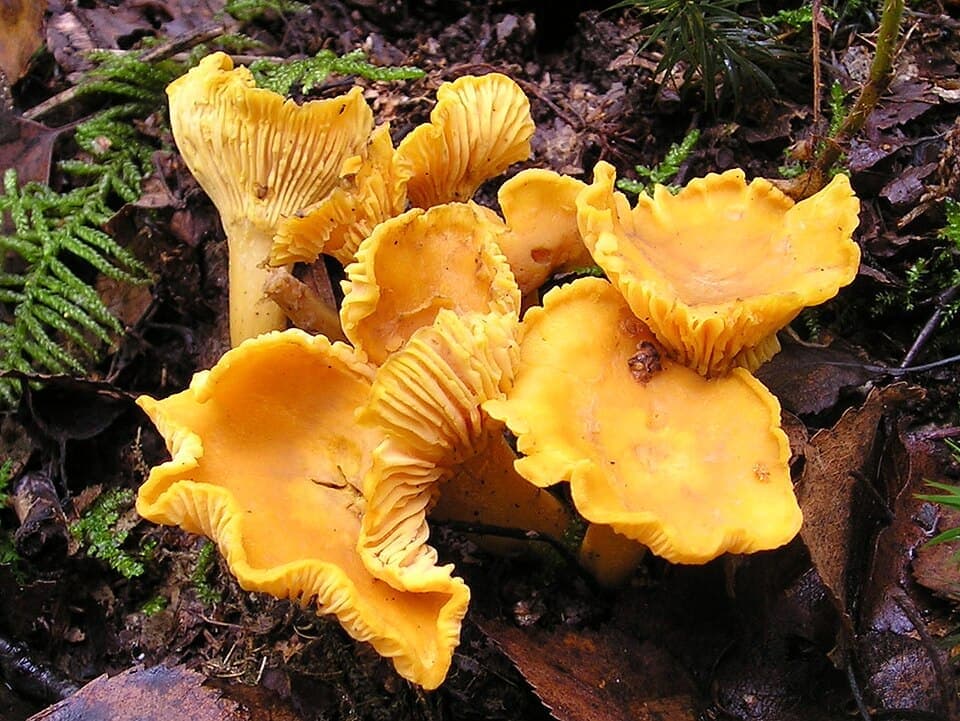
Golden Chanterelle
Cantharellus cibarius
July–October
A golden-yellow to orange funnel-shaped mushroom with wavy, forking ridges (not true gills) running down the stem. Has a fruity, apricot-like aroma.
Habitat: Mixed hardwood forests, especially under oak and beech, from midsummer through fall.
A common lookalike is the Jack-o'-lantern (Omphalotus illudens), which has true knife-blade gills (not blunt forking ridges) and grows in clumps at the base of wood.
FG-0004.03
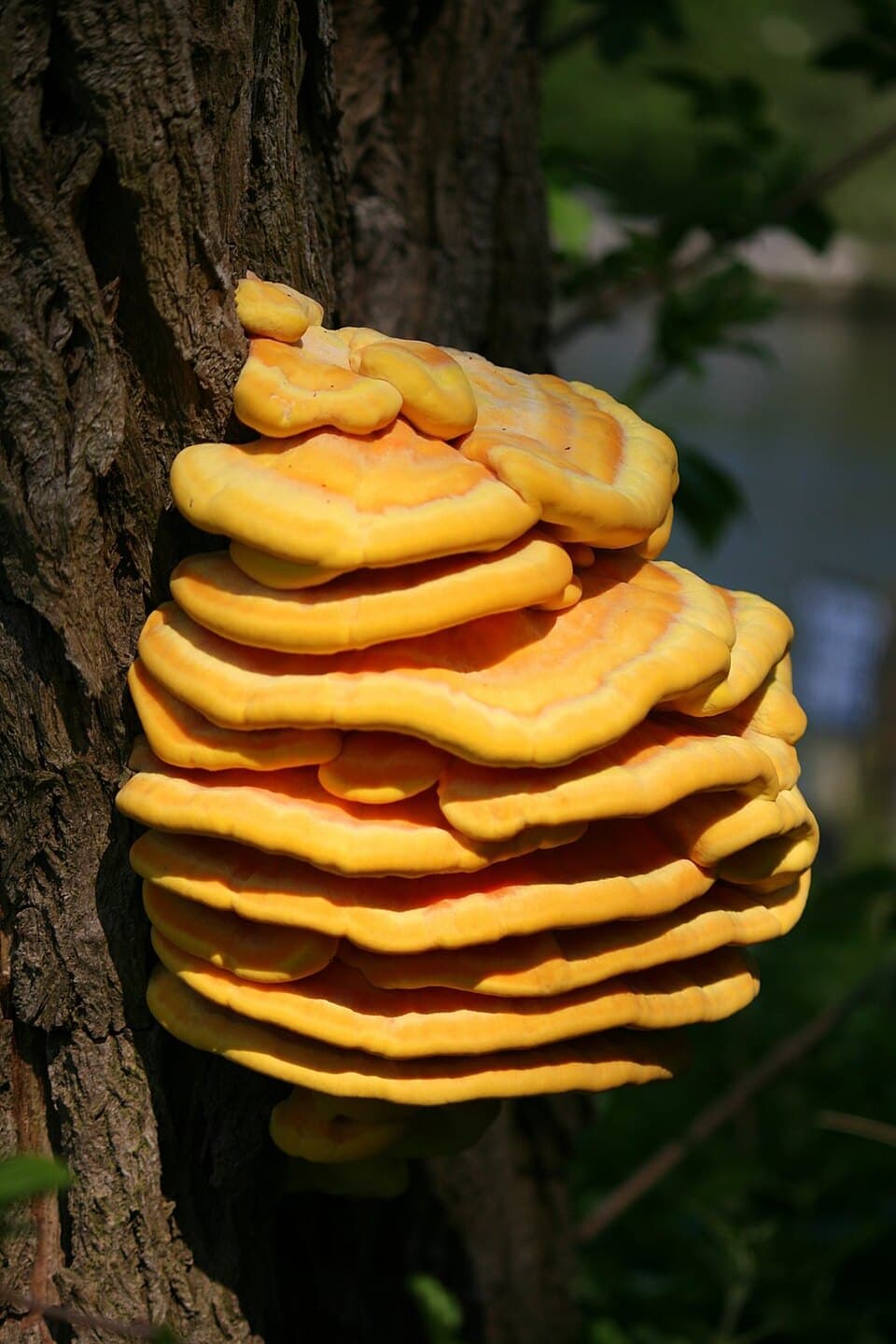
Chicken of the Woods
Laetiporus sulphureus
July–November
Unmistakable bright orange and yellow shelf-like brackets growing in overlapping tiers from tree trunks. Young specimens are soft; can grow to several pounds.
Habitat: Oak, cherry, locust, and other hardwoods, both living and dead.
FG-0004.04
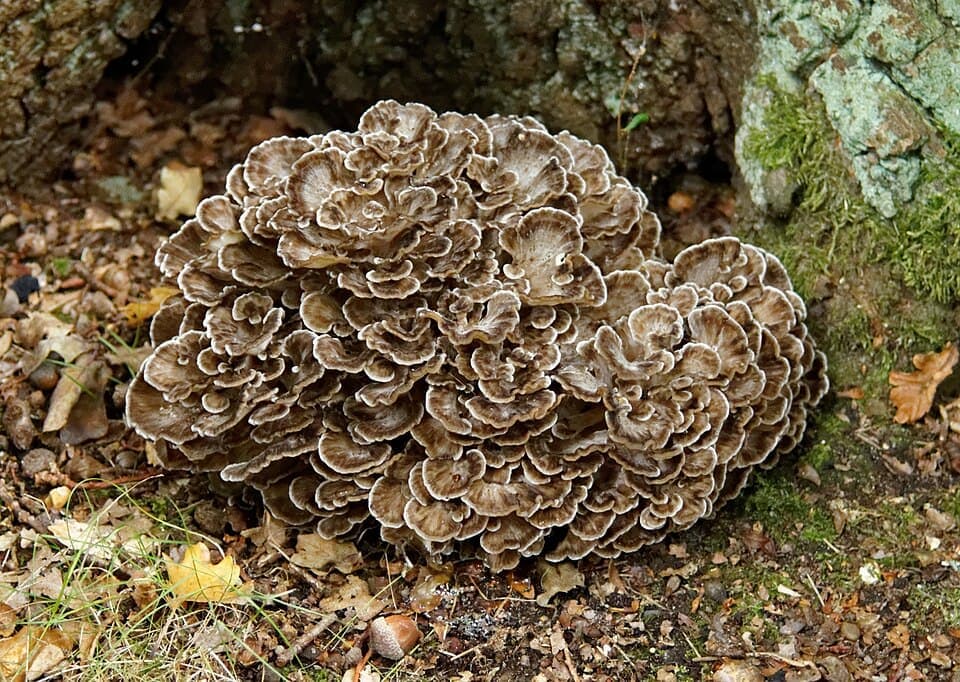
Hen of the Woods (Maitake)
Grifola frondosa
September–November
Large clusters of overlapping gray-brown fronds radiating from a central base. A single specimen can exceed 40 pounds. Recurs at the same oak year after year.
Habitat: Base of oak trees, stumps, and buried roots in hardwood forests.
FG-0004.05
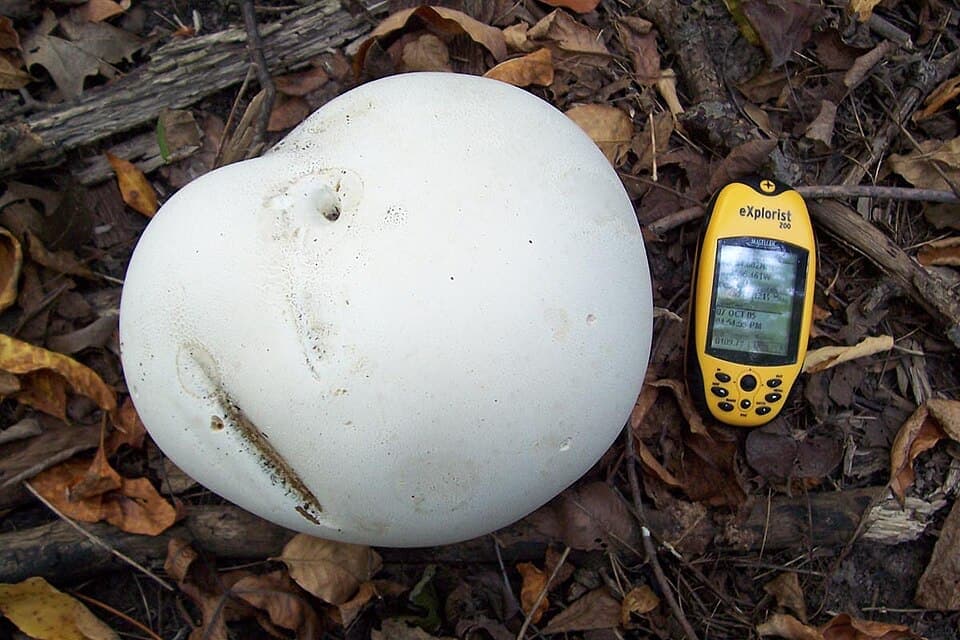
Giant Puffball
Calvatia gigantea
August–October
White to cream-colored spheres ranging from baseball to basketball size, with no cap, gills, or stem. As the spheres age the interior darkens as spores develop.
Habitat: Meadows, pastures, forest edges, and lawns.
Young Amanita buttons can superficially resemble a small puffball; a puffball is uniform inside, while a sliced Amanita button shows the faint outline of a developing cap and gills.
FG-0004.06
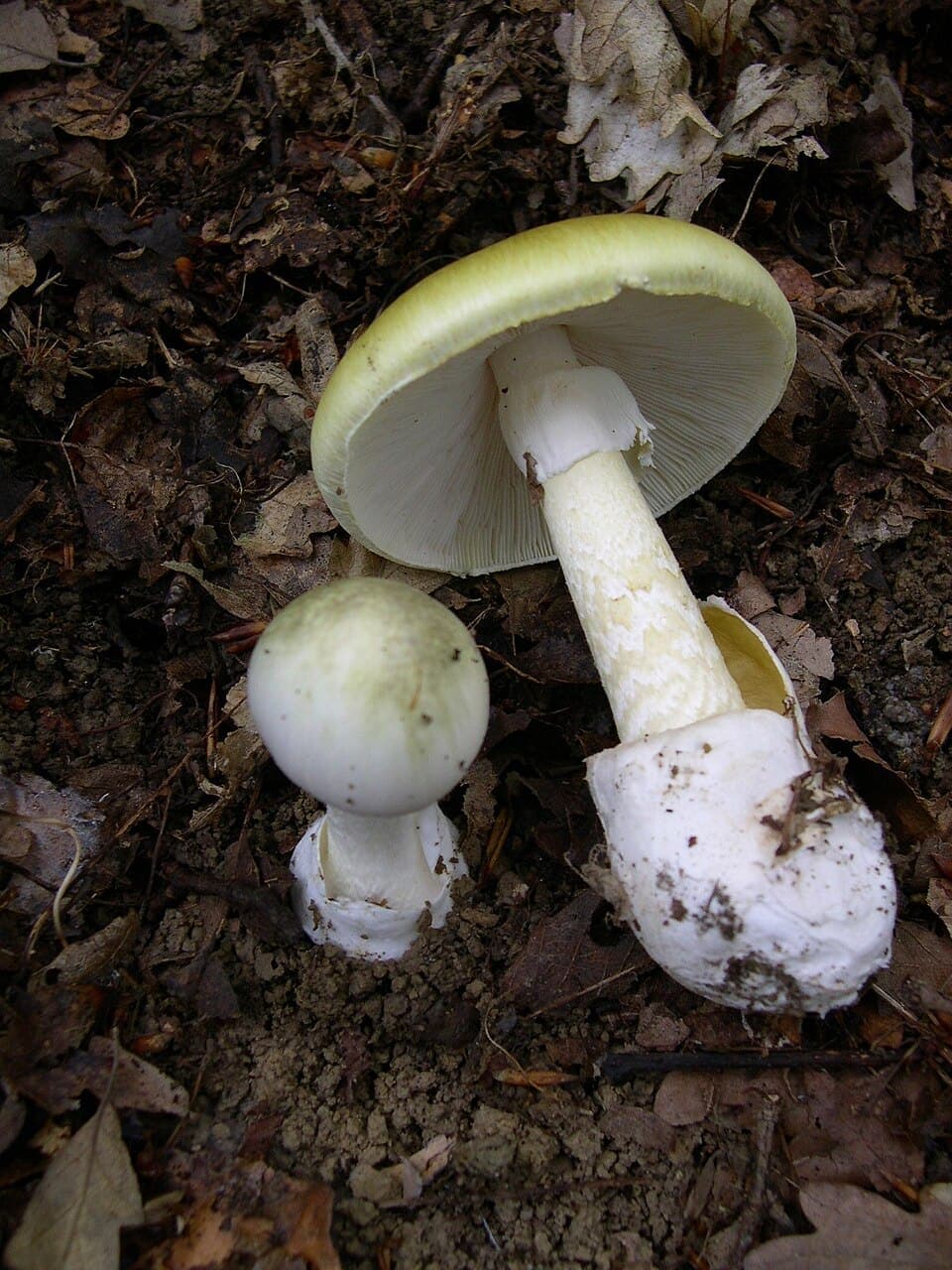
Death Cap
Amanita phalloides
ToxicAugust–October
One of the world's most dangerous mushrooms — worth learning to recognize. Pale greenish-white cap, white gills, a ring on the stem, and a cup-like base (volva).
Habitat: Near oak trees and other hardwoods; often appearing in late summer and fall.
Highly toxic — a species to learn so you can recognize and avoid it. Note the combination of pale cap, white gills, stem ring, and a cup-like volva at the base.
Through the seasons
- April–May: Scout south-facing slopes and dying elm trees for morels as soon as trillium blooms.
- June–July: After warm rains, check oak forests for early chanterelles.
- August–September: Prime season for spotting puffballs, hen of the woods, and chicken of the woods.
- October–November: Late season brings lion's mane and oyster mushrooms on fallen hardwoods.
Questions
- Where in Wisconsin are morels most commonly found?
- Morels are most reliably spotted along the Mississippi River bluffs in western Wisconsin (Crawford, Vernon, and La Crosse counties), the Kettle Moraine area, and anywhere mature elm or ash trees are dying.
- How do I tell a morel from a false morel?
- A true morel is completely hollow when sliced lengthwise — cap and stem form one open chamber. False morels (Gyromitra) have wrinkled, brain-like caps, are not hollow, and may have cottony fibers inside. Use the Spotter app to get an AI-assisted second opinion on the features.
- What features should I photograph for a mushroom identification?
- Capture the cap (top), the underside (gills, pores, or ridges), the full stem including the base, and any ring or cup-like structure. A cross-section and a note on habitat and nearby trees also help narrow the species.
From Field Notes
- What Is the Big Frilly Mushroom at the Base of My Oak Tree? Identifying Hen of the Woods
- What Is the Golden Trumpet-Shaped Mushroom? Identifying Chanterelles (and Their Look-Alikes)
- What Is the Bright Orange Shelf Mushroom on My Tree? Identifying Chicken of the Woods
- What Is the Big White Ball in My Yard? Identifying the Giant Puffball
Not sure what you found?
Take a photo with Spotter for the name, field marks, look-alikes and safety notes in seconds.


In this guide
- Species
- 6
- Region
- Wisconsin