FG-0008 · Mushroom Foraging · 4 species
Identifying Mushrooms in the Great Lakes Region
By Derek Gauger · Updated
Overview
The Great Lakes region's mix of northern hardwood forests, mixed conifer stands, and rich bottomlands creates exceptional conditions for fungi. Michigan alone hosts over 2,000 documented fungal species, with the spring morel season drawing mushroom enthusiasts from across the Midwest. Minnesota's boreal forests add chanterelles and boletes to the mix, while Illinois' hardwood river corridors are prime morel and hen of the woods habitat.
This guide focuses on recognizing the region's most distinctive mushrooms — their key features, the trees and habitats they associate with, and the seasons when they appear.
Key species to know
FG-0008.01
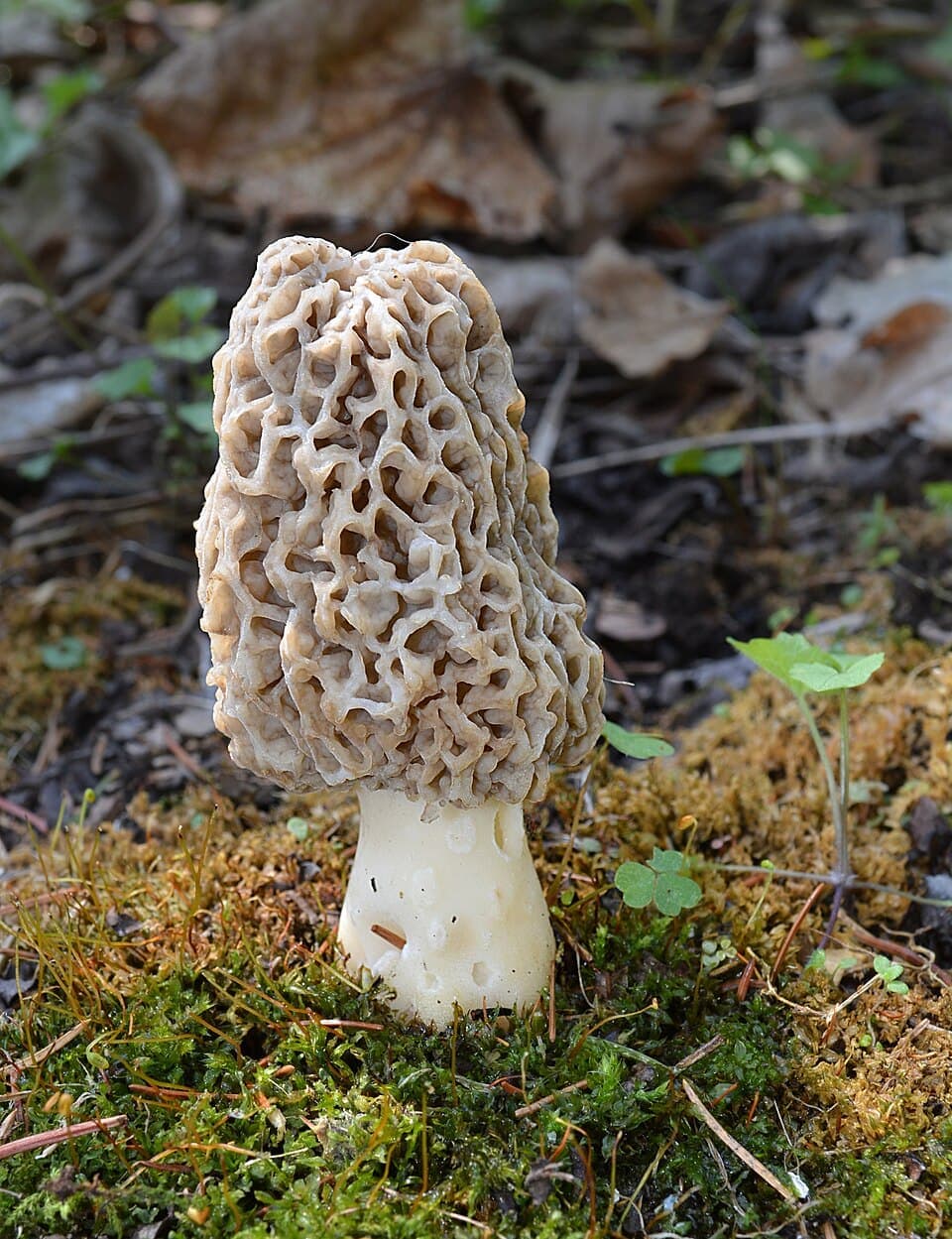
Morel Mushroom
Morchella americana
April–May
The most sought-after spring mushroom in the Great Lakes — honeycomb-patterned cap and hollow stem. Michigan holds an annual Morel Festival celebrating the species.
Habitat: Dying elms, old orchards, disturbed areas, and sandy river bottoms.
A true morel is completely hollow when sliced lengthwise; false morels (Gyromitra) have wrinkled, brain-like caps and are not hollow.
FG-0008.02
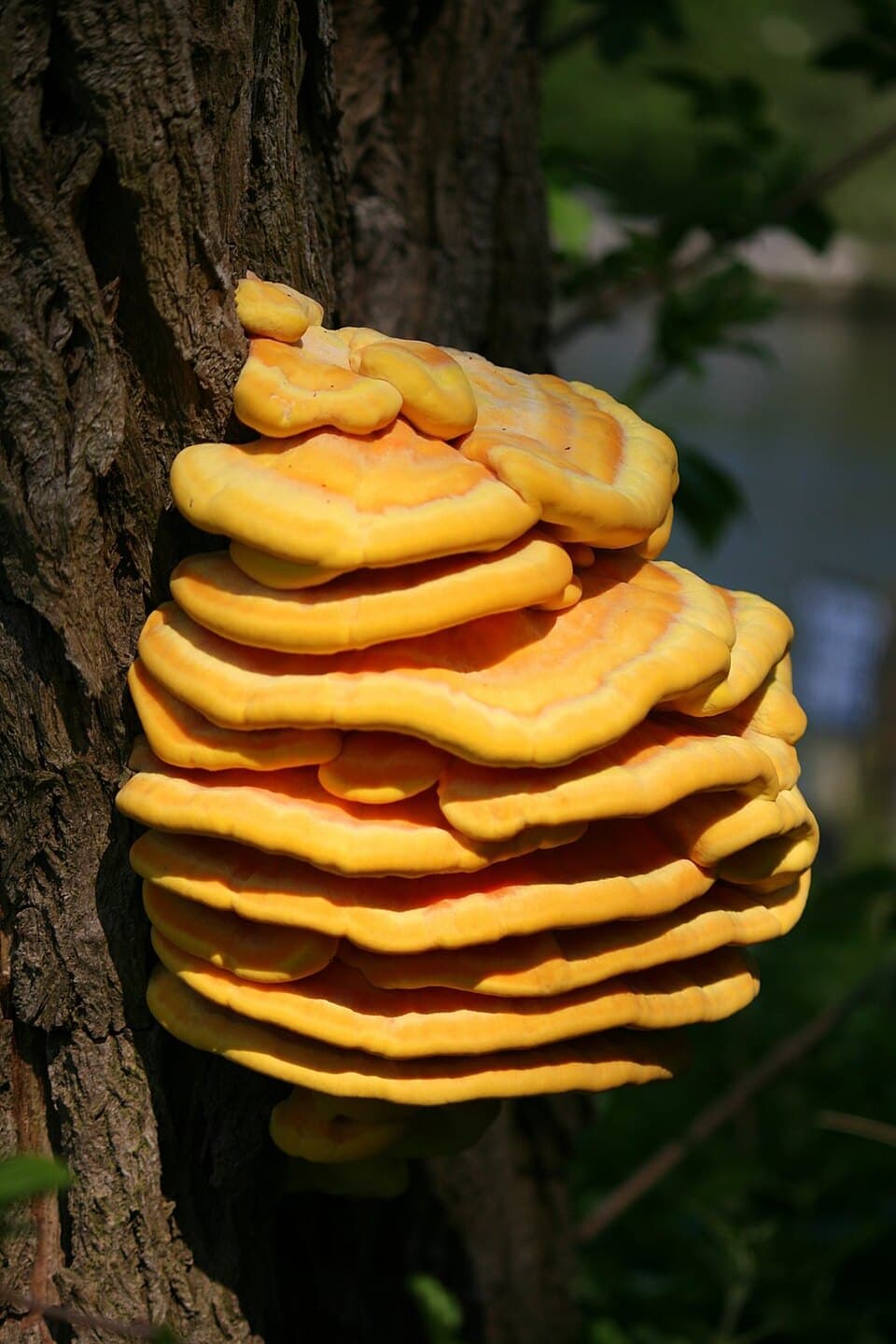
Chicken of the Woods
Laetiporus sulphureus
July–November
Vivid orange-yellow shelf brackets growing in overlapping tiers — one of the most striking and easily recognized fungi in the Great Lakes.
Habitat: Oak, cherry, locust, and beech trunks and stumps.
FG-0008.03
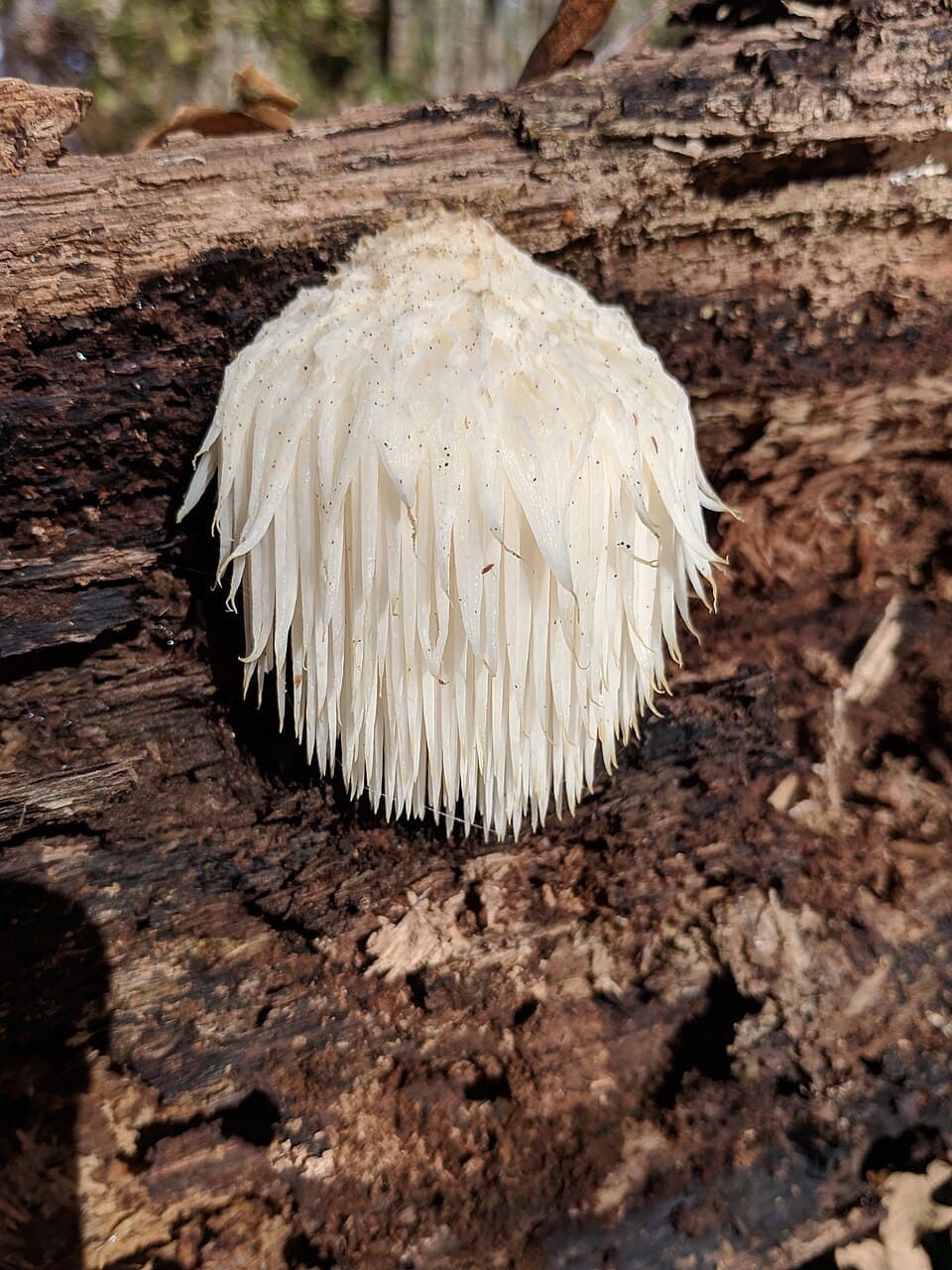
Lion's Mane
Hericium erinaceus
August–November
A cascading mass of white spines hanging from hardwood trees. With no gills and no cap, it is distinctive and hard to confuse with anything else.
Habitat: Wounds and crevices of living and dead hardwoods, especially oak and beech.
FG-0008.04
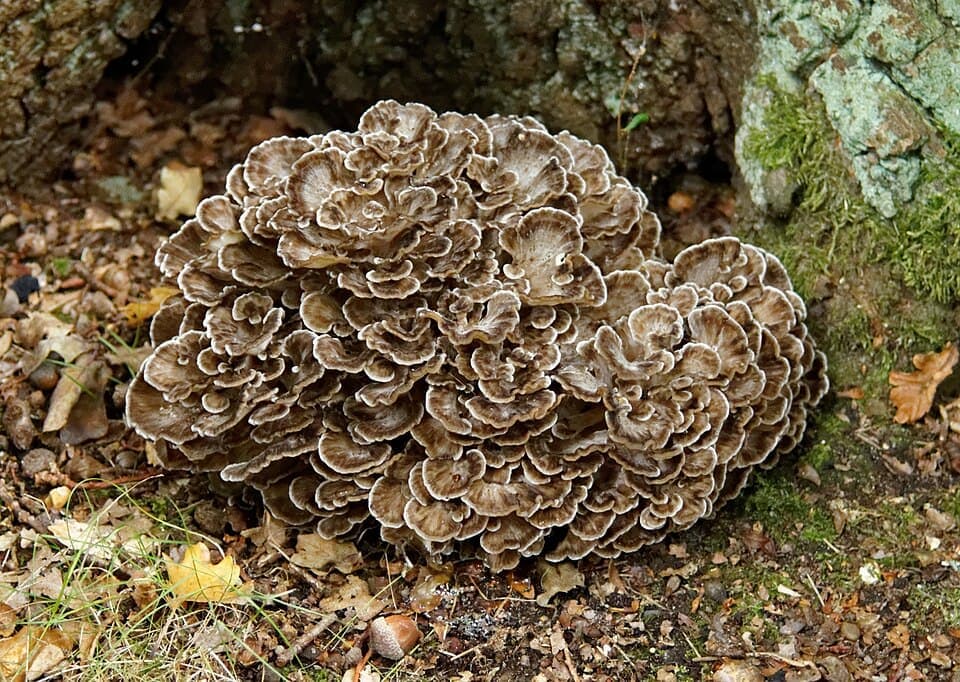
Hen of the Woods (Maitake)
Grifola frondosa
September–November
Overlapping gray-brown fronds radiating from a central base at the foot of oaks. A single cluster can weigh over 40 pounds and recurs at the same tree year after year.
Habitat: Base of oak trees; often returns to the same tree year after year.
Through the seasons
- April: Watch for morels as trout lilies bloom and cottonwood trees bud.
- July–August: Chicken of the woods appears on hardwood trunks after summer heat and rain.
- September: Hen of the woods is easiest to spot around the base of large oaks.
- October–November: Lion's mane and oyster mushrooms show on fallen hardwoods.
Questions
- Where are morels most commonly found in Michigan?
- The Lower Peninsula's Manistee National Forest, areas around Boyne City (home of the National Morel Festival), and the thumb region are known morel hotspots. Look on sandy soils near dying elms.
- What mushrooms grow in Minnesota's northern boreal forests?
- Minnesota's north woods host boletes, chanterelles, lobster mushrooms, and abundant oyster mushrooms on aspen and birch. The BWCA (Boundary Waters) area is a good place to spot fall boletes.
From Field Notes
- What Is the White Icicle-Like Mushroom Growing on a Tree? Identifying Lion’s Mane
- What Is the Big Frilly Mushroom at the Base of My Oak Tree? Identifying Hen of the Woods
- What Is the Bright Orange Shelf Mushroom on My Tree? Identifying Chicken of the Woods
- What Is the Tall Shaggy White Mushroom That Melts Into Black Ink? Identifying the Shaggy Mane
Not sure what you found?
Take a photo with Spotter for the name, field marks, look-alikes and safety notes in seconds.


In this guide
- Species
- 4
- Region
- Great Lakes