
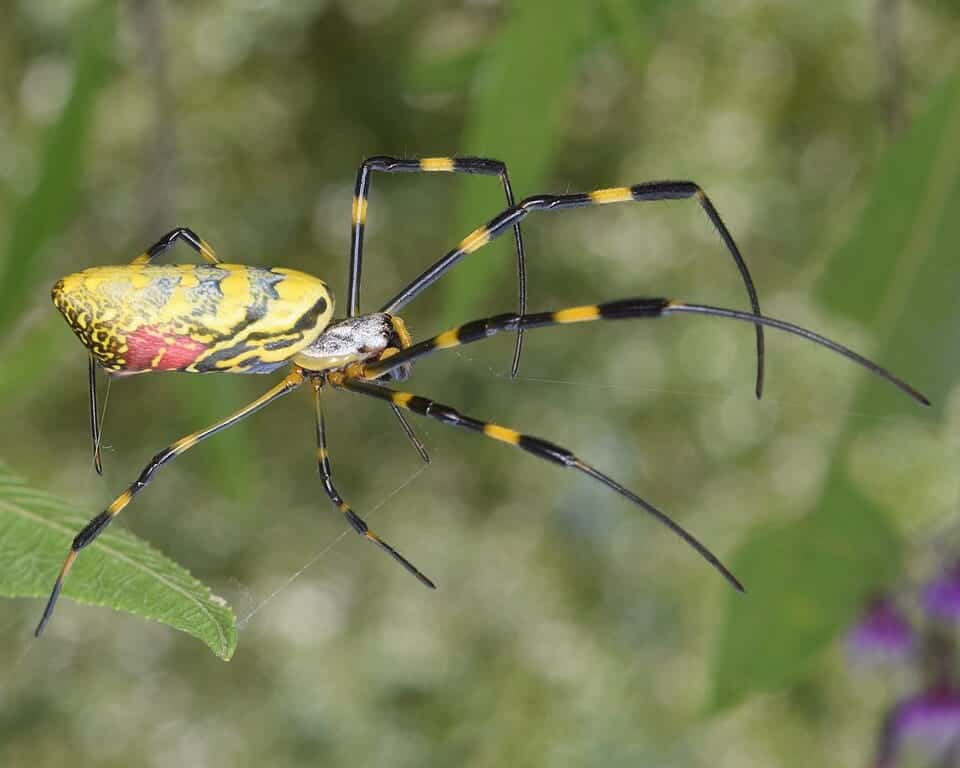
The Joro spider (Trichonephila clavata) is a large, colorful orb-weaver from East Asia that has been spreading across the southeastern United States since it turned up in Georgia around 2013. Its size startles people, but it is essentially harmless to humans. Here is how to recognize it and what to know.
How to Identify a Joro Spider
A mature female is striking and unmistakable once you know the marks:
- A bright yellow body with blue-gray and black bands across the back
- Red markings on the underside
- Very long legs, banded yellow and black, spanning three to four inches
- A large, distinctive golden-tinted web, often three-dimensional and up to several feet across
Males are much smaller and drab brown. Joros look similar to the native golden silk orb-weaver, but the Joro's blue-and-yellow banding and gold web set it apart.
Are Joro Spiders Dangerous?
No. Joro spiders are venomous only in the sense that all spiders are — their venom is for subduing insect prey, and their fangs rarely break human skin. They are shy and would rather flee than bite. Despite alarming headlines about "flying" spiders, only the tiny spiderlings disperse on strands of silk in the wind (ballooning); the big females do not fly.
Why People Are Talking About Them
Joros are spreading rapidly and tolerate cold better than expected, so they are moving north. Researchers are still learning their long-term effect on native spiders and insects. For now they are mostly a startling but benign backyard neighbor.
Found a big yellow spider in a golden web and want to be sure? Take a photo and Spotter will identify it, tell you whether it is the invasive Joro or a native look-alike, and explain what it means where you live.
Try Spotter free on iPhone or Android
Plants, animals, fungi and rocks from one photo. 5 free identifications every day, no card required.