
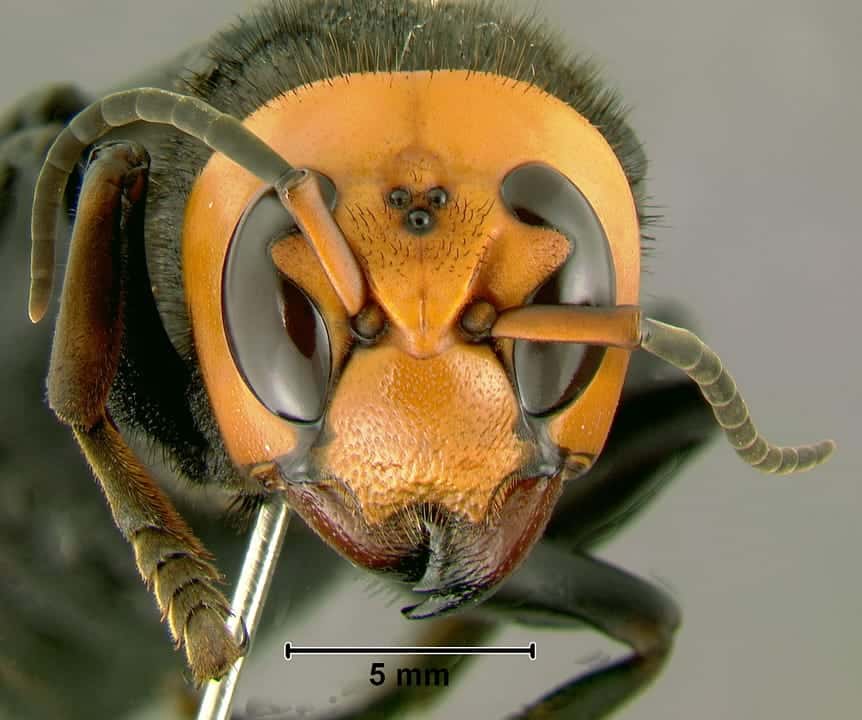
The northern giant hornet (Vespa mandarinia), sensationally nicknamed the "murder hornet," is the world's largest hornet. A small number were found in the Pacific Northwest starting in 2019, triggering an intensive eradication effort that was declared successful in Washington in 2024. It is worth knowing what it looks like — and what it is usually confused with.
How to Identify the Northern Giant Hornet
- Very large — up to about two inches long, far bigger than any common wasp or hornet
- A distinctive large, bright orange-yellow head with prominent eyes
- A dark thorax and an orange-and-dark-brown striped abdomen
- A broad, blunt body compared with slimmer native wasps
Common Look-Alikes
Most "giant hornet" sightings are actually harmless natives: the European hornet, the cicada killer wasp (a big but docile ground wasp), and the bald-faced hornet. All are much less of a concern, and none has the giant hornet's solid orange head. Real northern giant hornets are extremely rare in North America.
Safety and What to Do
Northern giant hornets can deliver a painful, potent sting and can destroy honeybee hives, but they do not hunt people. Never approach or disturb a nest. If you believe you have seen a genuine northern giant hornet, do not try to catch it — photograph it from a safe distance and report it to your state agriculture department.
Worried the big wasp in your yard is a murder hornet? Take a photo from a safe distance and Spotter will identify it — almost always a harmless native — and tell you what it really is.
Try Spotter free on iPhone or Android
Plants, animals, fungi and rocks from one photo. 5 free identifications every day, no card required.