From about mid-August into September, a common wild shrub comes into its most noticeable stage: broad, flat-topped clusters of tiny dark berries drooping from arching branches, often along ditches, stream banks, woodland edges, and old fence lines. This is the American elderberry, and it is one of the plants people most want to put a name to in late summer. It is also one where getting the identification exactly right matters, because a couple of its look-alikes are seriously toxic — and even elderberry itself is not a plant to treat casually.
What Elderberry Looks Like
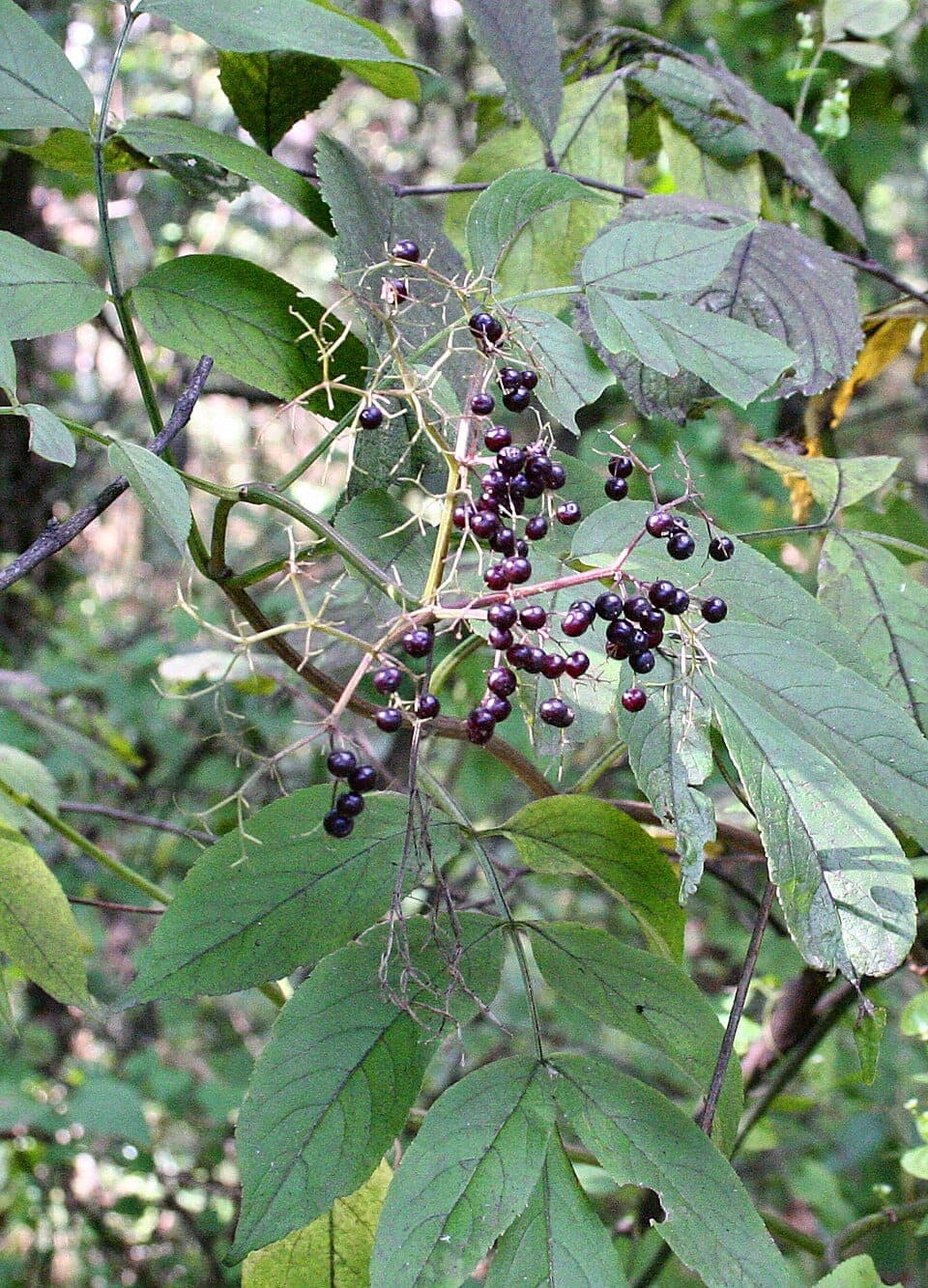
Elderberry is a large, multi-stemmed shrub, often chest- to head-high or taller, with a loose, arching form. In late summer look for this combination of features together — no single one is enough on its own:
- Berries: tiny, round, purple-black when ripe, each only a few millimeters across, borne in large numbers
- Cluster shape: the berries hang in a broad, flat-topped or gently domed spray (a "cyme"), not a single hanging spike or chain
- Stems: the berry stems are often bright reddish or pink, and the fruit weight makes the whole cluster nod downward
- Leaves: compound, with 5 to 9 (usually 7) toothed leaflets arranged in opposite pairs along a central stalk
- Earlier in summer the same shrub carries flat, creamy-white flower clusters — the elderflowers — in the same broad shape
Try Spotter Free on iOS & Android
Plants, animals, fungi, and rocks — all from a photo. 5 free identifications every day, no credit card required.
The Dangerous Look-Alikes
Several other late-summer plants produce dark berries in roughly the same places and at the same time, and confusing them with elderberry can be dangerous. Learn these before you trust any wild shrub:
- Pokeweed: the most common mix-up — its berries hang in a long, drooping chain along a smooth, magenta-purple stem, not in a flat-topped spray, and all parts of pokeweed are toxic
- Water hemlock and poison hemlock: among the most poisonous plants in North America, with lacy, fern-like leaves and small white flower clusters; hemlock stems are hairless and often streaked with purple, and no part should ever be handled carelessly
- Various nightshades and buckthorns: shrubs and vines with dark berries that do not have elderberry’s compound, opposite, 7-leaflet leaves
- The rule of thumb: a true elderberry shows opposite compound leaves and a flat-topped berry cluster together — if either is missing, it is not elderberry
A Serious Safety Note
Even correctly identified elderberry is not a plant to nibble in the field. The raw berries, along with the leaves, stems, bark, and roots, contain compounds that release cyanide and can cause nausea, vomiting, and worse. This guide is about identification only — recognizing the shrub — not about foraging or eating it. Do not consume any wild plant based on an app, a blog post, or a photo match. If you are ever interested in wild foods, that is a decision to make only with hands-on guidance from a qualified local expert, and never from identification alone.
Spotted a berry-laden shrub and want to know whether it is elderberry, pokeweed, or something you should not touch at all? Snap a photo and let Spotter help you narrow it down — then treat every wild berry as look-don’t-taste until an expert says otherwise.
Try Spotter Free on iOS & Android
Plants, animals, fungi, and rocks — all from a photo. 5 free identifications every day, no credit card required.