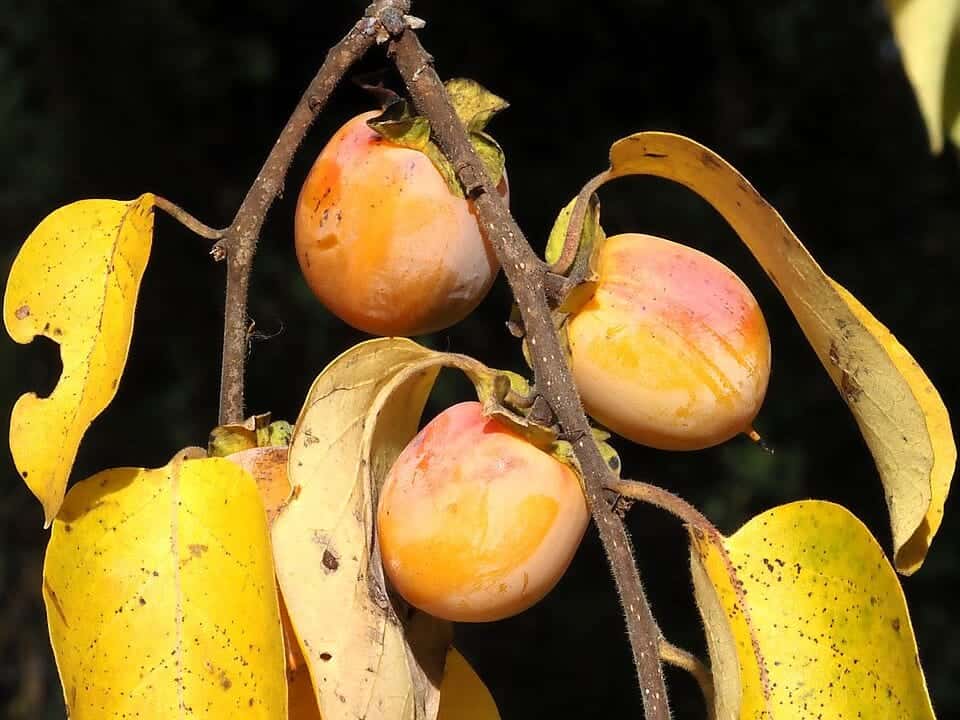
It is fall and you keep seeing them: small, round, orange fruits about the size of a cherry tomato or a plum, hanging in ones and twos from the twigs of a medium-sized tree along a field edge, fencerow, or roadside — sometimes still clinging to bare branches after most of the leaves have dropped. On the ground below are the soft, squishy, fallen ones, often being worked over by wasps, ants, and wildlife. This is the American persimmon (Diospyros virginiana), a native tree of the eastern and midwestern United States whose fruit is legendary for two things: being wonderfully sweet when fully ripe, and being so astringent before that point that one unripe bite will pucker your whole mouth. The fruit ripens from September through the first frosts of late fall, which is why so many people first notice it now. Here is how to identify the tree with confidence.
How to Identify an American Persimmon
The bark alone will often clinch it, but the fruit, leaves, and habit together make the identification certain:
- The bark: the standout feature — dark gray to nearly black bark broken into small, thick, squarish blocks separated by deep furrows, looking remarkably like alligator hide or a tray of charcoal briquettes
- The fruit: round, orange to orange-brown fruit about 1 to 2 inches across, resembling a small tomato or plum, ripening from green to deep orange and turning soft and wrinkled when fully ripe in fall
- The leaves: simple, oval, 3 to 6 inches long with smooth (untoothed) edges, glossy dark green above and paler below, arranged alternately along the twig, often turning yellow to reddish in fall
- The habit: a small-to-medium tree, commonly 30 to 50 feet, favoring field edges, old pastures, roadsides, and open woods, and often forming small thickets by root sprouts
- The persistence: fruit that clings to the twigs after leaf drop, so an otherwise bare tree can be dotted with orange globes into late fall
Blocky, alligator-hide bark plus small round orange fruit on a field-edge tree is the American persimmon. The checkered bark is distinctive enough that many people learn to name the tree by trunk alone, and the persistent orange fruit confirms it.
Try Spotter free on iPhone or Android
Plants, animals, fungi and rocks from one photo. 5 free identifications every day, no card required.


Why the Fruit Is So Astringent — Until It Isn’t
The persimmon’s reputation for puckering your mouth comes down to tannins — the same class of astringent compounds found in strong tea and unripe fruit generally. An unripe persimmon is loaded with them, producing an intensely dry, chalky, mouth-gripping sensation that is genuinely unpleasant and unforgettable. As the fruit ripens and softens fully, those tannins break down and the flesh turns remarkably sweet, with a flavor often compared to a date or spiced honey. The old folk belief that persimmons need a frost to sweeten is only loosely true: it is full ripeness and softening, not the cold itself, that removes the astringency, though frost often coincides with that timing. The transformation is dramatic enough that the tree’s scientific name, Diospyros, translates roughly as "fruit of the gods" — a nod to how good the ripe fruit can be.
A Magnet for Wildlife
A ripe persimmon tree is one of the busiest wildlife stops in the fall woods. The sugary fruit draws opossums, raccoons, foxes, deer, squirrels, and box turtles, along with many birds; the tree’s common association with the opossum even earned it nicknames like "possumwood" and "possum apples." That is also why you so often find the fruit half-eaten or the ground picked clean beneath a productive tree. Because persimmons are dioecious — individual trees are either male or female — only the female trees bear fruit, so a fruitless persimmon in fall is not necessarily barren; it may simply be a male tree doing the pollinating.
A Safety Note on the Fruit
Persimmons are a well-loved native wild food, but this article is about identifying the tree, not gathering or eating from it, and a few cautions matter. Only the fully soft, ripe fruit is palatable; unripe persimmons are intensely astringent, and eating quantities of very unripe fruit has in rare cases been linked to hard masses forming in the stomach, so this is not a fruit to sample green. As with anything wild, never eat something based on a photo or a resemblance — confirm the tree’s identity with an expert or a good regional guide, be certain of ripeness, and when in doubt, leave it for the wildlife. The simplest pleasure here is learning to recognize a native tree by its unmistakable checkered bark and glowing orange fruit.
Not sure whether the tree dropping little orange fruits is an American persimmon or something else? Snap a photo of the bark, a leaf, and the fruit and let Spotter help you identify it as a starting point for getting to know the trees along your fields and roadsides.
Try Spotter free on iPhone or Android
Plants, animals, fungi and rocks from one photo. 5 free identifications every day, no card required.