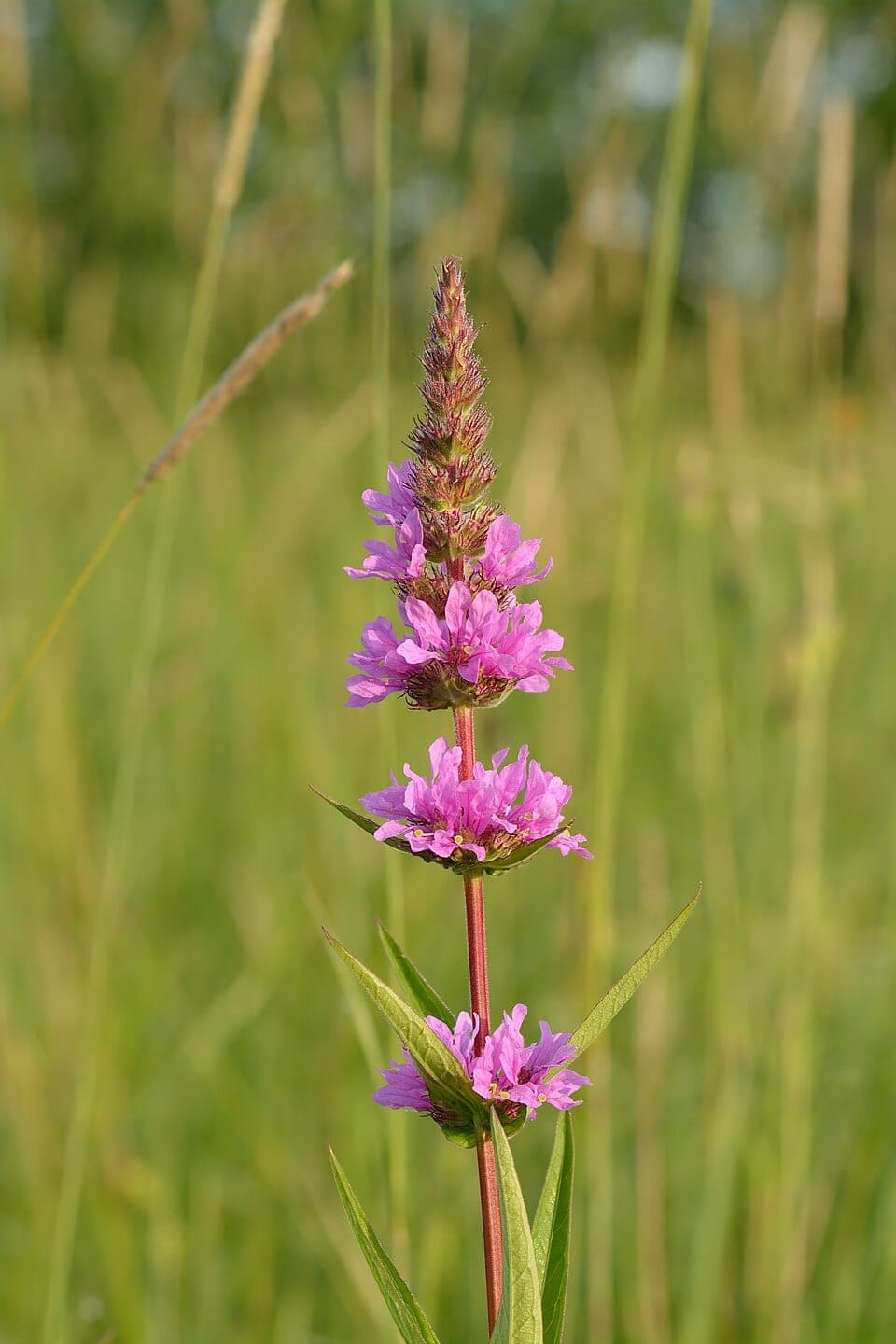
From mid-summer into September, wetlands across much of the United States and Canada light up with tall spires of vivid pink-purple flowers. Standing waist- to head-high along ditches, pond margins, marshes, and wet roadsides, it looks like a gorgeous native wildflower having a very good year. It is not. This is purple loosestrife, a Eurasian invader that forms dense, glowing monocultures and steadily chokes the life out of the wetlands it colonizes. Its peak bloom in August is exactly when people notice it — and exactly when it is easiest to identify.
How to Identify Purple Loosestrife
A few features separate purple loosestrife from the many native purple wetland flowers it is confused with:
- Tall, upright plants from about two to over six feet high, often growing in dense stands rather than scattered individuals
- Long, showy flower spikes densely packed with small flowers, each with five to seven crinkly pink-purple to magenta petals around a small yellow center
- A distinctly square stem — run your fingers around it and you will feel four to six ridged sides rather than a round stalk
- Narrow, lance-shaped leaves that are stalkless and clasp the stem, arranged opposite each other or in whorls, sometimes with a slightly downy feel
- A single mature plant can be enormous and long-lived, producing on the order of two to three million tiny seeds every year
Try Spotter Free on iOS & Android
Plants, animals, fungi, and rocks — all from a photo. 5 free identifications every day, no credit card required.
Why It Is a Problem
Purple loosestrife is native to Europe and Asia and arrived in North America in the 1800s, both accidentally in ships’ ballast and deliberately as a garden ornamental and honey plant. Freed from the insects that keep it in check back home, it spreads explosively. Those millions of seeds, plus the plant’s ability to resprout from roots and stem fragments, let it form dense, homogeneous thickets that crowd out cattails, sedges, and other native wetland plants. As the native plant community collapses, so does the habitat that waterfowl, amphibians, fish, and native pollinators depend on — and the choked channels can even alter how water moves through a marsh. It is considered one of the worst wetland invaders on the continent, and it is regulated or banned in many states.
Native Look-Alikes You Don’t Want to Pull by Mistake
Several beautiful native plants bloom purple in the same wet places, and they are the good guys — worth protecting, not removing. Before you pull anything, rule these out:
- Blazing star (Liatris) — purple spikes, but with grass-like leaves and flower heads that open from the top down, on rounded (not square) stems
- Blue vervain — slender candelabra of thin flower spikes with smaller, bluer flowers and toothed, stalked leaves
- Ironweed and blue lobelia — tall purple wetland natives with a very different flower shape and no square stem
- Fireweed and native winged loosestrife — similar habitats but different leaf and flower structure; the square stem, whorled clasping leaves, and dense magenta spike together point to the invasive purple loosestrife
What to Do If You Find It
Purple loosestrife is not toxic and it will not hurt you to touch — the danger is ecological, not personal. The most important thing is not to spread it: do not plant it or its cultivars (even so-called "sterile" varieties can still cross-pollinate and set viable seed), and never move soil, mulch, or cut stems from an infested area. Many state agriculture and natural-resource agencies want reports of where it is turning up, so a photo and a location are genuinely useful. For a small, young patch on your own property, hand-pulling before the flowers go to seed — bagging and trashing the plants rather than composting them — can knock it back; large established stands usually call for a coordinated management plan, and in many regions specialized beetles have been released as long-term biological control.
Not sure whether the purple flowers taking over that wet ditch are invasive loosestrife or a native worth keeping? Snap a photo and let Spotter help you tell them apart, so you know whether to report it — or leave it be.
Try Spotter Free on iOS & Android
Plants, animals, fungi, and rocks — all from a photo. 5 free identifications every day, no credit card required.