Some trees you can identify from a block away, and the ginkgo is one of them. In fall its whole crown turns a clear, glowing gold all at once, and then — often over just a day or two — it drops nearly every leaf into a bright carpet on the sidewalk. Pick one up and it is like no other leaf you know: a small, leathery green fan, sometimes notched in the middle, with fine veins that fan out from the stalk and no central midrib at all. And near some of these trees there is a second, unmistakable clue that arrives in autumn — a soft tan fruit littering the ground and a smell so bad people cross the street to avoid it. That is a ginkgo, one of the oldest tree lineages on Earth and one of the most widely planted street trees in the world. Here is how to know one.
How to Identify a Ginkgo Tree
The leaf alone is usually enough — nothing else common looks like it — but a few other features confirm it:
- The leaves: distinctive fan- or wedge-shaped, roughly 2–4 inches wide, often with a notch or wavy split in the outer edge, with veins radiating out in a fan (no single central vein like most broadleaf trees)
- Fall color: a striking, uniform butter-yellow to gold, one of the cleanest fall colors of any tree, often dropping almost all at once
- The branching: leaves grow in little tufts or clusters along short, stubby spur shoots on older branches, giving the twigs a knobby look
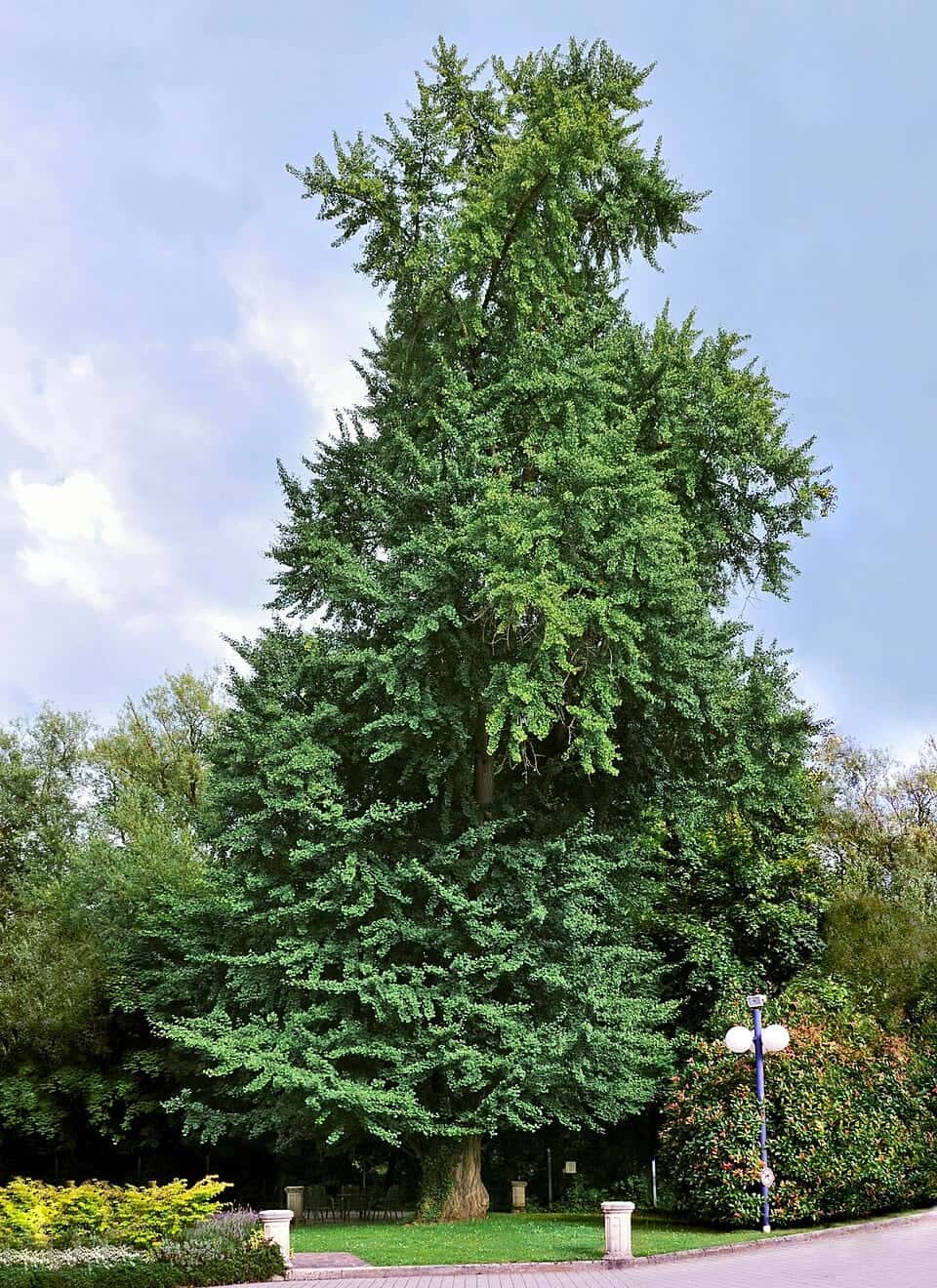
- The shape and bark: often tall and somewhat narrow when young, spreading with age; gray-brown bark that becomes ridged and furrowed on older trees
- The fruit (female trees only): pale tan to yellowish, plum-sized, soft fleshy balls that fall in autumn and, when crushed underfoot, smell strongly of rancid butter or vomit
A tree with small, veined, fan-shaped leaves and a brilliant uniform gold fall color is a ginkgo — no other widely planted tree shares that leaf. If it is also dropping soft, foul-smelling tan fruit, you have found a female ginkgo.
Try Spotter free on iPhone or Android
Plants, animals, fungi and rocks from one photo. 5 free identifications every day, no card required.


Why Only Some Ginkgos Stink
Ginkgos are dioecious, meaning individual trees are either male or female. Only female trees produce the fleshy seeds — often loosely called "fruit" — and only those seeds carry the notorious odor. The soft outer coating contains butyric acid, the very same compound that makes rancid butter and vomit smell the way they do, which is why a fruiting female ginkgo can clear a sidewalk in October. Because a young ginkgo can take around two decades to reach seed-bearing age, and because the sex is hard to determine before then, cities that meant to plant only odorless males sometimes end up with a stinky female by mistake. Where you smell it, you will usually find the mushy tan seeds crushed into the pavement nearby. The smell is unpleasant but not dangerous; the fleshy coating can irritate skin for some people, so it is best not to handle the fresh fruit with bare hands.
A Living Fossil on the Sidewalk
Part of what makes the ginkgo worth recognizing is its history: Ginkgo biloba is the sole survivor of a plant group that flourished alongside the dinosaurs, which is why it is so often called a "living fossil." It has no close living relatives — that fan-shaped, midrib-less leaf really is a design from a different era. Ginkgos are planted so widely along streets and in parks precisely because they are extraordinarily tough: they shrug off pollution, compacted soil, pests, and road salt better than almost any other tree, and reward the city with that spectacular one-week gold each fall. Once you learn the leaf, you will start spotting ginkgos everywhere — and know at a glance which season is about to bring either a golden carpet, a pungent surprise, or both.
Come across a fan-leaved tree and want to be sure it is a ginkgo and not something else? Snap a photo of the leaves and let Spotter confirm the ID — fall, when the gold color and the telltale fruit both show up, is the easiest time of year to catch one.
Try Spotter free on iPhone or Android
Plants, animals, fungi and rocks from one photo. 5 free identifications every day, no card required.