FG-0031 · Wild Plants · 6 species
Identifying Trees in California
By Derek Gauger · Updated
Overview
California holds the tallest, the largest, and among the oldest trees on Earth, across habitats that run from fog-belt redwood forest to Sierra conifer to Mojave desert. That range makes for an extraordinary set of trees to learn.
This guide covers common and iconic California trees — how to tell them apart by leaf, bark, and habit. Pair it with a photo of the foliage or bark and the app to confirm any tree you find.
Key species to know
FG-0031.01
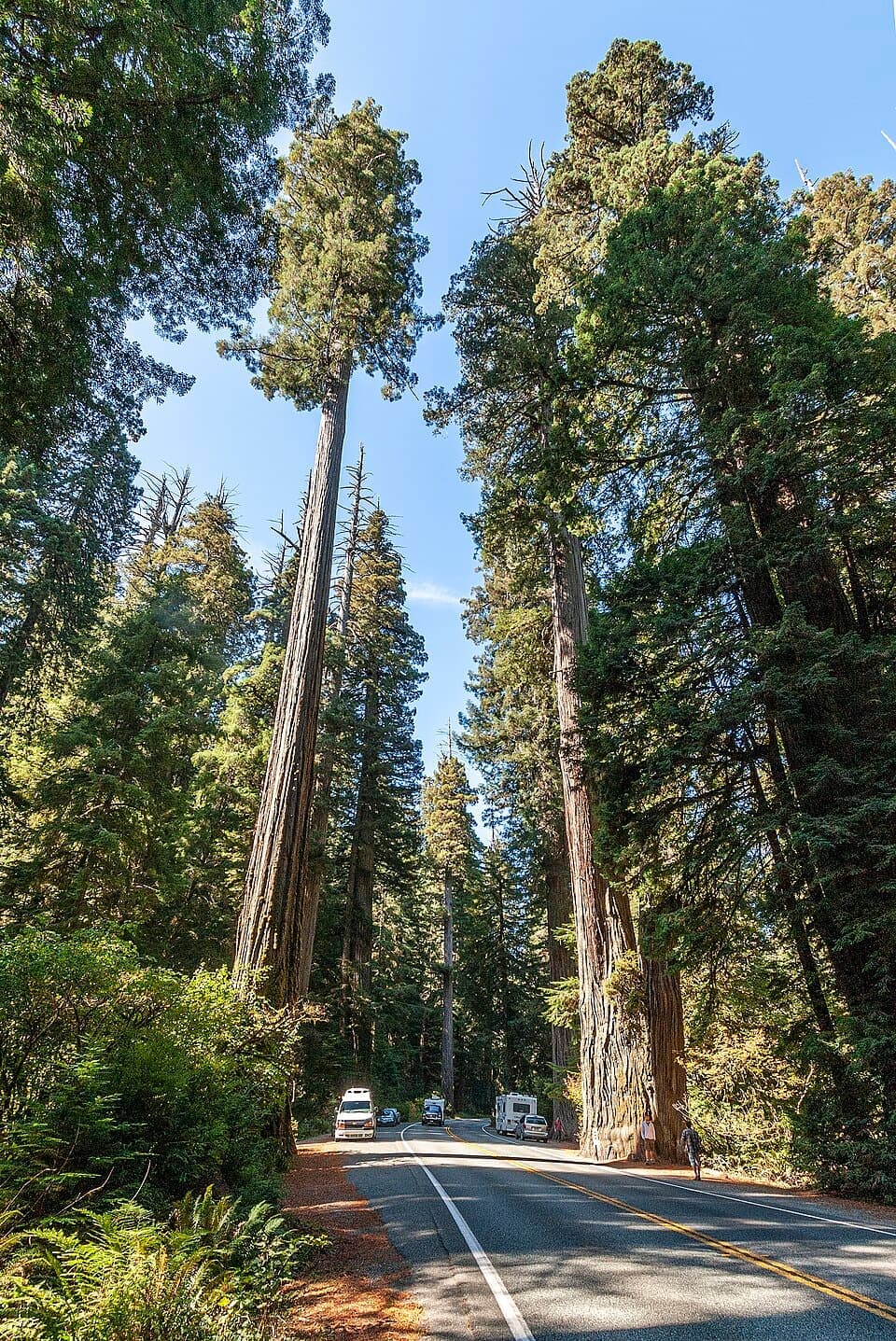
Coast Redwood
Sequoia sempervirens
The tallest tree on Earth — a towering evergreen with flat, needle-like foliage and thick, fibrous reddish bark. Grows in the fog belt of the northern and central coast.
Habitat: Coastal fog-belt forests from Big Sur north to the Oregon border.
FG-0031.02
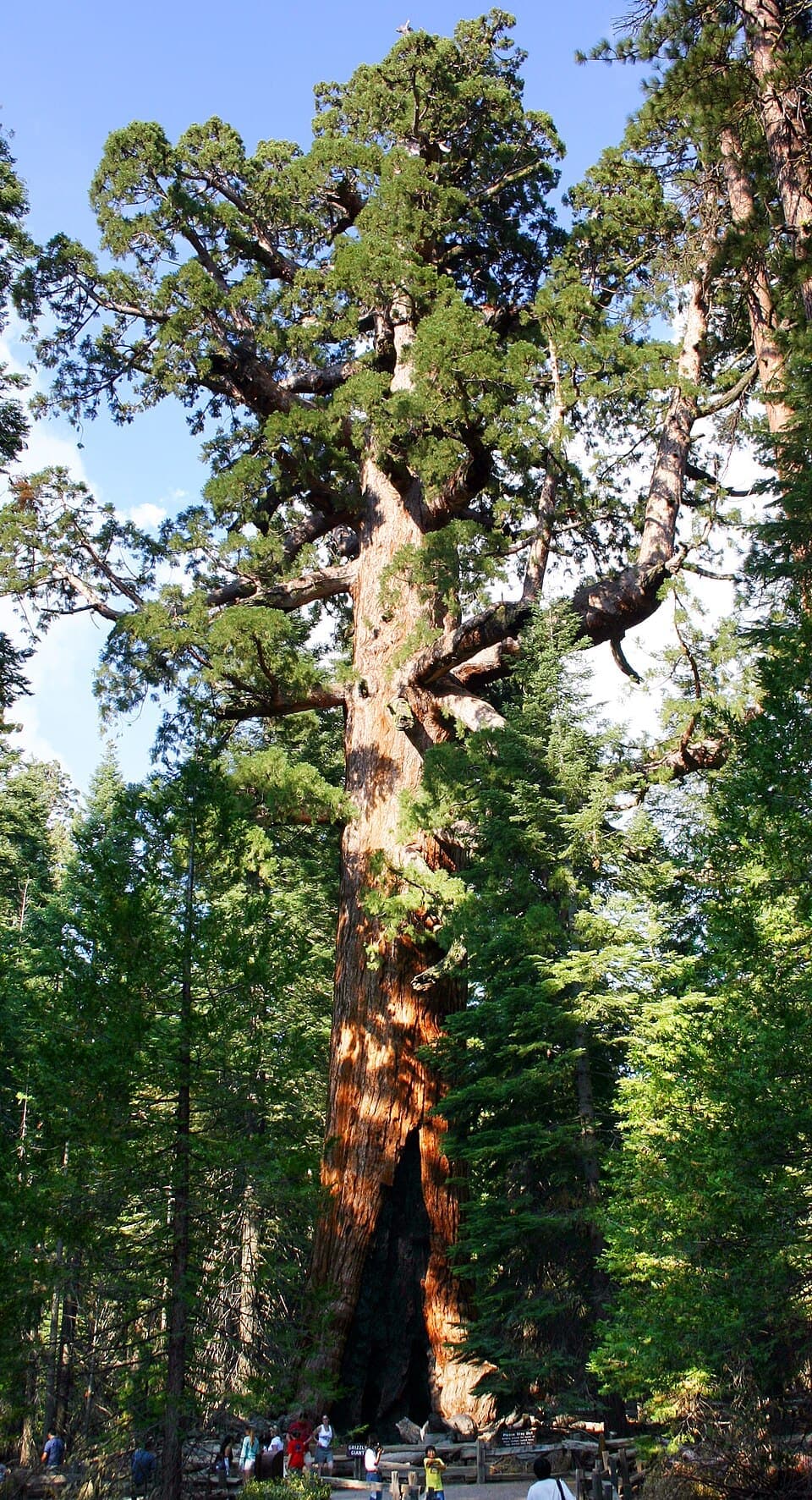
Giant Sequoia
Sequoiadendron giganteum
The most massive tree on Earth by volume — a colossal evergreen with awl-like scale foliage and thick cinnamon-red bark. Restricted to scattered Sierra Nevada groves.
Habitat: Mid-elevation groves on the western Sierra Nevada slopes.
FG-0031.03
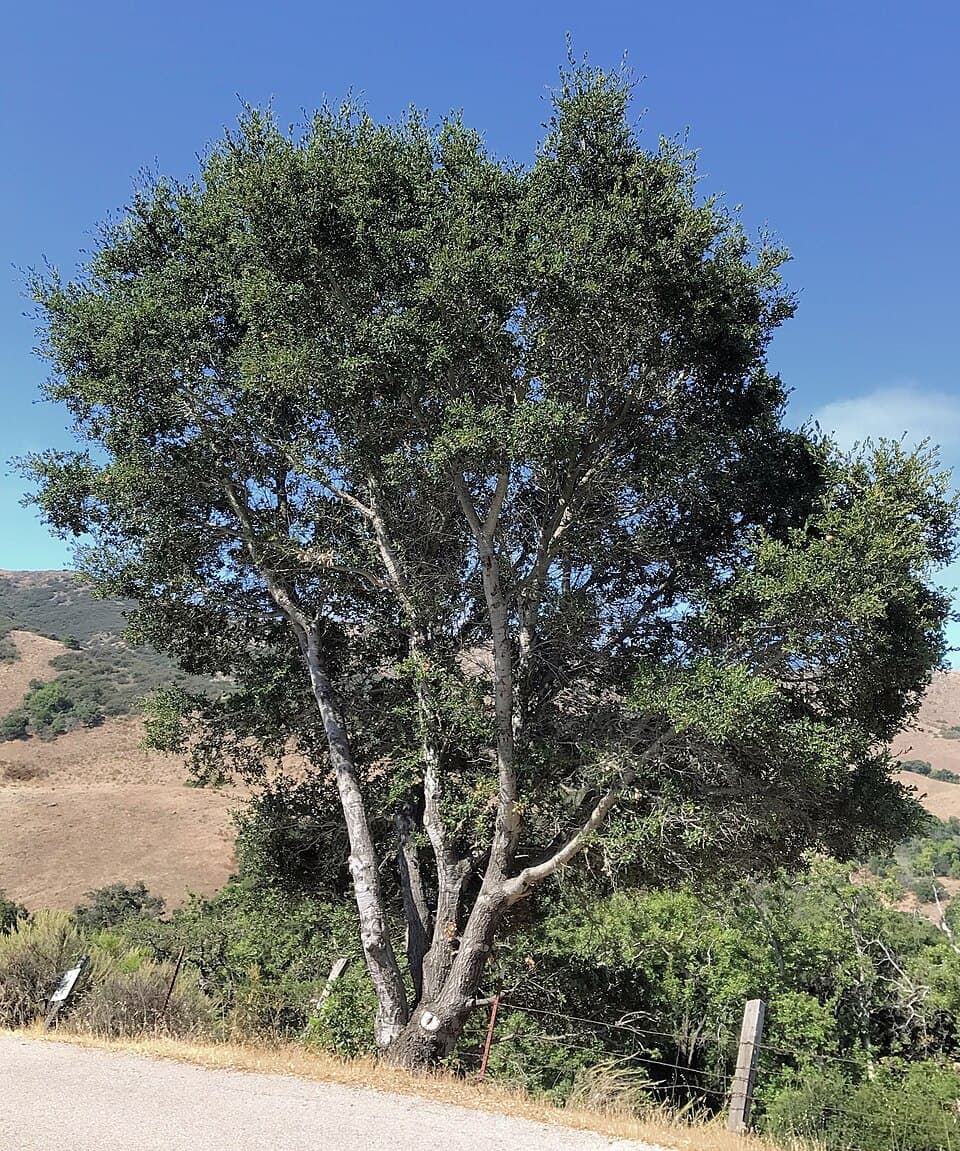
Coast Live Oak
Quercus agrifolia
A broad, evergreen oak with small, cupped, holly-like leaves and dark, furrowed bark. A signature tree of the coastal hills and oak savanna.
Habitat: Coastal hills, valleys, and oak woodland west of the Sierra.
FG-0031.04
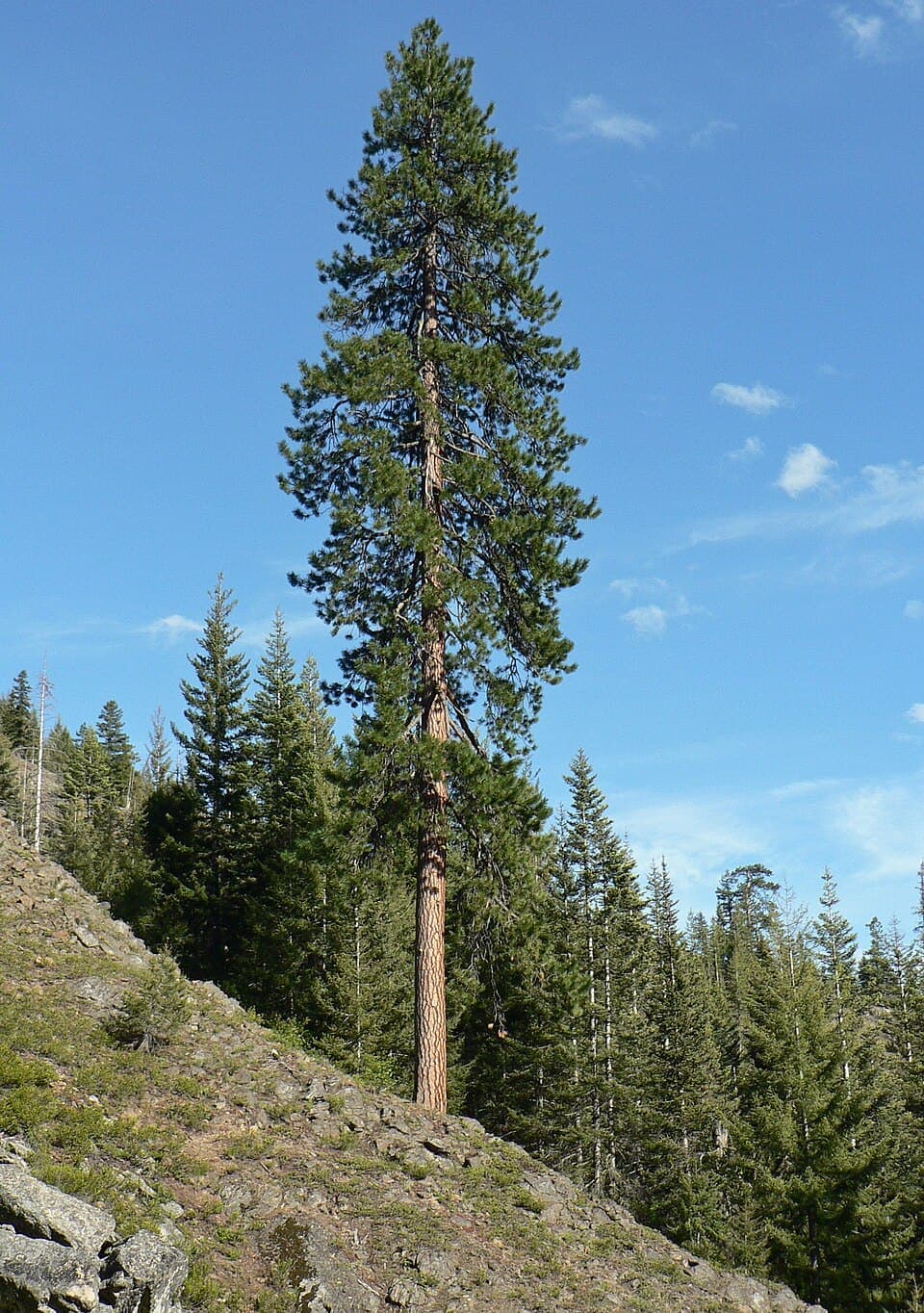
Ponderosa Pine
Pinus ponderosa
A tall pine with long needles in bundles of three and puzzle-piece orange bark that smells of vanilla up close. A dominant conifer of the Sierra and mountain forests.
Habitat: Mid-elevation mountain forests across the Sierra and other ranges.
FG-0031.05
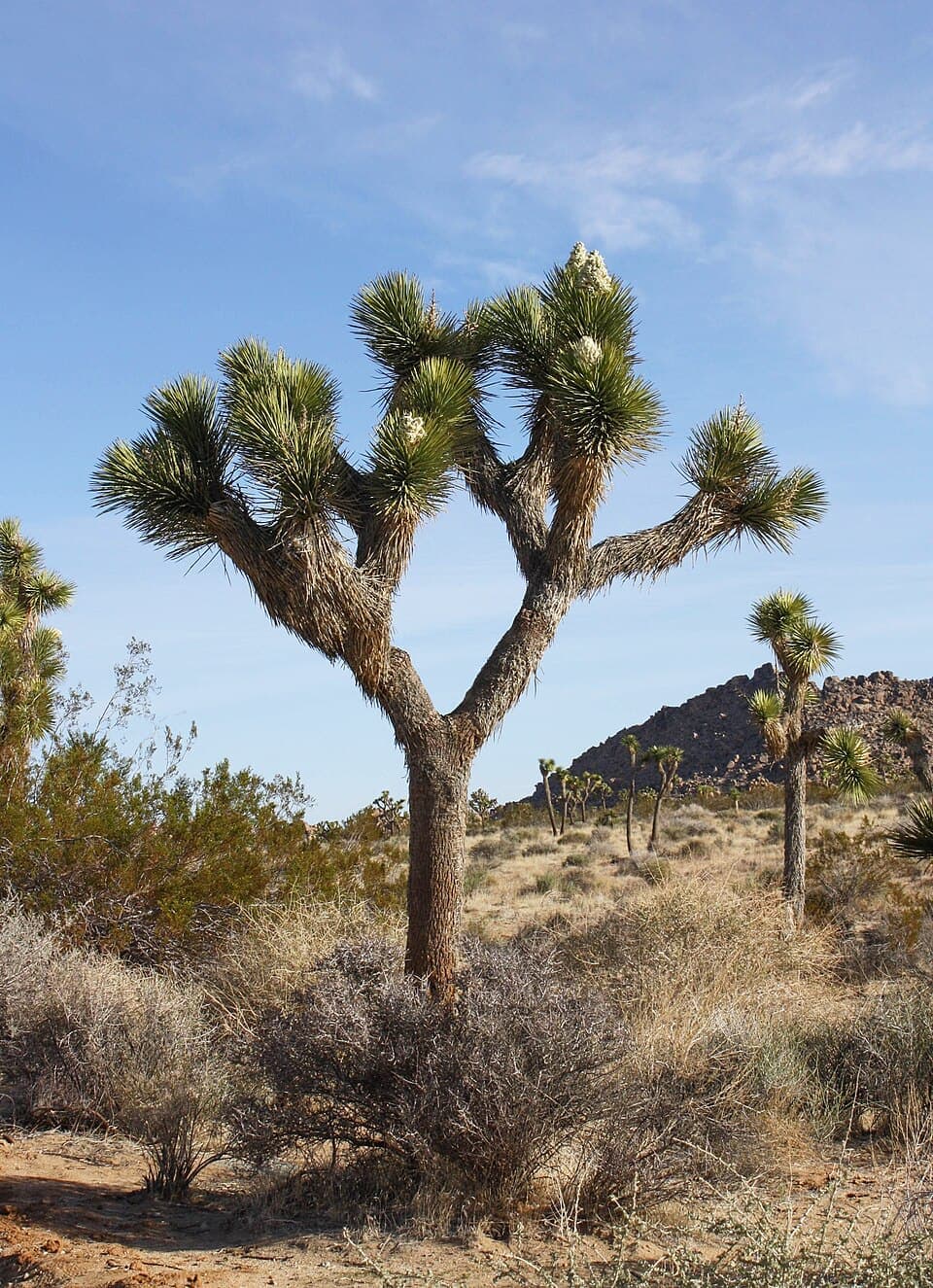
Joshua Tree
Yucca brevifolia
A branching desert yucca with clusters of spiky, dagger-like leaves at its limb tips, forming a surreal silhouette. Emblematic of the Mojave Desert.
Habitat: Mojave Desert flats and slopes, mostly above 2,000 ft.
FG-0031.06
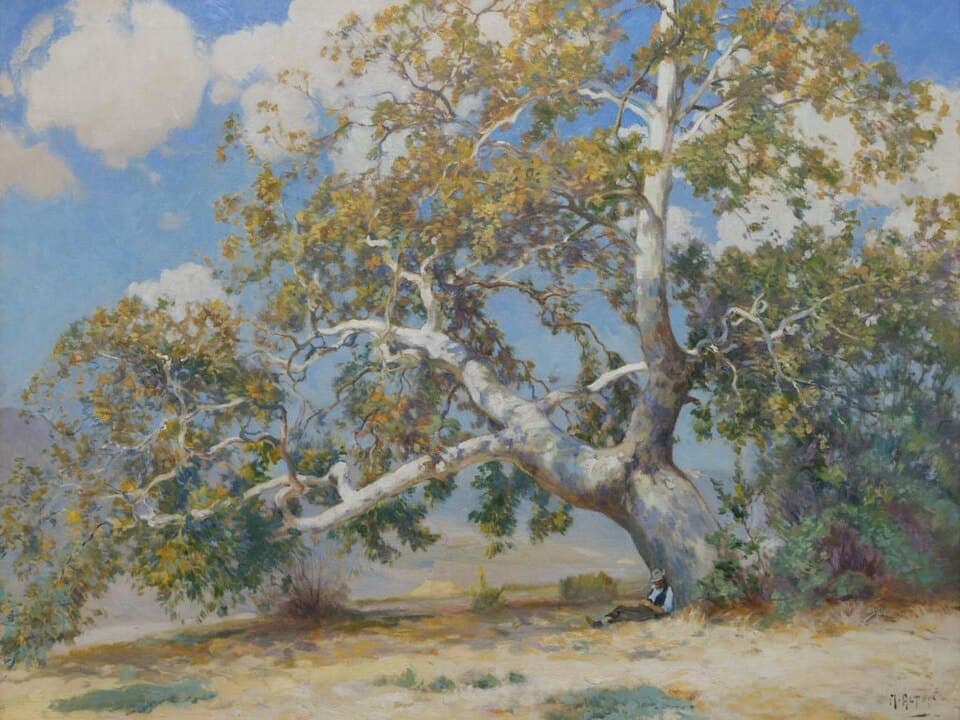
California Sycamore
Platanus racemosa
A large streamside tree with broad, maple-like leaves and mottled, patchy bark that peels to reveal pale creamy patches. Often leans and forks dramatically.
Habitat: Stream banks, canyon bottoms, and floodplains statewide.
Through the seasons
- Year-round: redwoods, sequoias, live oaks, and pines are evergreen and identifiable in any season.
- Winter: the pale, peeling bark of leafless sycamores stands out along watercourses.
- Spring: Joshua trees bloom with tall clusters of creamy flowers in good years.
Questions
- What is the difference between a coast redwood and a giant sequoia?
- Coast redwoods are the tallest trees and grow in the coastal fog belt with flat, needle-like foliage. Giant sequoias are the most massive by volume, grow only in Sierra Nevada groves, and have awl-like scale foliage and a broader, more columnar trunk.
- How do I identify a tree in California?
- Photograph the leaves or needles and the bark, note the habitat and elevation, and use an app like Spotter to identify the species along with its range.
From Field Notes
- Pine vs. Spruce vs. Fir: How to Identify Evergreen Trees
- White Oak vs. Red Oak: How to Tell the Two Great Oak Groups Apart
- What Is the Big Tree With White, Camouflage-Peeling Bark? Identifying the American Sycamore
- Why Is My Pine Turning Yellow and Dropping Needles This Fall? Understanding Seasonal Needle Drop
Not sure what you found?
Take a photo with Spotter for the name, field marks, look-alikes and safety notes in seconds.


In this guide
- Species
- 6
- Region
- California