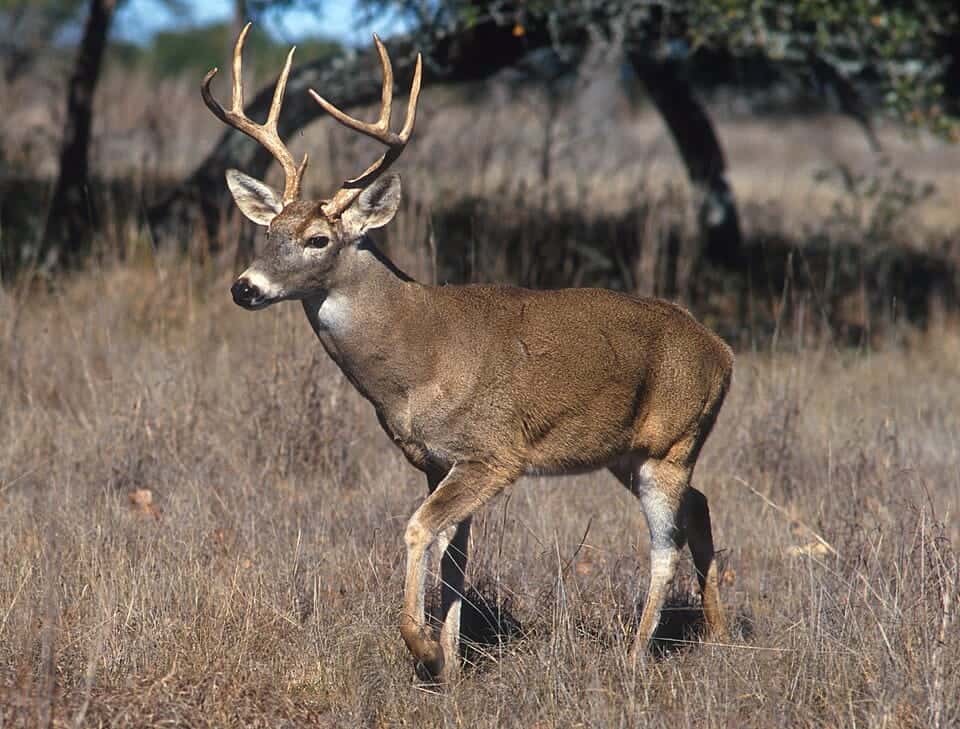
You walk out to a young tree — a backyard sapling, a newly planted maple, or a slim trunk along a woodland edge — and find it wounded: the bark scraped and shredded off one side in vertical strips, bright bare wood exposed underneath, and sometimes a few low branches snapped or a whole thin tree bent and battered. It looks like something attacked the trunk, and in fall, something did. This is a buck rub, made by a male white-tailed or mule deer rubbing his antlers against the tree. Rubs appear across much of the country from early fall onward as the deer breeding season — the rut — gets underway. Here is how to recognize a buck rub, separate it from other kinds of tree damage, and protect trees that are at risk.
How to Identify a Buck Rub
Buck rubs have a distinctive look that sets them apart from random breakage or disease:
- The wound: bark scraped and shredded away on one or two sides of the trunk, usually roughly knee-to-waist height, exposing smooth, pale wood beneath — often with frayed, stringy bark hanging at the edges
- The trees chosen: most often smooth-barked saplings roughly 1 to 4 inches in diameter — maples, dogwoods, birches, lindens, young conifers, and similar — flexible trunks that stand up to antler rubbing
- The freshness: a new rub shows bright, non-weathered wood, sometimes with sap or moisture at the edges, while an old rub from a previous year looks gray, dried, and bleached
- The signs nearby: broken twigs, disturbed ground, tracks, or several rubbed trees along the same travel route (a "rub line") — bucks often work a series of trees through an area
A young, smooth-barked tree with the bark scraped off one side in strips, bright bare wood showing low on the trunk, is almost certainly a buck rub — especially if you find it in fall and there are more like it nearby.
Try Spotter free on iPhone or Android
Plants, animals, fungi and rocks from one photo. 5 free identifications every day, no card required.


Why Bucks Rub Trees in Fall
Buck rubs serve two purposes, both tied to the fall rut. First, antlers grow over the summer under a layer of soft, blood-rich skin called velvet. As the breeding season approaches, the velvet dries and the buck rubs it off against trees and shrubs — often removing all of it in a day or less — leaving hard, polished antlers ready for the season. Second, and lasting well past that first cleanup, rubbing is territorial communication: bucks have scent glands on the face and forehead, and by rubbing a trunk they deposit scent that signals their presence and status to other deer. That is why rubbing continues through the rut and why you may find fresh rubs for weeks. A cluster of rubs along a path is a buck advertising that this is his neighborhood.
Other Tree Damage That Gets Confused With Rubs
A few other things can strip or scar a trunk, so it helps to rule them out:
- Rodent and rabbit gnawing: rabbits and voles chew bark near the base in winter, leaving small, even tooth marks rather than the long vertical scrapes of an antler
- Sapsucker holes: neat horizontal rows of small holes drilled by a woodpecker, not shredded bark (a separate, common backyard puzzle)
- Bear or cat claw marks: parallel gouges or claw scratches, usually higher and deeper, in areas with those animals
- Mechanical injury: string trimmers, mowers, and stakes can scrape a trunk near the ground, but leave clean or crushed wounds without the frayed, stringy bark of a rub
If you want to protect vulnerable young trees, the reliable approach is a physical barrier during the fall rut: a loose cylinder of wire fencing, a corrugated tree-trunk guard, or staking a wider cage around prized saplings until rubbing season passes. A tree that is only lightly scraped often heals, but one rubbed all the way around the trunk (girdled) may not survive, so barriers are worth it for trees you care about. Repellents give mixed results; a sturdy guard is the surer bet.
Not sure whether that scraped-up sapling was a buck, a rabbit, or a string trimmer — or what left the tracks in the mud beside it? Photograph the trunk and any nearby sign and let Spotter help you identify what is passing through your yard this fall.
Try Spotter free on iPhone or Android
Plants, animals, fungi and rocks from one photo. 5 free identifications every day, no card required.