
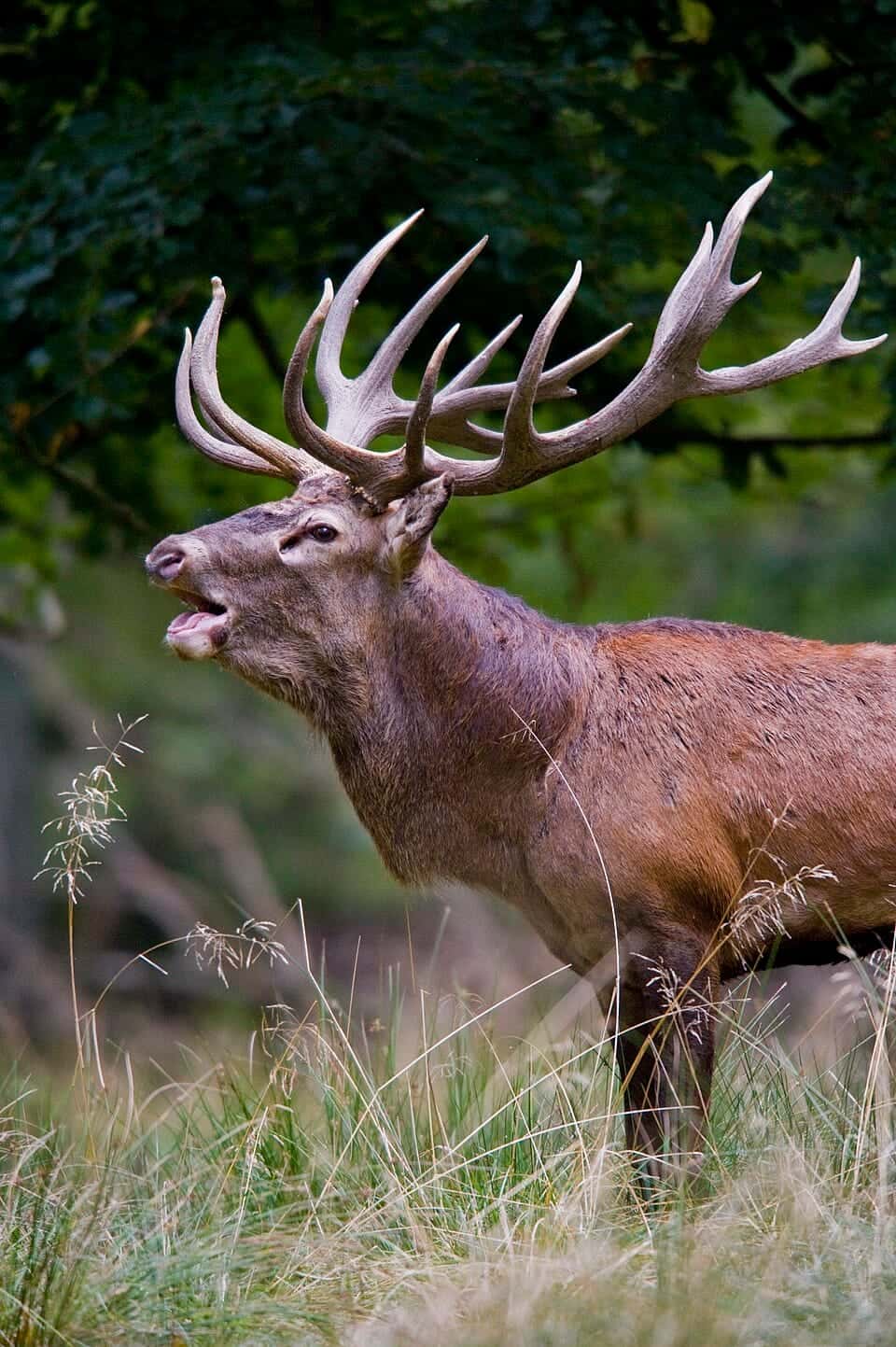
A shed antler is a single, hard, bone-like antler that a buck or bull dropped naturally over winter — not a sign the animal was hurt. Deer, elk, and moose grow a fresh set of antlers every year and cast the old ones each winter or early spring, so finding one on the ground is a normal seasonal event, not a tragedy. To tell which animal a shed came from, read its size and weight, the shape of the main beam, how the tines (points) are arranged, and the look of the base where it broke away from the skull. A small, forked, pencil-to-wrist-thick antler is almost always a deer; a long, heavy, sweeping beam with tall tines is an elk; a broad, flattened palm with points around the edge is a moose. Here is how to identify a shed antler and work out which species — and which part of the animal — it came from.
How to Identify a Shed Antler
Start by confirming it is an antler at all, then move to size, shape, and the base, which together point to the species. One antler is a "shed"; a left and right found together is a "matched set."
Antler vs. horn — first, make sure it is an antler
Antlers and horns are completely different. Antlers are solid bone, grown and shed every year, usually branched, and carried only by members of the deer family — deer, elk, moose, and caribou. Horns are a permanent, unbranched sheath of keratin over a bony core, never shed, and are worn by cattle, sheep, goats, bison, and pronghorn (which sheds only the outer sheath). If what you found is a single branched bone with a rounded, slightly rough base — not a hollow keratin sheath — it is a shed antler.
Size, weight, and the main beam
Size is the fastest sort. A white-tailed or mule deer shed is light enough to hold easily in one hand, with a main beam roughly the thickness of a thumb to a wrist and a gentle curve. An elk shed is dramatically bigger and heavier — a long, thick, sweeping beam several feet long that can weigh several pounds — and often needs two hands. A moose shed is heavier still and unmistakably flat. Weight and heft alone usually separate a deer shed from an elk or moose shed before you even study the shape.
Tines, points, and shape
How the points come off the beam identifies the species. On a white-tailed deer, all the tines rise vertically from a single main beam that sweeps forward. On a mule deer, the beam forks, and each fork forks again, giving a branched, split look. Elk antlers are long, curved beams that sweep up and back with tall tines branching upward, typically carrying six points per side on a mature bull — a "six-by-six." Moose grow a broad, flattened palm — a wide slab of bone — with short points protruding from the outer edge.
The base (where it detached)
The giveaway that an antler was shed rather than cut or broken off a skull is the base, where it separated from the bony pedicle on the head. A naturally shed antler has a rounded, slightly concave, porous base with a textured rim. A sawn antler shows a flat, smooth cut, and an antler still attached to a piece of skull obviously was not shed. A clean, rounded, naturally detached base confirms a genuine shed.
A Field Routine for Identifying a Shed
To identify a shed in the field, work through it in order:
- Confirm it is an antler, not a horn: branched solid bone with a rounded base, not a hollow keratin sheath.
- Heft it: palm-light points to deer; heavy and long to elk; heavy and flat to moose.
- Read the beam and tines: tines off one sweeping beam (whitetail), a repeatedly forking beam (mule deer), tall upward tines (elk), or a flat palm (moose).
- Check the base: a rounded, porous, naturally detached button means it is a true shed.
Deer vs. Elk vs. Moose Sheds at a Glance
The most common sheds in North America sort out quickly:
- White-tailed deer — small and light, with all tines rising vertically from a single forward-curving beam; typically a few inches to a couple of feet long.
- Mule deer — similar in size to a whitetail, but the beam forks and each branch forks again, giving a balanced, split "Y-on-Y" shape.
- Elk — large and heavy, with a long beam sweeping up and back and tall tines; a mature bull sheds a beam several feet long with around six points.
- Moose — an unmistakable broad, flat palm of bone with short points along the edge, the heaviest shed of the group.
- Caribou — long, sweeping, and asymmetrical with distinctive forward-pointing brow "shovels"; the only North American deer in which females also grow antlers.
When and Where to Find Sheds
Timing is seasonal and worth knowing if you want to find sheds rather than just identify them. Moose drop first, often from December into January; white-tailed and mule deer follow from late January through March; and elk hold on longest, shedding from March into April. The best way to find them is to search where animals spend the winter conserving energy: feeding areas like crop stubble and fields, bedding areas on sheltered south-facing slopes and in conifer stands, and the trails and fence crossings in between, where the jolt of a jump can shake a loose antler free. Many states regulate or set seasons on shed collecting, so check local rules before you go.
Is It Legal and Safe to Collect Sheds?
Picking up naturally shed antlers is a popular, low-impact hobby, but a few cautions apply. On much public land, especially in the West, agencies set shed-hunting seasons or winter closures to protect wintering herds from stress during the hardest months, and collecting is prohibited entirely in national parks and many wildlife refuges — so confirm the rules for the specific land before collecting. Never approach or pressure live animals to make them drop antlers. Remember, too, that found antlers are quickly gnawed by mice, squirrels, and porcupines for their calcium, which is why old sheds look chewed. Antlers themselves are safe to handle, though it is good practice to wash your hands after handling anything found in the wild.
Frequently Asked Questions
Do deer die when they lose their antlers?
No. Shedding antlers is a normal, painless annual process driven by a drop in testosterone after the breeding season. The buck or bull grows a brand-new, often larger set the following spring and summer.
How can I tell a deer shed from an elk shed?
Mostly by size and weight. A deer shed is light and fits easily in one hand, with a thumb-to-wrist-thick beam; an elk shed is far longer and heavier, with a sweeping beam several feet long and tall tines, usually needing two hands.
What is the difference between antlers and horns?
Antlers are solid bone, branched, grown and shed every year, and found only on the deer family. Horns are permanent, unbranched keratin over a bony core and are never shed, except for the pronghorn’s outer sheath. A found, branched bone is a shed antler.
When is the best time to look for shed antlers?
Late winter into early spring. Moose drop around December and January, deer from late January through March, and elk from March into April, so February through early April is prime shed-hunting time across much of the country.
Found a dropped antler and not sure whether it came from a deer, an elk, or a moose? Snap a photo and let Spotter help you identify it as a starting point, then confirm it with the size, the shape of the beam and tines, and the rounded, naturally shed base.
Try Spotter free on iPhone or Android
Plants, animals, fungi and rocks from one photo. 5 free identifications every day, no card required.