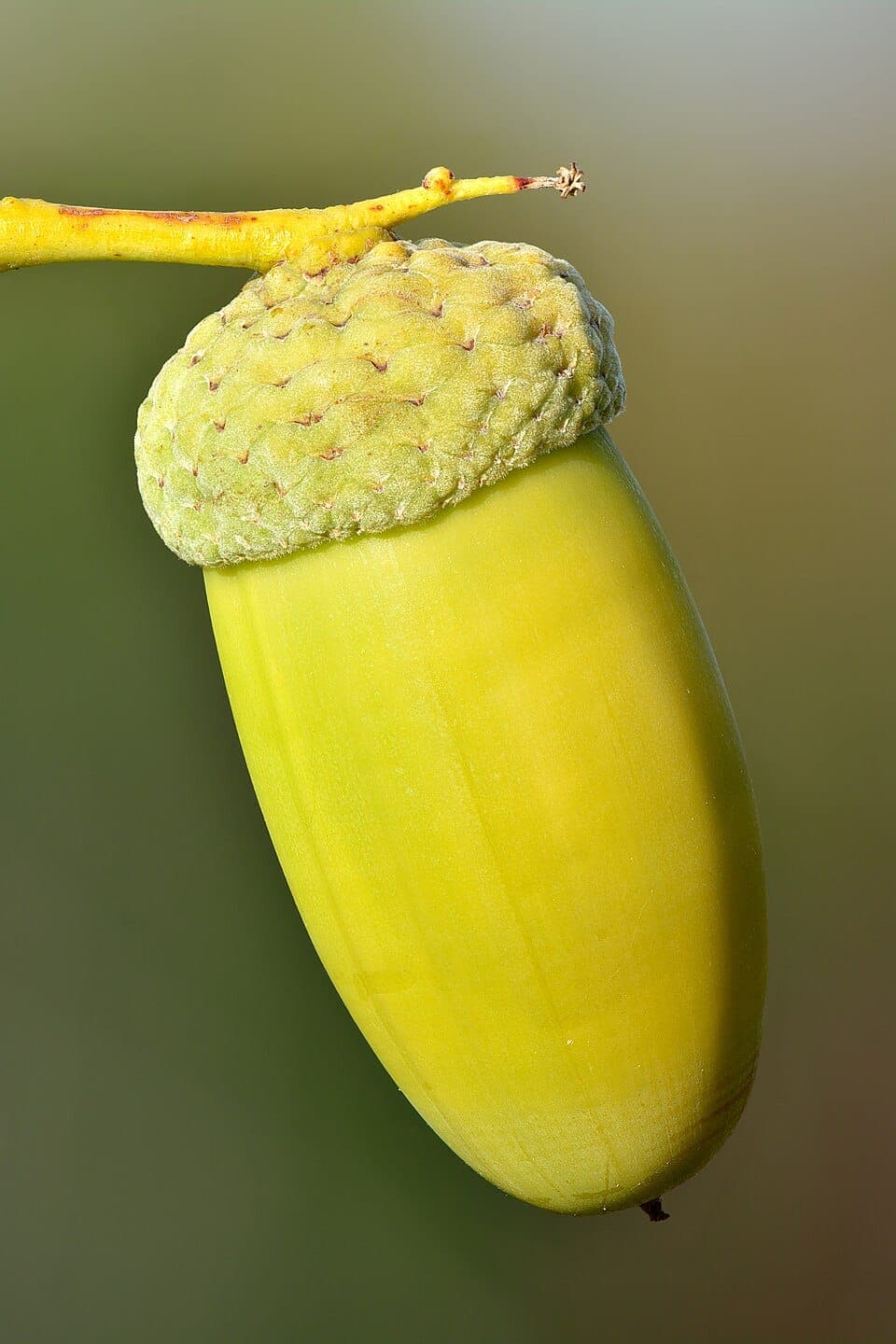
Some years the oaks seem to declare war on your lawn. Acorns rain down by the thousands, blanketing the grass, pinging off the roof and the car, rolling across the driveway, and crunching underfoot on every walk. Squirrels go into a frenzy, gutters clog with them, and you cannot take a step in the yard without acorns underfoot. Then, a year or two later, you can walk the same yard and barely find one. If it feels like the oaks are producing wildly more acorns than usual this fall, you are almost certainly right — and the phenomenon has a name: a mast year.
What Is a Mast Year?
Masting is the tendency of oaks (and some other trees like beeches and hickories) to produce huge crops of seed in some years and very little in others, rather than a steady amount every year. In a mast year, oaks across a whole region drop an enormous, synchronized crop of acorns all at once; in the lean years between, they produce comparatively few. These heavy years typically come every two to five years, with sparse years in between, which is why a bumper acorn fall can feel like it comes out of nowhere.
What makes it striking is the coordination. It is not just your oak having a good year — oaks of the same species across an entire area tend to mast in the same year, synchronizing their heavy seed drop over huge distances. That regional synchrony is a big part of what makes a true mast year so overwhelming.
Try Spotter Free on iOS & Android
Plants, animals, fungi, and rocks — all from a photo. 5 free identifications every day, no credit card required.
Why Do Oaks Do This?
The leading explanation is a survival strategy called predator satiation. Acorns are a favorite food of squirrels, chipmunks, deer, turkeys, mice, and jays, and in a normal year those animals eat nearly every acorn that falls, leaving few to sprout. By occasionally flooding the forest with far more acorns than all those animals can possibly eat, the oaks guarantee that some acorns survive to germinate and grow into new trees. The lean years in between actually help the strategy work: they keep acorn-eating animal populations from growing too large, so that when the big crop comes, the predators are overwhelmed.
How the trees coordinate is still not fully understood. Scientists point to a mix of factors — weather is clearly important, especially spring conditions during flowering. A well-timed warm spring can let oaks pollinate heavily, while a late frost that kills the flowers can wipe out the following fall’s crop. Trees may also communicate through pollen in the air and possibly through connected root systems, but the full mechanism remains an open question in ecology.
Does a Big Acorn Year Predict a Hard Winter?
This is the folklore everyone repeats: lots of acorns means a brutal winter ahead. It is a charming idea, but it is not how masting works. A mast year is driven by conditions during the previous spring and by the tree’s own multi-year cycle — it reflects the weather that already happened, not the weather to come. Oaks have no way to forecast the coming winter. So a yard full of acorns tells you about last spring’s growing conditions and where the oak is in its cycle, not whether you should stock up on firewood.
What a Mast Year Means for Your Yard and the Woods
A heavy acorn year ripples through the whole ecosystem. That fall, squirrels, chipmunks, deer, and wild turkeys feast, and more of them survive the winter and breed the next spring. The following year often brings more mice — and, because mice carry the ticks that spread Lyme disease, ecologists have linked big mast years to higher tick numbers a year or two later. In your own yard, the practical effects are simpler: slippery acorns on walkways, busy squirrels, and a lot of raking. The good news is that the very next year is usually a light one.
Curious which oak is burying your yard in acorns — a red oak, a white oak, a pin oak, or something else? Snap a photo of the leaves, bark, or acorns and let Spotter identify the tree as a starting point for getting to know the giants dropping all that mast.
Try Spotter Free on iOS & Android
Plants, animals, fungi, and rocks — all from a photo. 5 free identifications every day, no credit card required.