
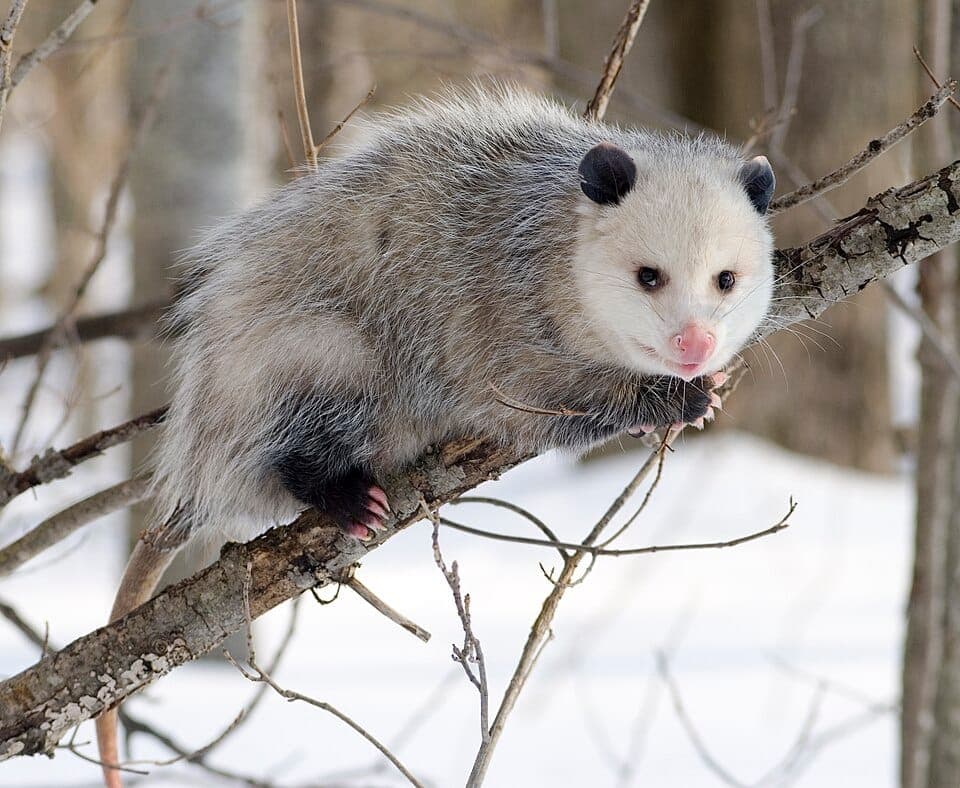
If you have spotted a cat-sized, grayish animal with a pointed white face, a long naked tail, and a slow, shuffling walk, you are almost certainly looking at a Virginia opossum — North America’s only native marsupial. Opossums are not dangerous: they are shy, non-aggressive animals that bluff their way out of trouble by hissing, drooling, or famously "playing possum," and they are genuinely good neighbors that clean up carrion, slugs, and pests. Here is how to identify one for certain and what to know about living alongside them.
How to Identify a Virginia Opossum
Opossums are unlike any other mammal in North America, so once you know the key marks they are hard to mistake. Focus on the tail, the face, and the size.
Size and body shape
A Virginia opossum is roughly house-cat sized, about 2.5 to 3 feet long including the tail and usually 4 to 14 pounds. It has a stocky, hunched body, short legs, and a distinctive long, cone-shaped snout that tapers to a pink nose. Its overall look is a bit ragged and unhurried compared with a sleek cat or a scurrying rat.
Fur and face
The body fur is a grizzled grayish-white, while the face is noticeably paler — often nearly white — which is one of the quickest ways to recognize one. Look for dark, bead-like eyes that shine red in a flashlight beam, and thin, leathery black ears, sometimes tipped or edged in pink or white. Open its mouth (from a distance, when it gapes defensively) and you may notice a lot of teeth: opossums have 50, more than any other North American land mammal.
The naked tail and hand-like feet
The long, scaly, hairless tail is the giveaway. It is prehensile, meaning the opossum can use it for balance and gripping, and it looks rat-like but is far thicker and longer. The hind feet are just as telling: each has an opposable "thumb" (the hallux) with no claw, so the footprint looks like a tiny splayed hand. This thumbed hind print, combined with five toes on each foot, makes opossum tracks distinctive in mud or snow.
Tracks and other signs
You will often find the sign before you see the animal. Opossum tracks show that hand-like hind print with the thumb angled off to the side, usually landing near or on top of the front print, which has five thin fingers spread in a star. Because opossums do not dig their own burrows, look for them denning in ready-made spaces — under decks, sheds, woodpiles, and old groundhog holes — and for tipped trash cans, raided pet-food bowls, and cleaned-up fallen fruit beneath a tree. Their droppings are dark and tubular, often deposited near a feeding spot.
Behavior: hissing, drooling, and playing dead
When cornered, an opossum’s first move is to bluff: it opens its mouth wide to show all 50 teeth, hisses, and drools, hoping to look scary. If that fails and it is truly terrified, it may involuntarily "play possum" — collapsing onto its side, going stiff, letting its tongue loll out, and releasing a foul greenish fluid from its anal glands that makes predators lose interest. This catatonic state is not a conscious act; it is an automatic response that can last from a few minutes to several hours before the animal quietly recovers and wanders off.
Try Spotter Free on iOS & Android
Plants, animals, fungi, and rocks — all from a photo. 5 free identifications every day, no credit card required.
Animals People Confuse With Opossums
A gray, medium-sized animal glimpsed at night gets misidentified constantly. Here is how the opossum differs from its common look-alikes:
- Rats — much smaller and brown, with a pointed face but no pale white mask and no opposable thumb; an opossum is far larger and grayer.
- Raccoons — similar in size but unmistakable with a black eye mask, a bushy ringed tail, and salt-and-pepper fur; the opossum’s tail is naked and its face is white.
- Groundhogs (woodchucks) — chunky and brown with a short furred tail and no pointed white face; they dig burrows, while opossums prefer ready-made shelters.
- House cats — obviously furred tails and rounded faces; but in the dark, an opossum’s size and red eyeshine can briefly fool you until you see the naked tail and long snout.
Are Opossums Dangerous? (And Why They’re Good to Have Around)
Opossums are not dangerous. They are gentle, non-aggressive animals that would rather flee or play dead than fight, and they very rarely bite unless they are cornered or handled. They are also far less likely than raccoons, foxes, or bats to carry rabies, because their low body temperature makes it hard for the virus to survive in them. On the plus side, opossums are opportunistic omnivores that eat slugs, insects, mice, overripe fruit, and carrion, and they meticulously groom off and eat ticks that latch onto them — so they help tidy up a yard. The only real nuisances are their habit of raiding trash cans and pet food or denning under a deck, all of which are easy to prevent by securing food and closing off gaps. And do not assume an opossum out in daylight is sick: daytime activity is normal for them.
Frequently Asked Questions
Are opossums dangerous to humans or pets?
Rarely. They are non-aggressive and prefer to flee or play dead rather than fight. An opossum can bite or scratch if it is cornered or handled, and it can carry parasites, so never touch one — but they almost never attack people and seldom tangle with pets.
Do opossums carry rabies?
Very rarely. An opossum’s low body temperature makes it hard for the rabies virus to survive, so they are far less likely to carry it than raccoons, foxes, skunks, or bats. Even so, never handle any wild animal, and call animal control if one is acting strangely.
Why do opossums play dead?
It is an involuntary response to extreme fear. The opossum collapses, goes stiff, drools, and releases a foul smell that convinces predators it is a rotting carcass not worth eating. It can last from a few minutes to several hours and is not something the animal chooses to do.
Do opossums really eat ticks and pests?
Opossums are fastidious groomers that eat ticks which climb onto them, along with slugs, beetles, mice, and carrion. That broad, cleanup-crew diet is a big reason many people are happy to have one passing through the yard.
Spotted a mystery animal shuffling across the yard after dark and want to be sure? Snap a photo and let Spotter help you identify it — and learn which quiet, helpful neighbors are sharing your neighborhood.
Try Spotter Free on iOS & Android
Plants, animals, fungi, and rocks — all from a photo. 5 free identifications every day, no credit card required.