
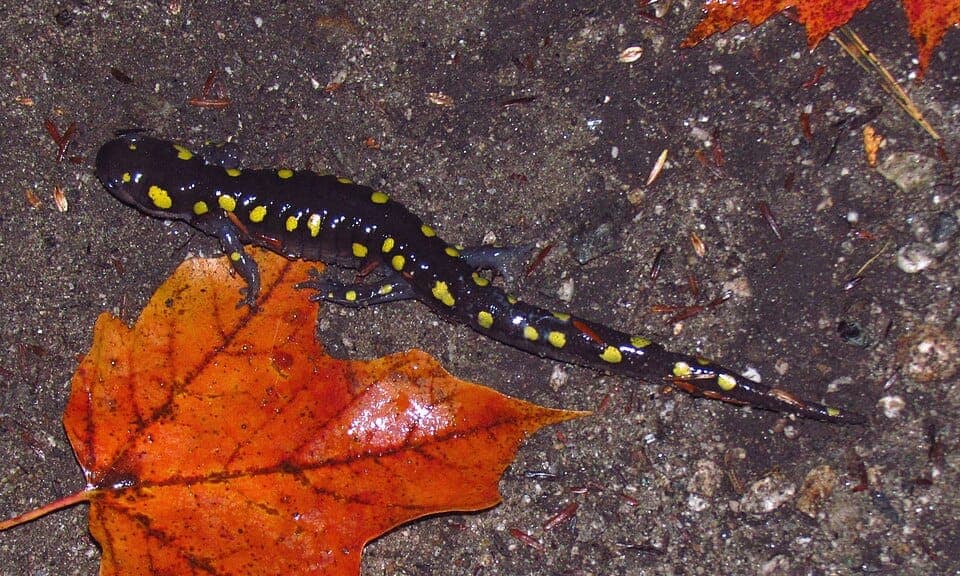
If you have found a small, four-legged, lizard-shaped creature and you are not sure whether it is a lizard or a salamander, the fastest test is to look at the skin. A lizard is a reptile with dry, scaly skin, clawed toes, and visible ear openings, and it is usually out basking in the sun. A salamander is an amphibian with smooth, moist, scaleless skin, no claws, and no external ears, and it stays in cool, damp, shady places. The two can look almost identical in outline, but they belong to completely different branches of the animal kingdom — and once you know what to check, telling them apart takes only a few seconds.
How to Tell a Lizard From a Salamander
Lizards and salamanders both have four legs, a long tail, and a slender body, which is exactly why they get confused. But their skin, feet, and behavior give them away every time. Here are the marks to check, roughly in the order that settles it fastest.
Skin: dry and scaly vs. smooth and moist
This is the single most reliable difference. A lizard’s skin is dry to the touch and covered in small, overlapping scales, so it often looks slightly rough, beaded, or shiny-plated. A salamander’s skin is smooth, soft, and always moist or even slimy, with no scales at all — amphibians breathe partly through their skin, so it has to stay damp. If the animal looks dry and scaly, it is a lizard; if it looks wet, glistening, and rubbery, it is a salamander.
Toes, claws, and feet
Check the front feet. Lizards have five clawed toes on each foot, and those tiny claws help them climb and grip. Salamanders have no claws at all, and most have four toes on the front feet and five on the back — a small detail, but a dead giveaway when you can see it. Soft, clawless toes mean salamander; clawed toes mean lizard.
Ears and eyes
Look at the side of the head. Lizards have a visible external ear opening — a small round hole or a thin, taut eardrum — just behind the eye. Salamanders have no external ear opening at all; the side of the head is smooth. Many lizards also have working eyelids they blink and bright, alert eyes suited to an animal active in daylight.
Where and when you find them
Habitat and timing are huge clues. Lizards love warmth and sun — you will see them basking on rocks, walls, fences, and sidewalks on hot, bright days, then dashing for cover when you approach. Salamanders avoid sun and dry heat entirely; they hide under logs, rocks, leaf litter, and damp soil, come out mostly at night or after rain, and stay tied to moist woodlands, stream edges, and ponds. A dry-skinned creature basking in the midday sun is a lizard; a moist one found under a log in cool shade is a salamander.
Body shape and movement
Lizards tend to look lean and athletic and move in fast, jerky bursts before freezing in place. Salamanders move more slowly and deliberately, with a stiff, side-to-side walking gait, and they rarely sprint. A salamander’s body also usually looks softer and more rounded, without the dry, armored look of a scaly reptile.
- Scaly, dry skin points to a lizard; smooth, moist, scaleless skin points to a salamander.
- Clawed toes point to a lizard; clawless toes point to a salamander.
- A visible ear opening behind the eye points to a lizard; no external ear points to a salamander.
- Basking in the sun and darting away fast points to a lizard; hiding in damp shade and moving slowly points to a salamander.
- A reptile that lays shelled eggs on land is a lizard; an amphibian that lays jelly-like eggs in or near water is a salamander.
Try Spotter Free on iOS & Android
Plants, animals, fungi, and rocks — all from a photo. 5 free identifications every day, no credit card required.
Common Mix-Ups and Look-Alikes
A few specific animals cause most of the confusion:
- Skinks — smooth, shiny-scaled lizards whose glossy bodies and (in the young) bright blue tails make people guess "salamander." They are still lizards: dry scales, clawed toes, and ear openings. Much of North America has five-lined skinks that fit this description.
- Red eft (eastern newt) — a bright orange, soft-skinned amphibian often found walking woodland trails by day after rain. Despite being out in the open, its moist skin and lack of claws mark it as a salamander — a newt is a type of salamander — not a lizard.
- Geckos — lizards with softer-looking skin and big eyes that come out at night, which makes some people guess salamander. Dry skin, clinging toe pads, and chirping calls give them away as reptiles.
- Mudpuppies and other fully aquatic salamanders — large salamanders with external feathery gills that live in water their whole lives; the frilly gills and permanently wet, scaleless skin are unmistakably amphibian.
Why It Matters (and a Safety Note)
Knowing which one you have is more than trivia. A salamander’s porous skin absorbs whatever it touches, so oils, lotions, sunscreen, and insect repellent on your hands can harm or kill it — if you must move one off a road, do it gently with clean, wet hands or a damp leaf, then set it in the shade. Both lizards and salamanders are harmless to people and almost never bite; no native North American salamander is venomous, and the only venomous lizard in the United States is the Gila monster of the desert Southwest, which is slow, distinctive, and easily avoided. A few salamanders, such as newts, carry defensive toxins in their skin, so the rule for both is simple: look, photograph, and wash your hands — do not lick, eat, or roughly handle them.
Frequently Asked Questions
Is a salamander a type of lizard?
No. Salamanders are amphibians, related to frogs and toads, while lizards are reptiles. They only look similar because both have four legs, a tail, and a long body — a classic case of unrelated animals evolving a similar shape.
What is the easiest way to tell them apart?
Look at the skin. Dry and scaly means lizard; smooth, moist, and scaleless means salamander. If you can also see the feet, clawed toes confirm a lizard and clawless toes confirm a salamander.
Why do I only see salamanders after rain?
Salamanders have to keep their skin moist and avoid drying out, so they stay hidden under logs and leaf litter during dry, sunny weather and emerge to feed and travel on damp nights and after rain. Lizards do the opposite, coming out to bask when it is warm and sunny.
Are the little lizards on my wall actually salamanders?
Almost certainly lizards. Animals basking on sunny walls, fences, and sidewalks with dry, scaly skin and quick, darting movements are lizards. Salamanders stay in cool, damp hiding places and would not sun themselves on a hot wall.
Found a small four-legged creature and still not sure whether it is a lizard or a salamander? Snap a photo — ideally showing the skin and feet — and let Spotter help you identify it as a starting point, so you can tell the sun-loving reptile from the moisture-loving amphibian.
Try Spotter Free on iOS & Android
Plants, animals, fungi, and rocks — all from a photo. 5 free identifications every day, no credit card required.