You are watching the treetops, a brushy edge, or a backyard tree in September when you notice them: small, quick, restless birds — greenish-yellow to grayish, with pale bellies and few obvious markings — flitting after insects and never holding still. You flip through a field guide expecting the bold oranges, blacks, and blues of spring warblers and find nothing that matches. Welcome to one of birding’s classic autumn puzzles: the confusing fall warblers. Fall is peak warbler migration, when far more species pass through than nested locally, but most are drab young birds of the year and worn adults in muted non-breeding plumage. Even veteran birders shrug at some of them. Here is a practical, beginner-friendly way to approach the fall warbler wave.
Why Fall Warblers Look So Different
In spring, males wear crisp breeding colors to attract mates, and they are the birds most guides show off. By fall, that is over. The birds moving through now are largely this year’s young, plus adults that have molted into plainer, energy-saving plumage for the long trip to Central and South America. The result is a flood of look-alike birds in shades of olive, yellow, and gray, often with faint or missing field marks. They also travel in mixed flocks, feed high in the canopy, and rarely sit still — so you are usually working with a quick, partial look at a plain bird. That combination is exactly why fall warblers earned their reputation.
A Few Common Ones to Learn First
You do not need to name every bird in the flock. A large share of the fall warblers most people see belong to just a handful of common species, so learn these first:
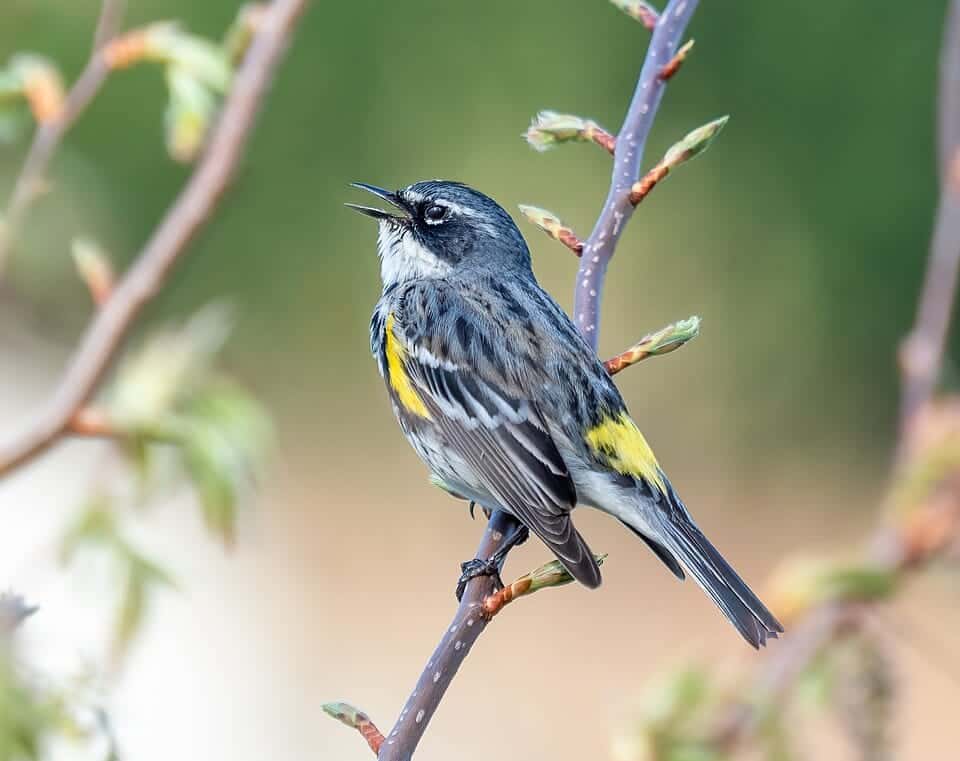
- Yellow-rumped warbler: the great fall standby — look for a bright yellow patch on the rump that flashes every time the bird flies or shifts, plus small yellow patches on the sides; abundant and often the most common warbler you will see
- Palm warbler: a brownish, yellowish warbler that constantly bobs and pumps its tail up and down, often feeding low or on the ground — the tail-wagging habit is the giveaway
- Blackpoll warbler: yellowish-olive with faint, blurry streaks on the sides, a pale eyebrow, and — a key mark — pale yellowish or pinkish legs and feet
- Common yellowthroat: skulks low in weedy, wet edges; fall birds are plain and brownish but often keep a yellow throat, and young males may show a shadow of the black mask
- American redstart: young birds and females are gray-and-olive with bright yellow patches on the sides of the tail and wings, often flashed as the bird fans its tail while feeding
Master a handful of the common species and you will have a name for most of the warblers you meet, which makes the genuinely tricky ones far less overwhelming.
Try Spotter free on iPhone or Android
Plants, animals, fungi and rocks from one photo. 5 free identifications every day, no card required.


What to Focus On in the Field
When the colors are gone, shift your attention to marks and habits that do not change with the seasons. Check for a yellow rump, yellow tail patches, or wing bars — small flashes of color that survive the fall molt. Watch what the bird does: constant tail-pumping, tail-fanning, or a preference for the ground versus the treetops all narrow things down. Note leg and foot color, the pattern around the eye (a full eyering, a pale eyebrow, or a dark line through the eye), and whether the breast is clean or faintly streaked. And be honest about the ones you cannot name — even experienced birders log some fall warblers as "unidentified," and that is a normal, respectable outcome, not a failure.
When and Where to Watch the Wave
Fall warbler migration builds through late August and September, and the birds tend to move at night and refuel by day. The morning after a night with north winds can drop a fresh wave of migrants into local parks, woodland edges, and even leafy backyards, so early-morning outings are best. Look where insects concentrate — sunlit edges, water, and flowering or fruiting trees — and scan the whole flock, since warblers often travel with chickadees and other small birds. A little patience with binoculars and steady, high-quality light turns a frustrating blur of "little yellow birds" into a genuinely rewarding part of fall.
Managed a clear photo of one of those restless little birds — or even a decent look at the rump, tail, or wing marks? Snap it and let Spotter help you identify the bird, so the confusing fall warblers slowly become old friends passing through on their way south.
Try Spotter free on iPhone or Android
Plants, animals, fungi and rocks from one photo. 5 free identifications every day, no card required.