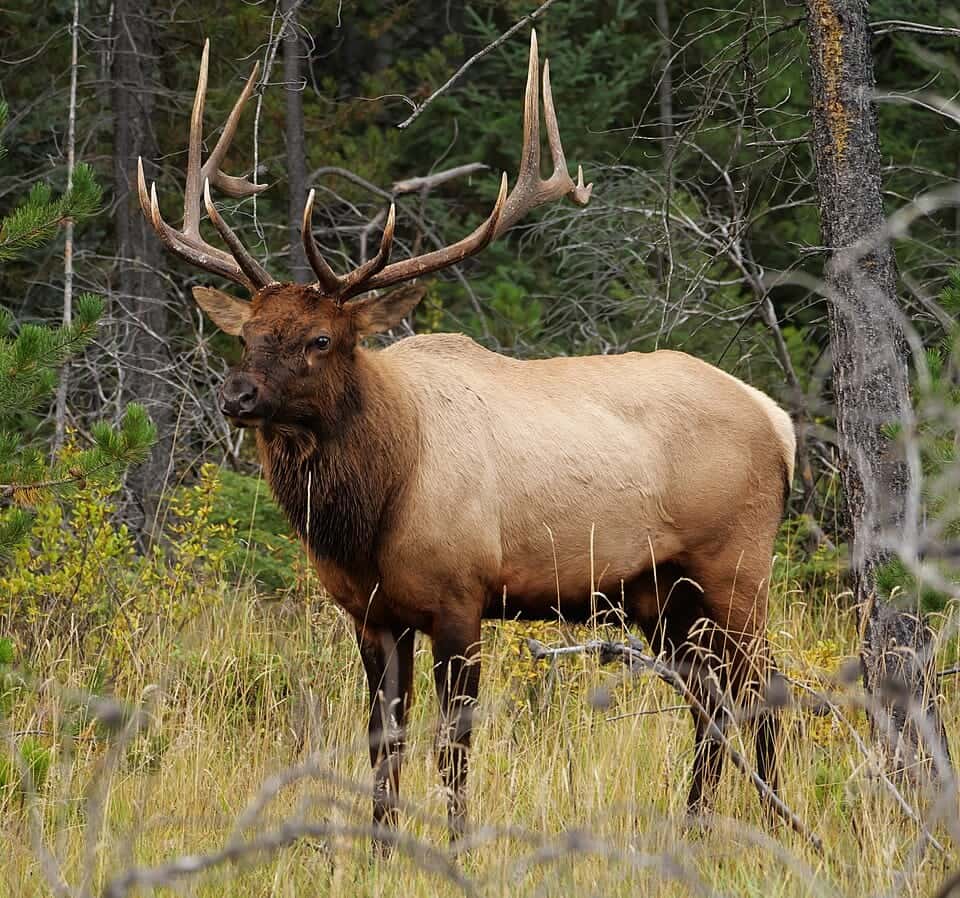
You are near a mountain meadow, a national park, or an open valley at dawn or dusk in early fall when it rolls across the landscape: a wild, high-pitched call that starts as a bellow, climbs into a piercing squeal or whistle, and trails off into a series of deep, guttural grunts. It sounds almost otherworldly — too eerie and too musical to come from a heavy-bodied animal — and it can carry for a mile or more through cool, still autumn air. That is a bull elk bugling, and it is the unmistakable soundtrack of the fall rut, the elk breeding season that peaks from September into October. Here is how to identify the bugle, what it means, and how to enjoy one of North America’s great wildlife spectacles without putting yourself in danger.
What the Elk Bugle Sounds Like
The bugle is unlike any other sound in the fall woods, and once you have heard it you will never mistake it for anything else:
- The structure: it typically begins as a deep, resonant bellow, rises quickly into a long, high-pitched scream or whistle that seems impossibly thin for such a big animal, then drops into a set of low, coughing grunts
- The volume and reach: it is loud and far-carrying, echoing across open meadows and valleys, especially in the calm air of early morning and evening
- The timing: bugling ramps up through September and peaks in late September and early October, most often at dawn and dusk, though during the height of the rut bulls may call day and night
- The purpose: bulls bugle to advertise their fitness to cows, to challenge and intimidate rival bulls, and to help keep their gathered group of cows — called a harem — together
A wild, high-pitched scream that rises to a squeal and ends in deep grunts, echoing across open country in September and October, is a bull elk bugling. Nothing else in the fall landscape makes a sound quite like it.
Try Spotter free on iPhone or Android
Plants, animals, fungi and rocks from one photo. 5 free identifications every day, no card required.


The Fall Rut: What You Are Watching
The bugle is one piece of a much larger drama. During the rut, mature bulls gather and defend harems of cows and compete fiercely with other bulls for the chance to breed. Beyond bugling, you may see a bull thrashing shrubs and small trees with his antlers, wallowing in muddy, scent-soaked pits, and parading stiffly alongside a rival in a tense sizing-up display. When neither backs down, two bulls may lock antlers and shove in a genuine trial of strength. All of this is driven by a short, intense breeding window, which is why elk are so active and so vocal for these few weeks and comparatively quiet the rest of the year. By this point in the season the bulls have also shed the soft velvet from their antlers, leaving them polished and hardened for exactly these contests.
Where and When to See It
Elk are animals of the mountain West and were historically far more widespread; today, in addition to strongholds like the Rocky Mountains and Yellowstone, reintroduced herds draw crowds in places such as Rocky Mountain National Park in Colorado, the Great Smoky Mountains along the Tennessee–North Carolina line, and the elk country of north-central Pennsylvania. The best viewing is at dawn and dusk, when bulls are most vocal and elk move out into open meadows to feed. Cool, calm mornings carry the bugles farthest. If you are in elk country in September or October, an early or late visit to an open valley is often all it takes to hear — and with luck, see — the rut in action.
Watch Safely: Give Elk Room
A rutting bull elk is a large, powerful, hormone-charged wild animal, and cows guarding calves can be defensive too. During the rut in particular, elk are unpredictable and have injured people who crowded them for photos. Keep a very generous distance — parks commonly advise staying at least 25 yards (about two bus lengths) from elk, and much farther is better — and never position yourself between a bull and his cows or between any animal and its escape route. Use a zoom lens or binoculars instead of stepping closer, stay near your vehicle or a solid barrier where one exists, and if an elk changes its behavior because of you, you are too close. Enjoy the bugle as the wild sound it is, and let the animals keep their space.
Not sure whether the big animal across the meadow is an elk, a mule deer, or a moose — or what left those torn-up shrubs and churned mud behind? Photograph the animal or the sign from a safe distance and let Spotter help you identify it, so you can put a name to the drama unfolding in the autumn hills.
Try Spotter free on iPhone or Android
Plants, animals, fungi and rocks from one photo. 5 free identifications every day, no card required.