You look out one morning and a small troop of tall white mushrooms has appeared overnight — pushing up through the lawn, along the gravel edge of the driveway, or out of a disturbed roadside or wood-chip pile. Each one is a slender, cylindrical column, not a typical umbrella, its whitish surface broken into shaggy, upturned scales like a rumpled wig. Come back the next day and something strange has happened: the bottom edges of the caps have turned pink, then black, and are dripping and dissolving into a slimy black ink that puddles on the ground. This is the shaggy mane, also called shaggy ink cap or lawyer’s wig — one of the most distinctive and dramatic fungi of late summer and fall. Here is how to identify it.
How to Identify a Shaggy Mane
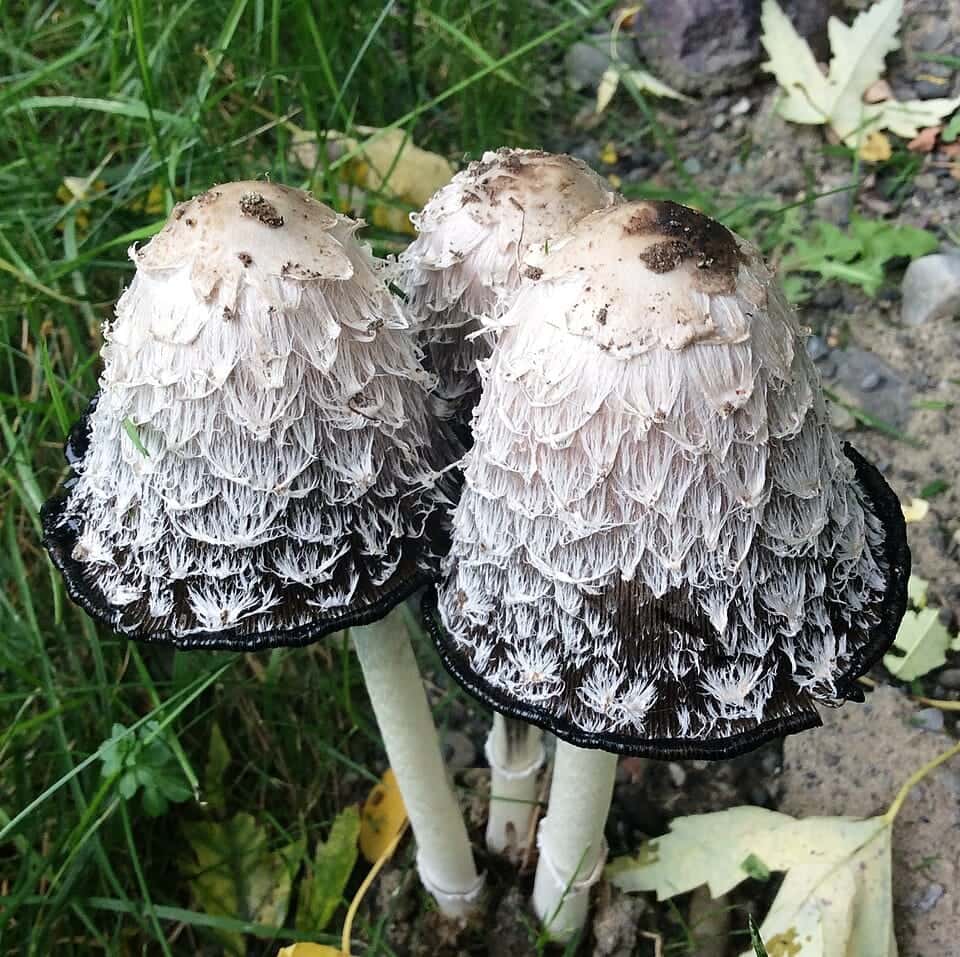
The shaggy mane (Coprinus comatus) is one of the more recognizable mushrooms in North America because of its odd shape and its habit of self-destructing. Look for this combination of traits:
- The shape: tall and cylindrical or bullet-shaped when young — like a narrow, elongated column or a partly furled umbrella — usually 2 to 6 inches tall, much taller than it is wide, rather than the flat, spreading cap of a typical mushroom
- The shaggy surface: the white cap is covered in coarse, upturned, shaggy scales, often tan, grayish, or brownish at their tips, which is exactly what gives the mushroom its "shaggy" and "lawyer’s wig" names
- The self-digesting edge: as it matures, the mushroom deliquesces — the gills and lower edge of the cap turn from white to pink to black and dissolve into a dripping black inky liquid, the single most telltale sign
- The gills: crowded and white in a young specimen, packed tightly beneath the cap before they blacken and liquefy from the bottom up
- The habit and timing: often appearing in groups, rows, or arcs overnight in grassy lawns, along paths and roadsides, and in disturbed or recently graded soil, especially after rain in late summer and fall
The combination of a tall, shaggy, cylindrical white cap that melts into black ink within a day or two is close to unmistakable. Few other common lawn mushrooms self-destruct so quickly and so visibly, which is why the shaggy mane is one of the easier fungi to place with confidence.
Try Spotter free on iPhone or Android
Plants, animals, fungi and rocks from one photo. 5 free identifications every day, no card required.


Why It Turns Into Ink
That dramatic black goo is not decay — it is the mushroom’s reproductive strategy. Shaggy manes belong to a group of fungi called inky caps, which release their spores by dissolving themselves. As the cap matures, an enzyme process causes the gills to liquefy from the bottom edge upward, turning them into a black, spore-laden ink. This "auto-digestion," or deliquescence, lets the spores drip and spread from the disintegrating cap rather than simply dropping as a dry powder. It also happens fast: a firm white shaggy mane in the morning can be a puddle of black ink by evening, which is why these mushrooms seem to appear and vanish almost overnight. The inky liquid was historically even used as a writing ink, which is one origin of the "ink cap" name.
Where and When You Find Them
Shaggy manes are lovers of disturbed, rich ground. They flush in lawns and grassy areas, along the edges of gravel driveways, roadsides, trails, and parking lots, and in recently graded soil, wood chips, or compacted earth, typically after a good rain when the weather turns cool. Their main season runs from late summer through fall, making them a familiar sight right now. Like some other lawn fungi, they sometimes come up in rough rows or arcs where their underground network runs. Because they are so short-lived, spotting a fresh troop is a bit of good timing — a day later they may be gone, leaving only black stains on the grass.
A Safety-First Word
This is an identification guide, not a foraging or edibility guide, and mushrooms are one area where that distinction genuinely matters. Never eat any wild mushroom based on an app, a photo, or an article. Shaggy manes have look-alikes among the other inky caps, some of which cause unpleasant reactions. A pale young mushroom in the grass can also be a deadly Amanita such as the destroying angel, which has smooth white gills that never dissolve and a cup-like sac at the base of its stem. Mushroom identification for the table requires hands-on expertise, spore prints, and often a knowledgeable local guide — not a phone screen. Enjoy the shaggy mane for exactly what makes it remarkable: a strange, elegant, self-erasing mushroom that turns itself to ink. Admire it, photograph it, and leave it in the ground.
Curious whether the tall shaggy white mushrooms melting into black goo on your lawn are shaggy manes? Snap a photo and let Spotter help you identify the fungus as a starting point — a satisfying way to put a name to one of fall’s most peculiar mushrooms.
Try Spotter free on iPhone or Android
Plants, animals, fungi and rocks from one photo. 5 free identifications every day, no card required.