FG-0012 · Mushroom Foraging · 4 species
Identifying Mushrooms in the Appalachian Mountains
By Derek Gauger · Updated
Overview
The southern Appalachians — spanning North Carolina, Tennessee, Virginia, and West Virginia — harbor the most biodiverse temperate forest in the northern hemisphere. That biodiversity extends below ground: the region supports hundreds of fungal species, from the common chanterelle to the elusive black trumpet. This guide focuses on recognizing them by their key features, habitat, and season.
Key species to know
FG-0012.01
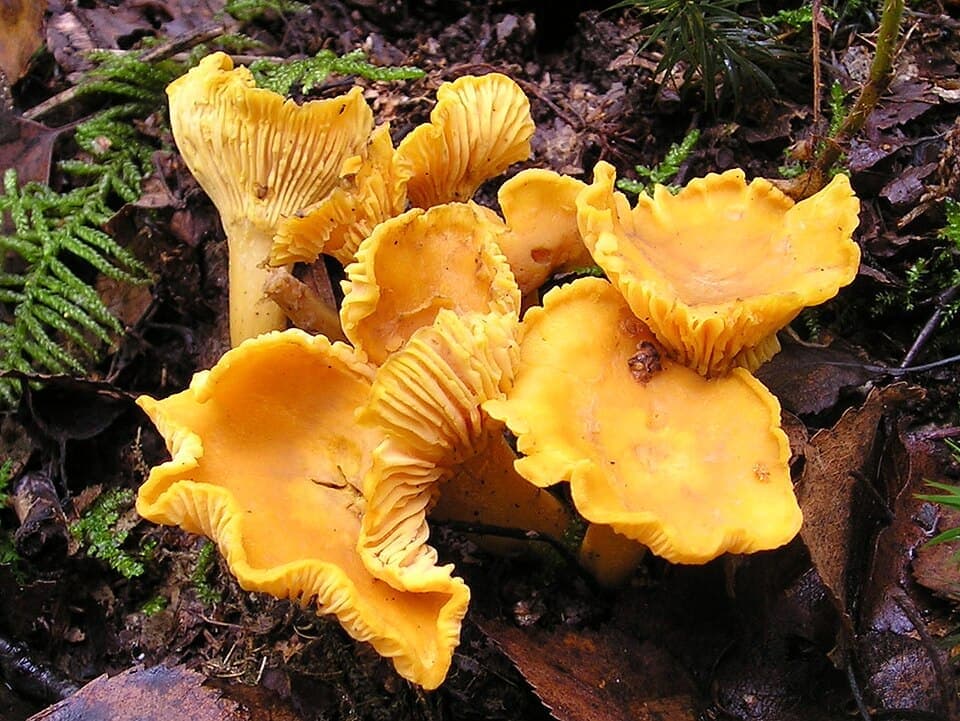
Golden Chanterelle
Cantharellus cibarius
June–October
The signature mushroom of the Appalachians — golden-yellow with blunt forking ridges (not true gills) running down the stem and a fruity aroma. Appears after summer rains in oak-rich coves.
Habitat: Mixed oak and hardwood forests at all elevations; often near large oaks.
FG-0012.02
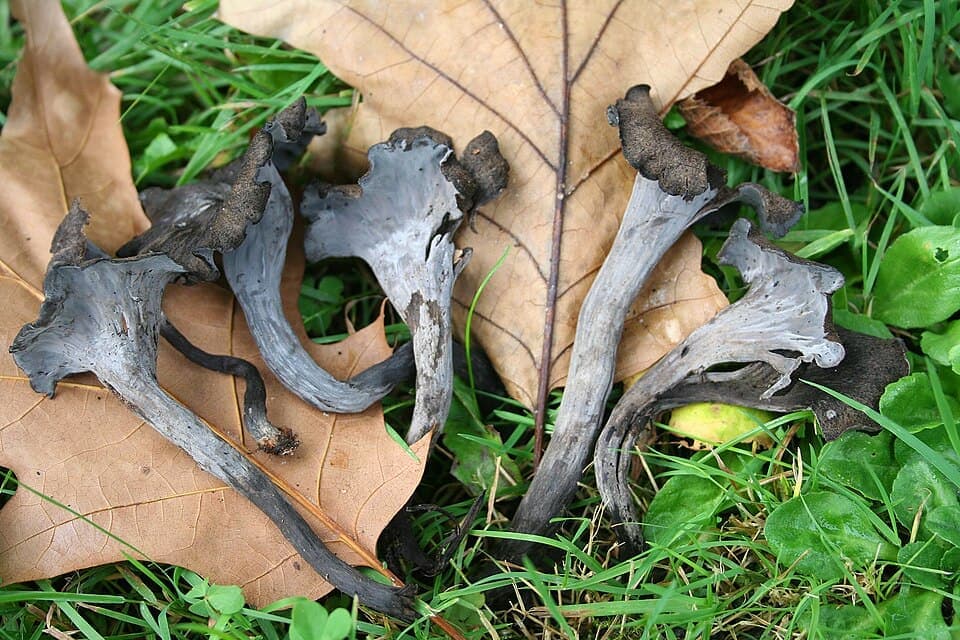
Black Trumpet
Craterellus cornucopioides
July–October
A hollow, funnel-shaped mushroom that is nearly black and easily overlooked on the leaf litter. Its dark color and trumpet shape make it distinctive once you learn to spot it.
Habitat: Rich hardwood coves, often near streams; particularly under oak and beech.
FG-0012.03
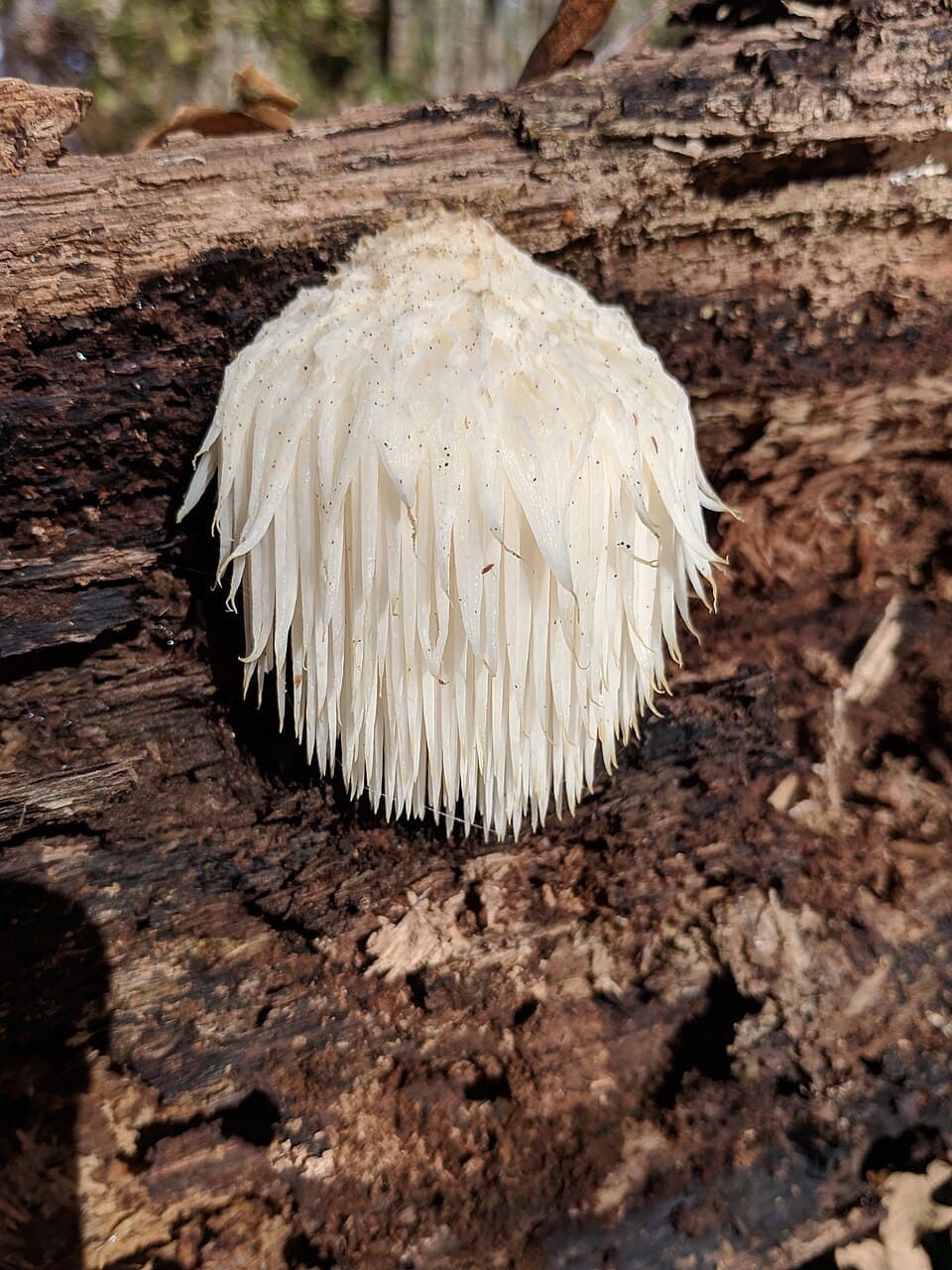
Lion's Mane
Hericium erinaceus
August–November
A white waterfall of spines cascading from hardwood trunks, with no gills and no cap. Its unique form makes it one of the easiest mushrooms to recognize.
Habitat: Wounds and trunk cavities in mature oaks, beeches, and maples.
FG-0012.04
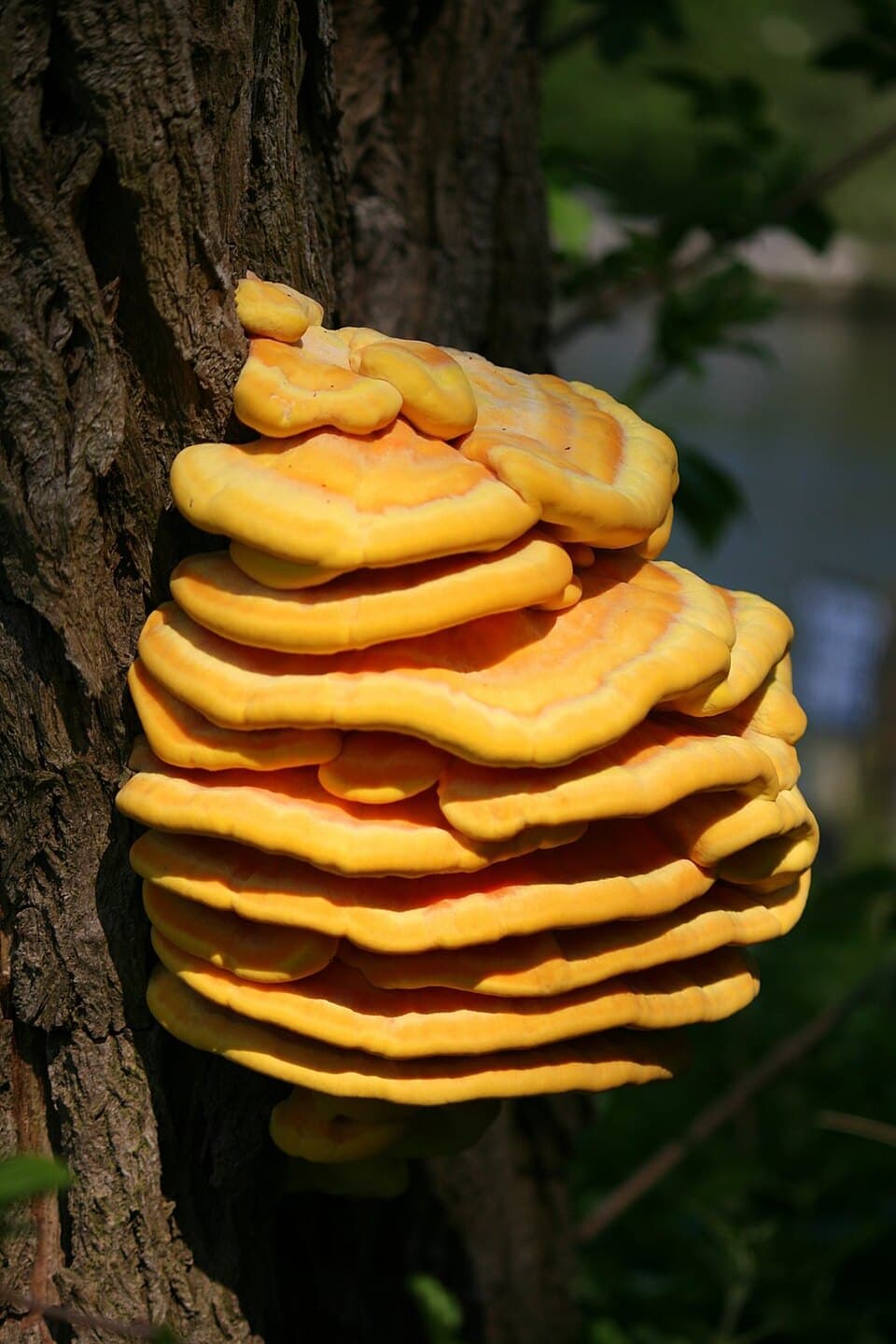
Chicken of the Woods
Laetiporus sulphureus
July–October
Brilliant orange and yellow shelf brackets in overlapping tiers on hardwood trunks. Common in Appalachian parks and forests and easy to identify by its vivid color.
Habitat: Oak, cherry, and locust trees; also fallen logs.
Through the seasons
- June: Chanterelles begin appearing after warm summer rains in cove hardwoods.
- August–September: Best time to spot lion's mane, black trumpets, and hen of the woods.
- October: Oyster mushrooms on fallen hardwoods; final chanterelles at higher elevations.
Questions
- What mushrooms are most common in the southern Appalachians?
- Golden chanterelles, black trumpets, lion's mane, and chicken of the woods are among the most frequently encountered and recognizable species. Rich hardwood coves near oak and beech are the best places to spot them after summer and fall rains.
- How do I recognize the destroying angel?
- The destroying angel (Amanita bisporigera) is entirely white, with white gills, a ring on the stem, and a cup-like volva at the base. Learning this combination of features helps you recognize and avoid one of the region's most dangerous mushrooms. Use Spotter to check features, and confirm with an expert.
From Field Notes
- What Is the Golden Trumpet-Shaped Mushroom? Identifying Chanterelles (and Their Look-Alikes)
- What Is the White Icicle-Like Mushroom Growing on a Tree? Identifying Lion’s Mane
- What Is the Tall Shaggy White Mushroom That Melts Into Black Ink? Identifying the Shaggy Mane
- What Is the Bright Orange Shelf Mushroom on My Tree? Identifying Chicken of the Woods
Not sure what you found?
Take a photo with Spotter for the name, field marks, look-alikes and safety notes in seconds.


In this guide
- Species
- 4
- Region
- Appalachian Mountains