For most of the summer the squirrels in your yard are easy to ignore — a few here and there, lounging on a branch in the heat. Then autumn arrives and the whole place seems to erupt. Suddenly there are squirrels everywhere: sprinting flat-out across the lawn, tails jerking, stopping to dig a quick hole, shoving a nut into the dirt, patting it down with their front paws, and tearing off to do it again. They spiral up tree trunks chasing one another, leap between branches, and seem to have switched into a higher gear overnight. This is the fall squirrel frenzy, and it is one of the most visible signs that the season is turning. The squirrels are not being random or crazy — they are racing a deadline. Here is what is really going on, and how to know the squirrels you are watching.
Why Squirrels Go Into Overdrive in Fall
Tree squirrels — the gray, fox, and red squirrels most people see — do not hibernate. They stay active all winter and have to eat all winter, but their favorite foods vanish under snow and ice. So in autumn they switch into a frantic stockpiling mode called scatter-hoarding: instead of one big pantry, they bury thousands of individual nuts and seeds in shallow caches spread all across their territory.
- The trigger: shortening days and the sudden autumn glut of acorns, hickory nuts, walnuts, and beechnuts flip a switch — high-fat, high-calorie mast becomes the top priority
- The scale: a single squirrel may bury several thousand nuts in one season, one at a time, scattered so no rival can raid the whole store at once
- The method: it digs a shallow hole, pushes in a nut, tamps the soil down with its paws and nose, and often "fakes" digging empty holes to fool onlookers watching to steal its cache
- The chasing: fall is also when the frantic energy spills into territorial squabbles over the best feeding trees, so you see more high-speed chases spiraling up trunks
- The peak: this activity crescendos through late September and October, then eases as the ground hardens and the stores are set for winter
So the yard full of digging, dashing squirrels is not chaos — it is thousands of tiny deposits being made against a winter with no fresh food.
Try Spotter free on iPhone or Android
Plants, animals, fungi and rocks from one photo. 5 free identifications every day, no card required.


Do Squirrels Really Forget Where They Buried Everything?
It is a popular idea that squirrels bury nuts and then forget them, accidentally planting forests. The truth is more impressive. Squirrels rely heavily on spatial memory to relocate their caches, and researchers have found they even organize their hoards by type — a technique called "spatial chunking," sorting acorns from walnuts into different areas so the mental map is easier to recall. They also use smell to pinpoint buried nuts, especially through light snow. They do not recover every single nut — a squirrel loses some to rivals, to rot, and to genuine misses — and those forgotten nuts really do sprout into oaks, hickories, and walnuts, which is why squirrels are among the great accidental tree planters. But the frantic burying you are watching is a deliberate, well-remembered survival system, not scatterbrained hiding.
The squirrel is not being forgetful — it is running a distributed pantry from memory. The few nuts it never digs up are how oak and hickory forests spread.
Know Your Squirrel: Gray, Fox, and Red
Most of the frenzy is powered by three common tree squirrels, and once you notice the differences they are easy to sort out:
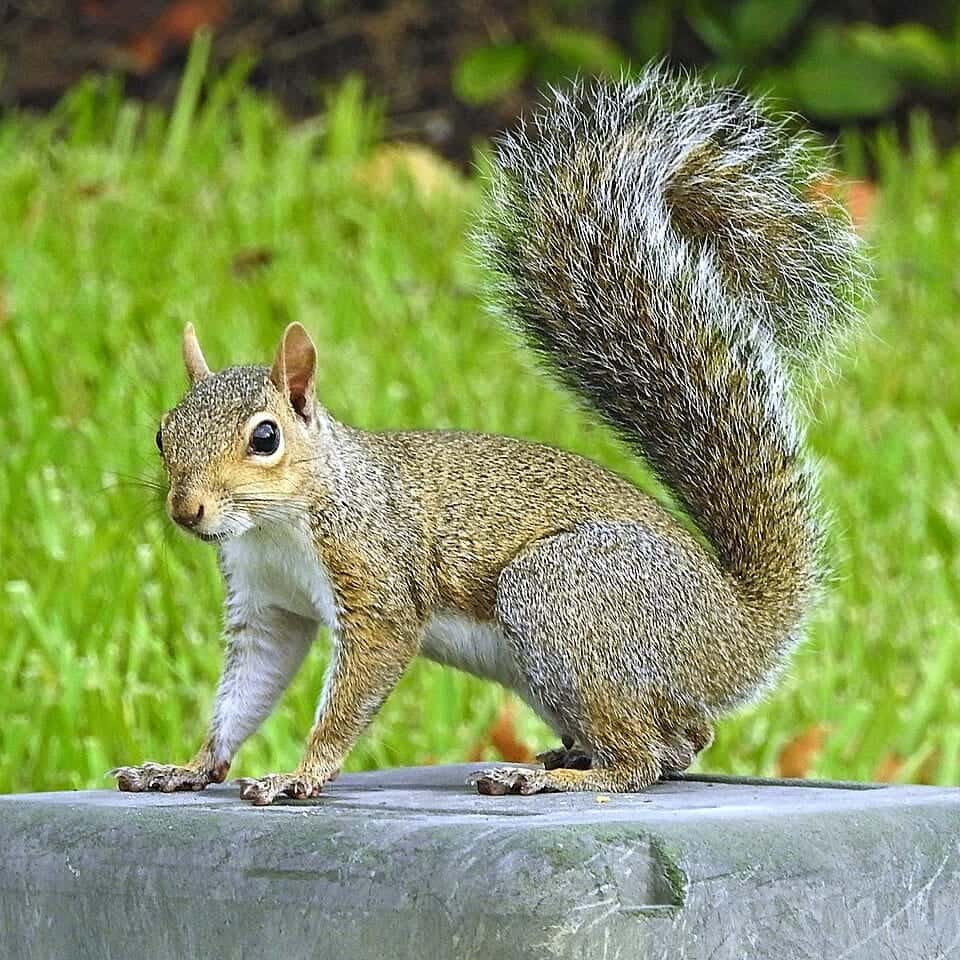
- Eastern gray squirrel: the classic backyard squirrel — salt-and-pepper gray with a pale belly and a big, bushy silver-edged tail; the most common one you will see burying nuts in yards and parks across the East and Midwest
- Fox squirrel: noticeably larger and heavier, with rusty-orange or brownish fur and a warm, tawny belly and tail; favors open woods, edges, and neighborhoods with scattered big trees
- American red squirrel: much smaller, rusty-red above with a whitish belly, often loud and territorial, chattering and scolding from conifers; instead of scattering nuts it tends to pile cones in one big central "midden"
Squirrel vs. Chipmunk at a Glance
The other animal darting around in fall is the chipmunk — much smaller, with bold dark-and-light stripes running down its face and back, and prominent cheek pouches it crams full of seeds. A squirrel is larger, has a big fluffy tail, and never has stripes on its face. If the little animal is stuffing its cheeks to bursting near the ground, you are almost certainly watching a chipmunk, not a squirrel.
Not sure whether the busy digger in your yard is a gray squirrel, a fox squirrel, or a chipmunk? Snap a photo and let Spotter help you confirm it — the fall frenzy is one of the best times to finally learn who your neighborhood regulars really are.
Try Spotter free on iPhone or Android
Plants, animals, fungi and rocks from one photo. 5 free identifications every day, no card required.