
FG-0018 · Wildlife · 6 species
Identifying Snakes in Georgia
By Derek Gauger · Updated
Overview
Georgia is home to around 46 snake species across its mountains, piedmont, and coastal plain — the great majority harmless and beneficial. Six are venomous, and knowing the handful you might actually meet takes much of the worry out of time outdoors.
Always identify from a distance: a photo from several feet away is safer and just as effective as a close look. This guide covers the snakes you are most likely to encounter in Georgia yards, woods, and wetlands.
Key species to know
FG-0018.01
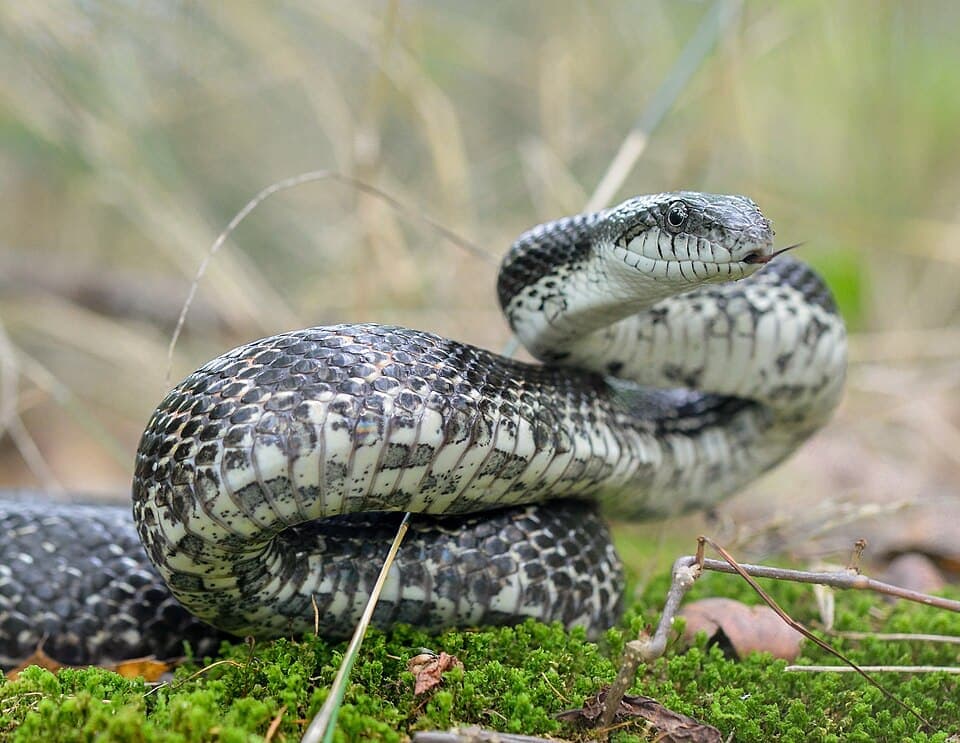
Gray Rat Snake
Pantherophis spiloides
A large, non-venomous constrictor with dark blotches on a gray body, and an excellent climber often found near barns and attics hunting rodents. Harmless but will rattle its tail and bluff when cornered.
Habitat: Woodlands, farmland, and suburbs throughout the state.
FG-0018.02
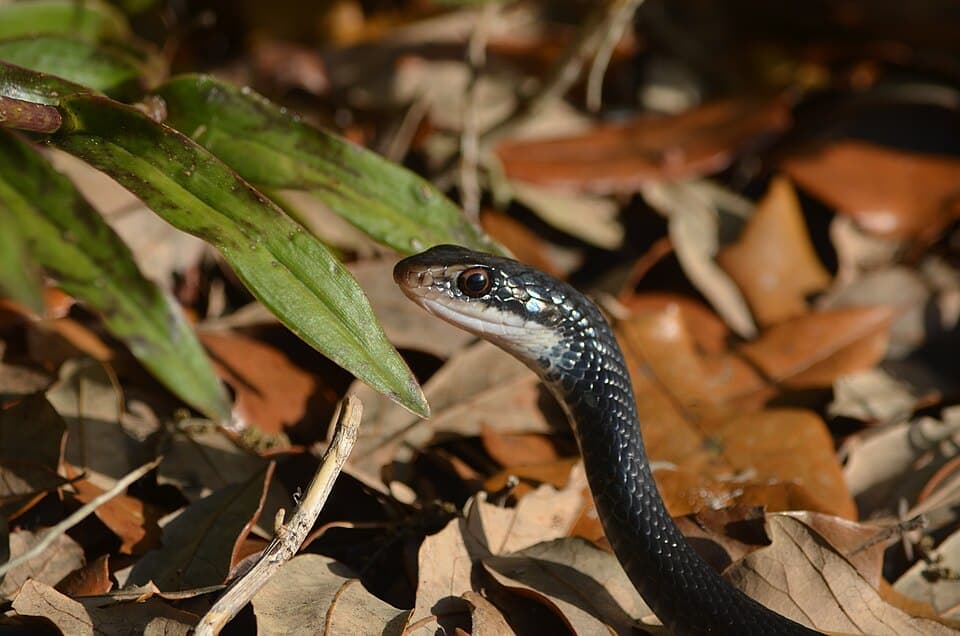
Southern Black Racer
Coluber constrictor priapus
A sleek, fast, solid-black non-venomous snake with a pale chin, common in yards and field edges. Nervous and quick to flee; harmless despite its speed.
Habitat: Fields, woodland edges, and suburbs statewide.
FG-0018.03
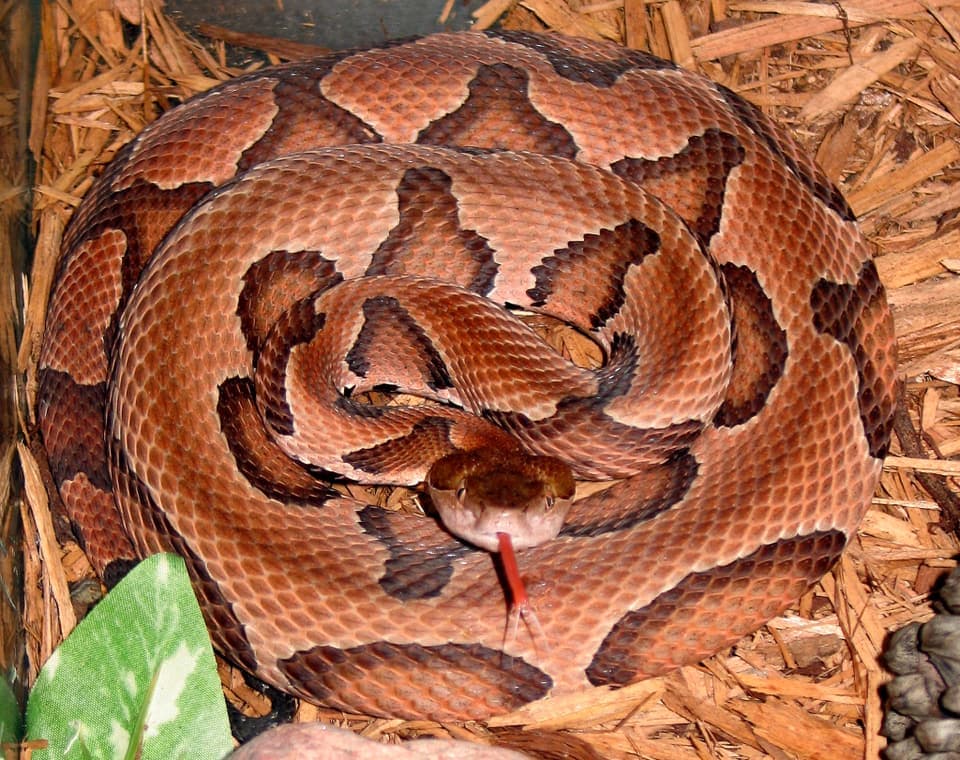
Copperhead
Agkistrodon contortrix
A pit viper with hourglass-shaped chestnut bands over a tan body, blending superbly into leaf litter. Venomous but generally mild; relies on camouflage and often stays still.
Habitat: Wooded hillsides, creek bottoms, and suburban edges across most of Georgia.
Venomous. Watch where you step and reach in leaf litter and woodpiles.
FG-0018.04
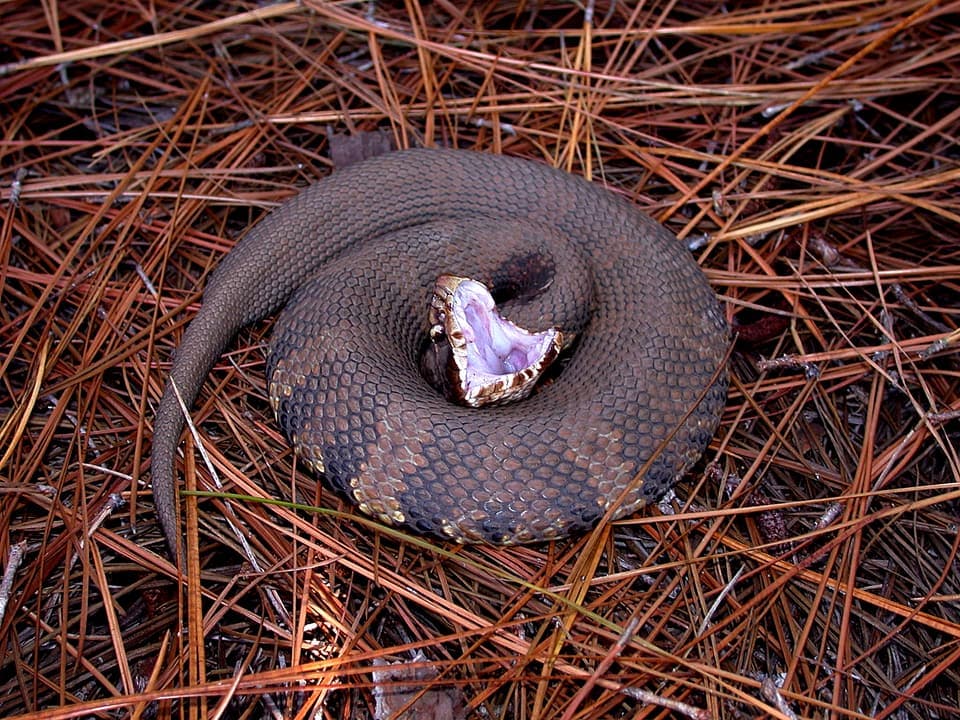
Cottonmouth
Agkistrodon piscivorus
A thick-bodied semi-aquatic pit viper, dark with a pale-lined face, that gapes to show a white "cotton" mouth when threatened. Venomous; often confused with harmless water snakes.
Habitat: Swamps, marshes, and slow streams, mainly in the coastal plain.
Venomous. Give a wide berth to any thick-bodied snake near water and never handle it.
FG-0018.05
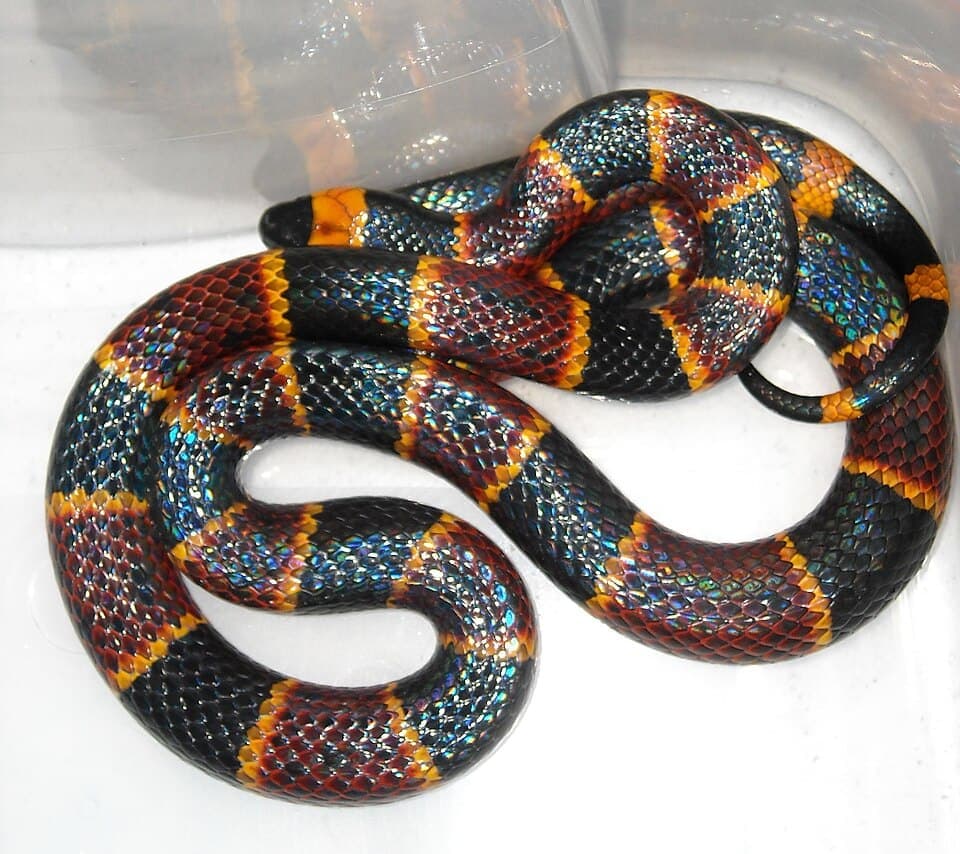
Eastern Coral Snake
Micrurus fulvius
A small, secretive snake ringed in red, yellow, and black, with the red and yellow bands touching. Venomous, but shy and rarely seen; bites are uncommon.
Habitat: Sandy, wooded areas and mulch beds in the southern part of the state.
Venomous. Never handle any small banded snake — confirm from a distance and leave it alone.
FG-0018.06
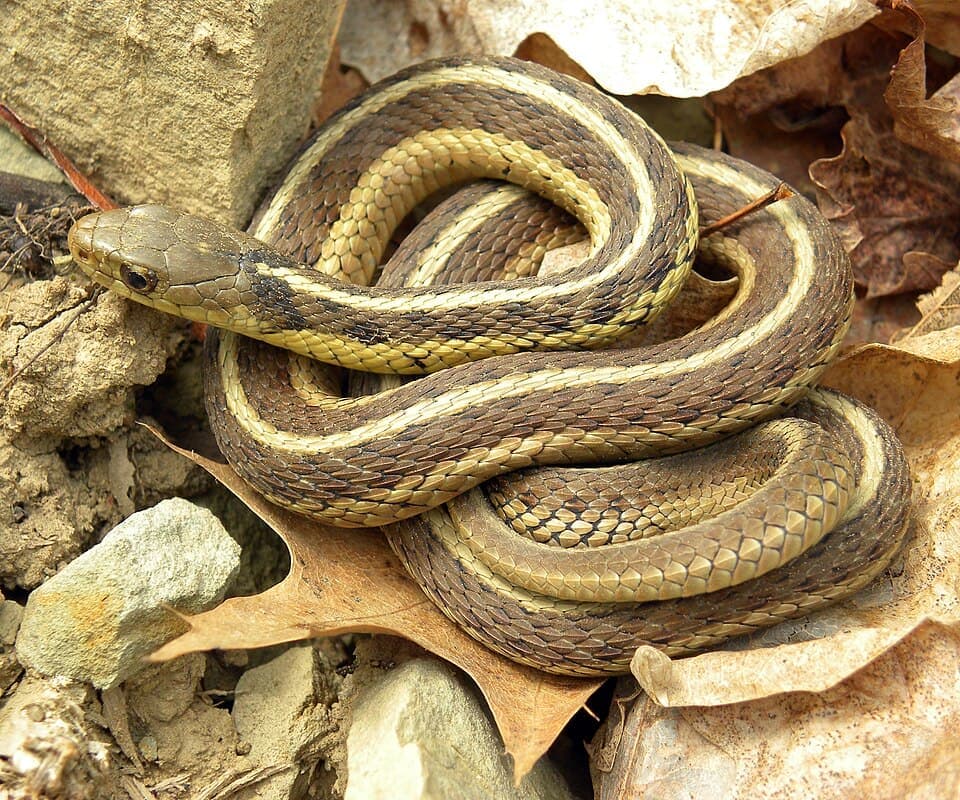
Eastern Garter Snake
Thamnophis sirtalis
A small, harmless snake with three pale stripes running the length of a dark body. One of the most common yard snakes; gentle and beneficial.
Habitat: Gardens, meadows, and damp areas near water statewide.
Through the seasons
- Snakes are most active in spring and fall, and on warm evenings in summer.
- Be cautious around water edges, leaf litter, and woodpiles, and reach only where you can see.
- Many harmless water snakes are killed out of fear — identify from a distance before assuming the worst.
Questions
- What venomous snakes live in Georgia?
- Georgia has six venomous species: the copperhead, cottonmouth, eastern coral snake, timber rattlesnake, eastern diamondback rattlesnake, and pygmy rattlesnake. The copperhead is the most commonly encountered.
- Is that snake in my yard dangerous?
- Most Georgia yard snakes — rat snakes, racers, and garter snakes — are harmless. Photograph it from a safe distance and use an app like Spotter to identify it rather than approaching.
From Field Notes
Not sure what you found?
Take a photo with Spotter for the name, field marks, look-alikes and safety notes in seconds.


In this guide
- Species
- 6
- Region
- Georgia