FG-0036 · Wildlife · 6 species
Identifying Snakes in Louisiana
By Derek Gauger · Updated
Overview
Louisiana's bayous, swamps, and bottomland forests support around 40 snake species, most of them harmless. Seven are venomous, and only a few are commonly encountered near people.
Always identify from a distance — a photo from several feet away is safer and just as effective. This guide covers the snakes you are most likely to meet in Louisiana.
Key species to know
FG-0036.01
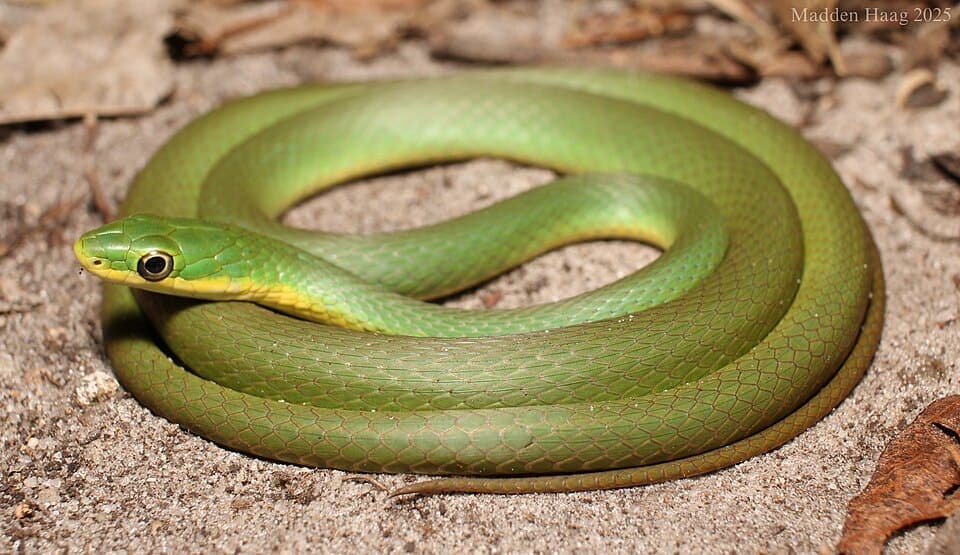
Rough Green Snake
Opheodrys aestivus
A slim, bright-green, harmless snake that lives in shrubs and vines, nearly invisible among leaves. Feeds on insects and is completely gentle.
Habitat: Dense vegetation near water and along wooded edges.
FG-0036.02
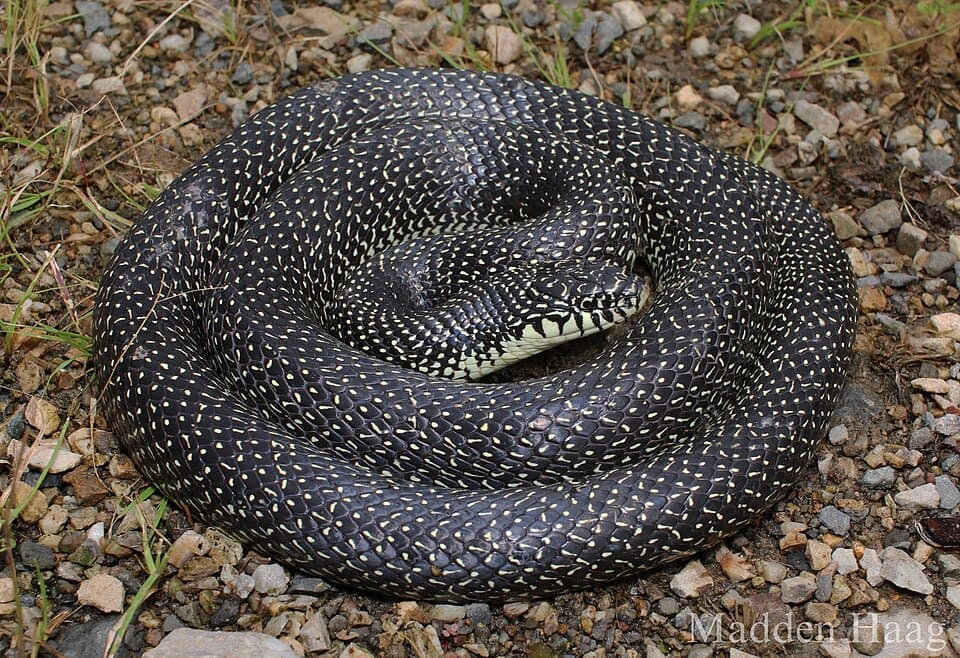
Speckled Kingsnake
Lampropeltis holbrooki
A glossy black non-venomous snake flecked with a yellow speck on nearly every scale, giving a "salt-and-pepper" look. Harmless and eats other snakes, including venomous ones.
Habitat: Fields, wetland edges, and farmland.
FG-0036.03
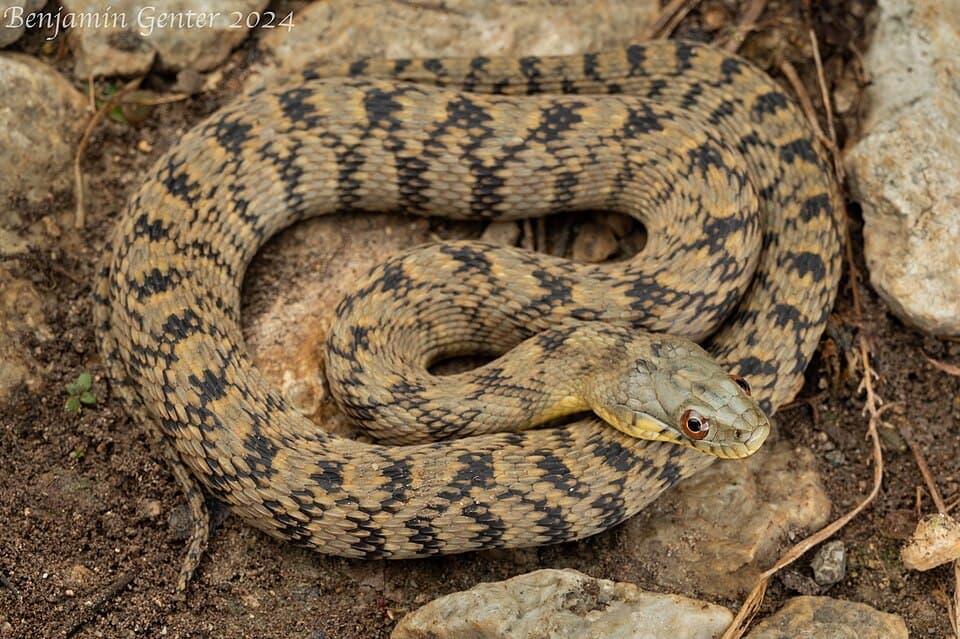
Diamondback Water Snake
Nerodia rhombifer
A heavy-bodied non-venomous water snake with a chain-like dark pattern, frequently mistaken for a cottonmouth and needlessly killed. Harmless but will bite if grabbed.
Habitat: Bayous, swamps, ponds, and slow rivers.
FG-0036.04
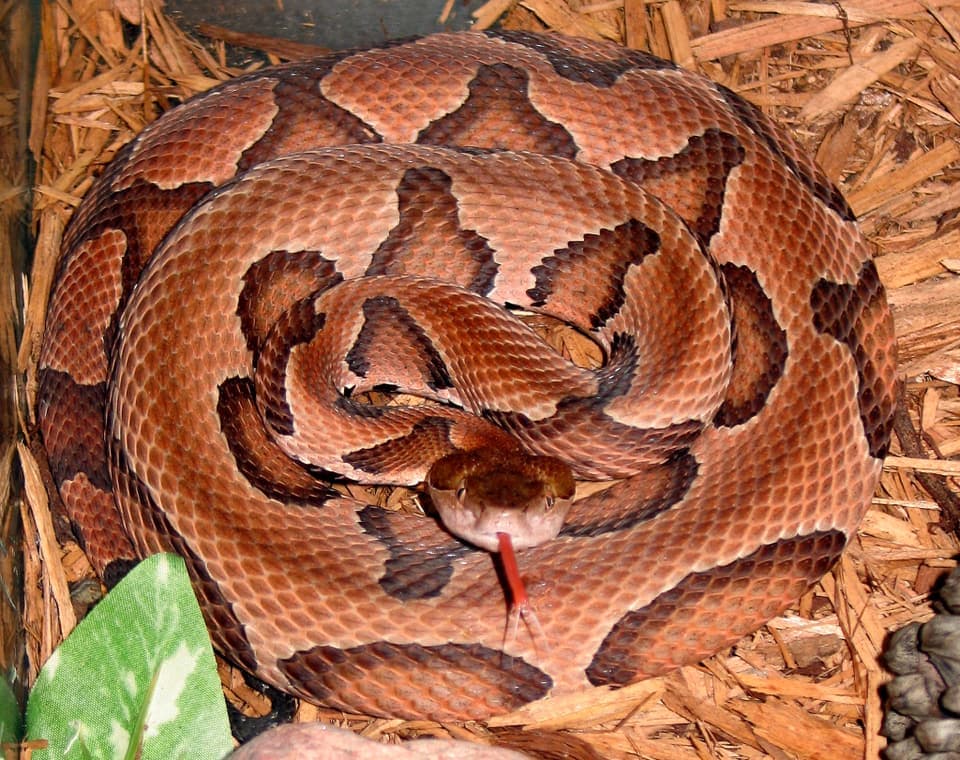
Copperhead
Agkistrodon contortrix
A pit viper with hourglass-shaped chestnut bands over a tan body, camouflaged in leaf litter. Venomous but generally mild.
Habitat: Upland woods, creek bottoms, and suburban edges.
Venomous. Watch where you step and reach in leaf litter and woodpiles.
FG-0036.05
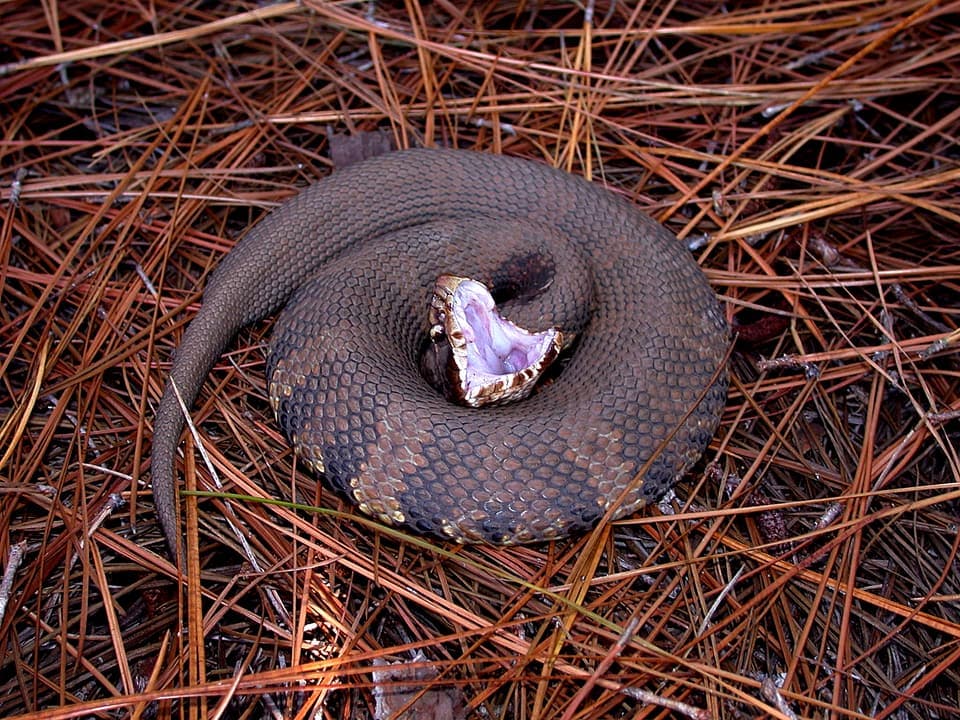
Cottonmouth
Agkistrodon piscivorus
A thick-bodied semi-aquatic pit viper, dark with a pale facial stripe, that gapes to show a white mouth when threatened. Venomous and often confused with water snakes.
Habitat: Swamps, bayous, marshes, and slow streams throughout the state.
Venomous. Give a wide berth to any thick-bodied snake near water and never handle it.
FG-0036.06
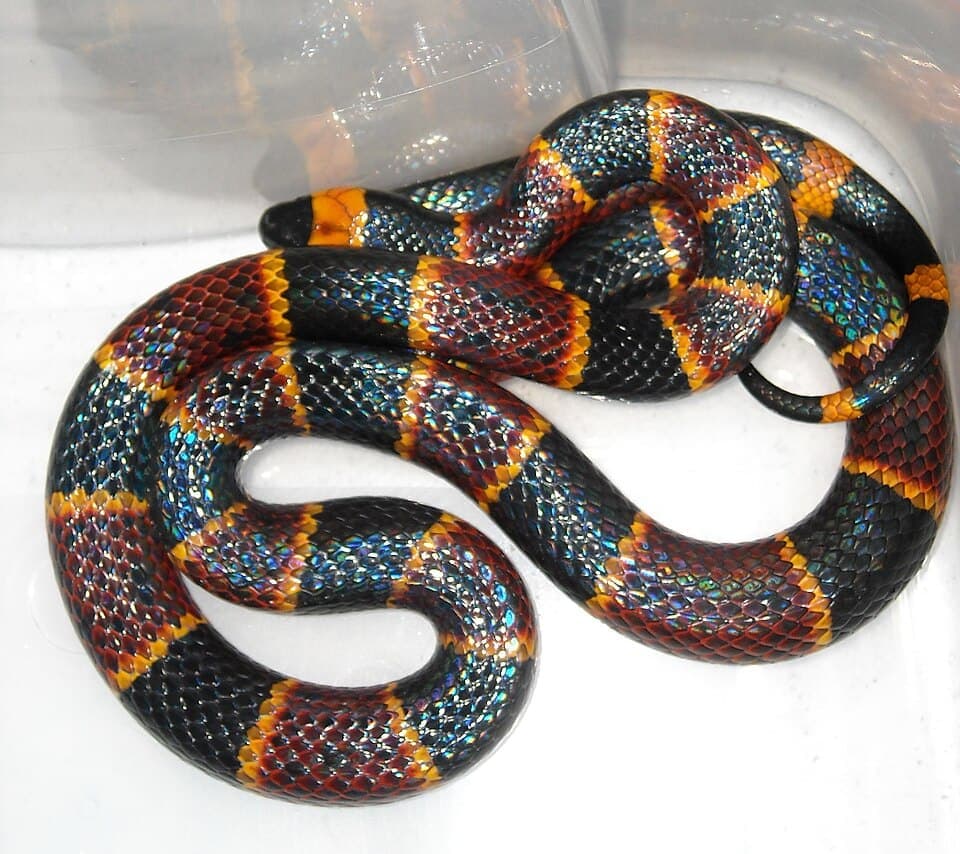
Eastern Coral Snake
Micrurus fulvius
A small, brightly ringed snake with red, yellow, and black bands, the red and yellow touching. Venomous but secretive and rarely seen.
Habitat: Sandy pine woods and wooded floodplains.
Venomous. Never handle any small banded snake — confirm from a distance.
Through the seasons
- Snakes are active much of the year in Louisiana, especially on warm, humid days and evenings.
- Be cautious around water edges, where cottonmouths and harmless water snakes both bask.
- Many harmless water snakes are killed out of fear — identify from a distance before assuming the worst.
Questions
- What venomous snakes live in Louisiana?
- Seven: the copperhead, cottonmouth, eastern coral snake, and four rattlesnakes (timber/canebrake, eastern diamondback, and two pigmy rattlesnakes). Cottonmouths are the most commonly encountered near water.
- How do I tell a cottonmouth from a harmless water snake?
- It is genuinely difficult and best left to a photo and an app — never a close look. Identify any thick-bodied snake near water from a safe distance rather than approaching.
From Field Notes
Not sure what you found?
Take a photo with Spotter for the name, field marks, look-alikes and safety notes in seconds.


In this guide
- Species
- 6
- Region
- Louisiana