
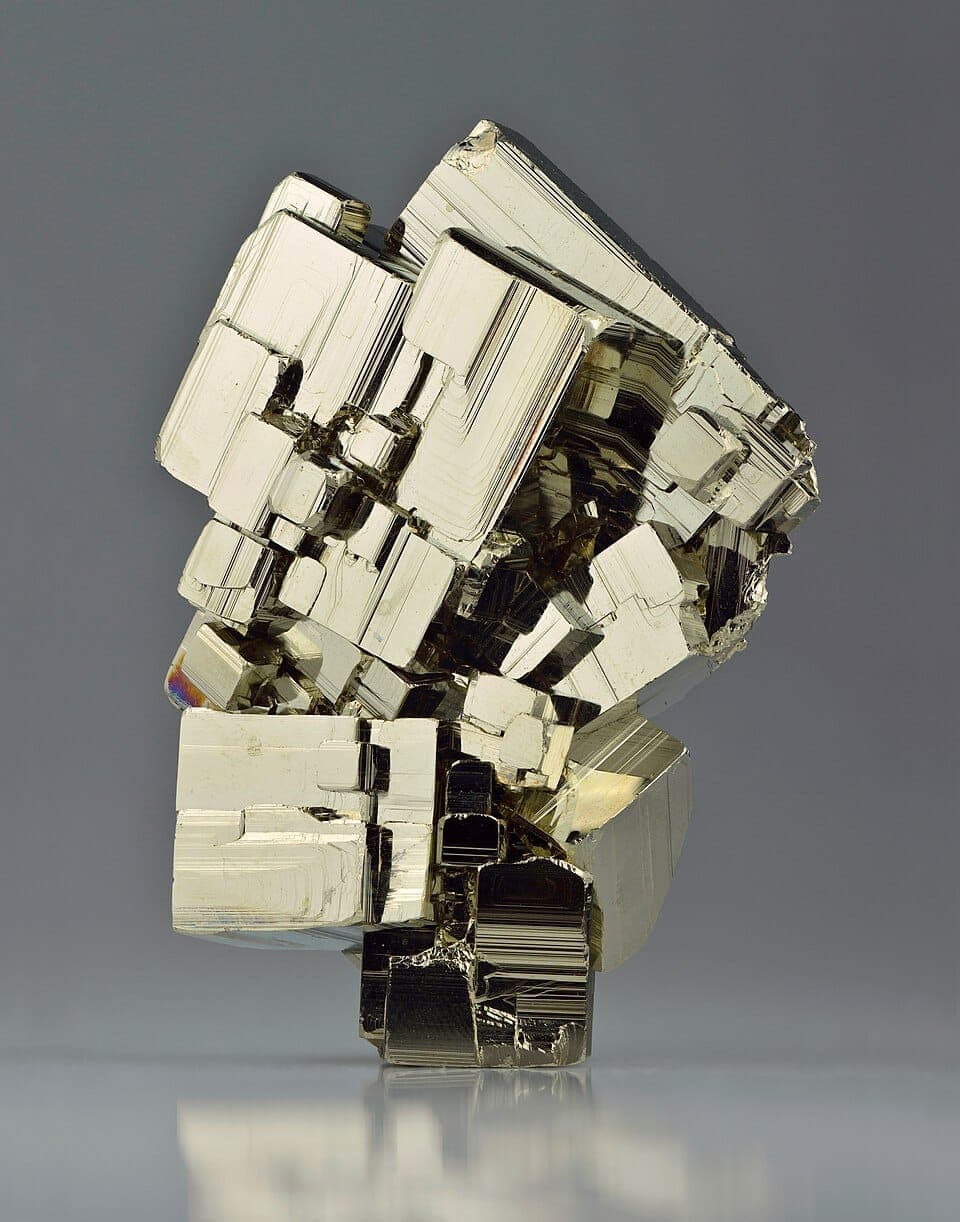
The fastest way to tell fool’s gold from real gold is to check its shape and give it a scratch. Real gold is soft, heavy, and forms rounded, smeared flakes and lumpy nuggets that dent when you press them; pyrite — the mineral nicknamed “fool’s gold” — grows as hard, brittle, brassy cubes with sharp edges that crumble and scratch instead of bending. Both can flash a metallic yellow in the pan or the rock face, which is exactly why prospectors and rockhounds have been fooled for centuries. Here is how to tell them apart for good, using a few features you can check with your eyes, a fingernail, and a scrap of unglazed tile.
How to Tell Fool’s Gold From Real Gold
No single glance settles it, because both are yellow and metallic. But run through the marks below in order and the answer becomes obvious fast — usually before you get to any test more complicated than a scratch.
Color and luster
Real gold is a warm, rich, buttery yellow that looks the same from every angle and in every light — it glows rather than sparkles. Pyrite is paler and brassier, with a cold silvery or slightly greenish undertone, and it flashes and glints as you rotate it because light bounces off its flat crystal faces. If the “gold” throws bright sparkles and seems to change brightness as you turn it, that twinkle is a pyrite giveaway.
Crystal shape
Pyrite loves geometry. It grows as sharp-edged cubes, twelve-sided balls, and blocky clusters with flat faces, and those faces are often etched with fine parallel lines called striations. Real gold almost never shows crystal faces you would notice; placer gold has been tumbled by water for thousands of years, so it turns up as rounded flakes, smeared grains, and soft-edged nuggets. Sharp cubes and straight lines mean pyrite; smooth, blobby, water-worn shapes point to gold.
The scratch and hardness test
This is the classic separator. Gold is soft — about 2.5 on the Mohs hardness scale, softer than a copper penny — while pyrite is hard, 6 to 6.5, hard enough to scratch glass and steel. Drag the sample against a copper coin or a steel knife: if the sample gouges the metal, it is pyrite; if the metal leaves a mark on the sample, it may be gold. Gold is also malleable, so a genuine flake flattens and dents when pressed with a pin, while pyrite is brittle and shatters into powder.
The streak test
The most reliable simple test is the streak. Drag the sample across the back of an unglazed white ceramic tile (the rough underside of a bathroom tile works). Real gold leaves a shiny golden-yellow streak; pyrite leaves a greenish-black to brownish-black streak. The color of the powder does not lie, even when the surface color fools you.
Weight in the hand
Gold is astonishingly dense — nearly four times heavier than pyrite for the same size. In a gold pan, real gold sinks and stays put at the bottom while pyrite washes and swirls away with the lighter sand. A genuine nugget feels startlingly heavy for how small it is; if a chunk feels about as heavy as an ordinary rock, it is not gold.
Try Spotter Free on iOS & Android
Plants, animals, fungi, and rocks — all from a photo. 5 free identifications every day, no credit card required.
Quick Field Tests, in Order
Found something brassy in a creek or a rock and want a fast answer? Work down this list — most people can stop after step three.
- 1Rotate it in the light. Bright, changing sparkles and flashes point to pyrite; a soft, steady yellow glow that looks the same from every angle points to gold.
- 2Look for cubes and straight lines. Flat crystal faces, sharp corners, and fine parallel striations mean pyrite. Rounded, smeared, water-worn shapes mean possible gold.
- 3Scratch it with a copper penny or steel knife. If the sample scratches the metal, it is pyrite. If the metal marks the sample, it could be gold.
- 4Streak it on unglazed tile. A greenish-black or brownish-black streak is pyrite; a golden-yellow streak is gold.
- 5Heft it. Real gold feels far heavier than any rock its size — pyrite does not.
Other “Gold” That Isn’t Gold
Pyrite is the famous impostor, but it is not the only one. A few other look-alikes trip people up:
- Chalcopyrite — even brassier and often tarnished to a peacock-blue or purple iridescence; softer than pyrite and, like it, not gold.
- Mica (biotite and muscovite) — thin, glittery bronze or gold flakes that float on water, flake apart with a fingernail, and weigh almost nothing compared to gold.
- Weathered pyrite — can look duller and more convincingly golden as it ages, fooling even experienced eyes; fall back on the streak and scratch tests, which still give it away.
Is Fool’s Gold Worth Anything?
On its own, pyrite has little cash value, but it is a genuine, collectible mineral — its crisp natural cubes are prized by rockhounds and it makes a handsome specimen. It is not always bad news for a prospector either: pyrite forms under the same conditions as real gold, so a rock or pan holding pyrite may also hold the real thing, which is why the goal is to tell them apart rather than to throw everything brassy away. One safety note: skip the old acid tests unless you know what you are doing — the visual, scratch, and streak checks answer the question for almost everyone — and never bite or taste a specimen to test it.
Frequently Asked Questions
Does fool’s gold sparkle more than real gold?
Yes. Pyrite glitters and throws bright flashes as you turn it because of its flat crystal faces, while real gold has a softer, more even glow that looks the same from every angle. If it sparkles like glitter, suspect pyrite.
Will a magnet pick up pyrite or gold?
Neither is strongly magnetic, so a household magnet is not a reliable test. Iron-rich impurities can give some pyrite a faint pull, but pure gold is never magnetic — use the streak, scratch, and weight tests instead.
Can fool’s gold and real gold be found together?
Often, yes. Pyrite and gold form under similar geological conditions, so a pan or rock that contains pyrite may also contain real gold. That is exactly why prospectors learn to tell them apart rather than discarding everything that glitters.
What is the easiest test to do at home?
The streak test. Drag the sample across the rough back of an unglazed white tile: a greenish-black to brownish-black streak means pyrite, while a golden-yellow streak points to real gold.
Not sure whether the brassy chunk in your hand is fool’s gold, real gold, or another shiny mineral? Snap a photo and let Spotter help you identify the rock or mineral — and learn what you actually found.
Try Spotter Free on iOS & Android
Plants, animals, fungi, and rocks — all from a photo. 5 free identifications every day, no credit card required.